Sam Altman
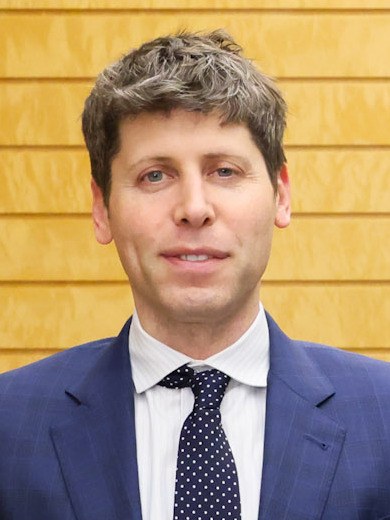
Introduction
Sam Altman is the American entrepreneur and co-founder of OpenAI, the company behind ChatGPT. On November 17, 2023, he was abruptly removed as CEO by OpenAI’s board of directors, which said he had not been “consistently candid” in his communications. The decision triggered one of the most high-profile tech upheavals of the year: within days, backlash from employees and investors forced the board to reverse course, and Altman was reinstated as CEO five days later. The episode became a landmark case in the debate over executive accountability, corporate governance, and the power of public and social-media pressure to shape corporate outcomes.
Background Information
Altman, born in 1985 in Chicago, had built his career across the tech industry before co-founding OpenAI and serving as its chief executive. As CEO he supervised the launch of ChatGPT in November 2022, which became the company’s breakout product and a global phenomenon. By late 2023 he was one of the most prominent figures of the AI boom, and the company he led was at the center of the world’s most consequential technology race. The board’s composition at the time — including co-founder and chief scientist Ilya Sutskever — would prove decisive in the events that followed.
The Controversy or Incident That Led to Their Cancellation
On November 17, 2023, OpenAI’s board announced that it had decided to remove Altman as CEO and to remove co-founder Greg Brockman from the board. The company’s statement, published on its blog, said that “Mr Altman’s departure follows a deliberative review process by the board, which concluded that he was not consistently candid in his communications with the board, hindering its ability to exercise its responsibilities.” The board added that it was grateful for Altman’s contributions but had decided that “new leadership is necessary as we move forward,” without elaborating on the reasons. In response, Brockman resigned from his role as President of OpenAI, and Mira Murati was named interim CEO.
The announcement produced an immediate and intense backlash. According to The New Yorker, Altman returned to his home and coordinated with consultant Chris Lehane, Airbnb executive Brian Chesky, and a team of staff to implement a strategy for his reinstatement. The day after his removal, the board was already discussing bringing him back. On November 20, Microsoft CEO Satya Nadella announced that Altman would be joining Microsoft to lead a new advanced AI research team, and two days later OpenAI employees published an open letter to the board threatening to leave for Microsoft unless all board members stepped down and reinstated Altman. The letter began with 505 signatures and grew to more than 700 of the company’s roughly 770 employees, and it included Ilya Sutskever, who had initially advocated for the firing but then said on Twitter that he “regret[ted] my participation in the board’s actions.” The scale of the opposition — employees, partners, investors, and the broader tech sector — overwhelmed the board’s rationale.
Public Reaction and Consequences
The episode was followed in real time across social media and became a global news story. Microsoft CEO Satya Nadella publicly called on the board on November 20, and by that date most of the existing board members had departed. On November 20 the board reached an agreement under which most existing members stepped down, an independent investigation into Altman’s conduct was planned, and Altman and Brockman returned to their roles. On November 21, 2023, after continued negotiations, Altman and Brockman formally returned to the company. D’Angelo remained on the board and was joined by Bret Taylor as chairman and Lawrence Summers, effectively forming a new board. The move was described as a stunning reversal that underscored the power of coordinated public and employee opposition to force a corporate decision.
Current Status
As of the material reviewed, Altman had been reinstated as CEO of OpenAI and the company had continued to operate under his leadership, with the newly constituted board in place and the promised independent investigation into his conduct underway. The episode remained a reference point in discussions of corporate governance, the limits of board authority, and the capacity of social and employee pressure to override a formal corporate decision. The specific findings of the investigation into Altman’s conduct were not detailed in the material reviewed.
Impact on Their Career/Life
The firing and reinstatement transformed Altman into a symbol of the tensions between corporate control and the collective power of employees, investors, and the public. His near-termination, followed by a dramatic return, became a defining story of the AI era and a cautionary tale for boards about the consequences of removing a high-profile leader without a broader constituency’s support. The case was cited in broader debates about transparency in executive communications, the role of social media in holding institutions accountable, and the balance of power in large technology companies.