Thomas Alter
Introduction
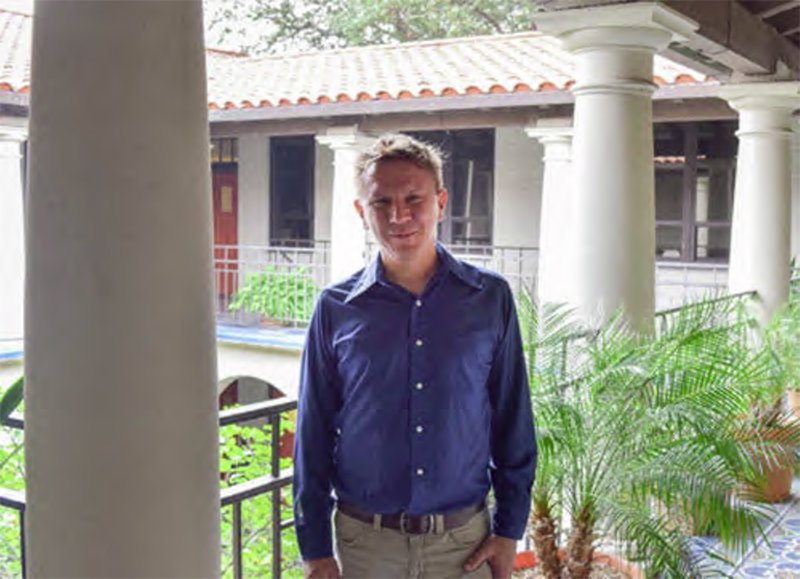
Thomas Alter is an associate professor of history at Texas State University in San Marcos. He became the subject of a nationally covered free-speech dispute when the university fired him on September 10, 2025 after a video of him speaking at an online Revolutionary Socialism conference was circulated on social media and accused of inciting violence. The case quickly became a flashpoint in the right’s campaign against perceived political speech on public-campus faculty, and a judge later ruled that Alter had been summarily terminated without due process.
Background Information
Alter was a tenured associate professor of history at Texas State University, a public institution in San Marcos, Texas. Like many historians, he participated in public-facing scholarly conversations, including an online conference organized by several socialist groups. His role as a faculty member at a large state university, and the political attention his case attracted from Republican figures in the state, turned a single video clip into a statewide controversy about what political speech public employees may make at academic events.
The Controversy or Incident That Led to Their Cancellation
A video recording of Alter speaking at a virtual Revolutionary Socialism conference was posted to the social media platform X, where he can be seen talking during a Zoom meeting. The clip was accused of advocating or inciting violence, and it drew the attention of Texas State University. University President Kelly Damphousse announced that Alter had been fired, saying the university had thoroughly reviewed the video and that his comments constituted “serious professional and personal misconduct.” Damphousse stated that “conduct that advocates for inciting violence is directly contrary to the values of Texas State University” and that she “cannot and will not tolerate such behavior.” Reporting later described the circulated video as having been doctored.
Texas State University System Chancellor Brian McCall commended Alter’s firing in a post on X and said the university would not “tolerate conduct by any employee intended to incite violence,” specifically pointing to Alter’s claim about overthrowing the United States as misconduct. The framing of the case as an example of “MAGA’s campaign against higher education” was picked up across progressive outlets and campus-organizing groups.
Public Reaction and Consequences
Alter’s lawyer, Amanda Reichek, said in a September 16 statement that the university’s claims “give every appearance of politically motivated discrimination” and that Alter would take legal action, arguing he was “terminated because he espoused views that are unpopular in today’s conservative, politically-charged climate, in violation of his First Amendment right to free speech.” Students protested on campus for several consecutive days — for five school days straight, by Alter’s own account — and internal organizing followed. Alter said his unions came to his defense immediately, naming the Texas State Employees Union (affiliated with the Communication Workers of America) and the American Association of University Professors, and supporters gathered at a rally against his firing in San Marcos on September 25. A judge ruled that Alter’s due process had been violated in accordance with Texas State’s own policies, state law, and his federal constitutional rights, and ordered his reinstatement — though not immediately back into the classroom. The university continued its own investigation and, in an October hearing, charged him with “partisan political activity.”
Current Status
As of the material reviewed, Alter was provisionally reinstated on September 26, 2025 but remained in limbo while the university completed its investigation into his firing. He and his family were awaiting a final decision, with the president holding hearings and the case framed by supporters as a fight over academic freedom, free speech, and union rights in a conservative political climate. The ultimate outcome of the internal proceedings was not resolved in the material reviewed.
Impact on Their Career/Life
The firing placed Alter at the center of a national dispute over the limits of faculty political expression at public universities and the speed at which a single viral clip can end an academic job. His provisional reinstatement, and the judge’s finding that due process had been violated, underscored how contested the boundaries of permissible speech are for tenured professors. The case was cited as emblematic of what critics described as a new era of political accountability — and, on the other side, of necessary public oversight — of faculty on state campuses.