Tiger Woods
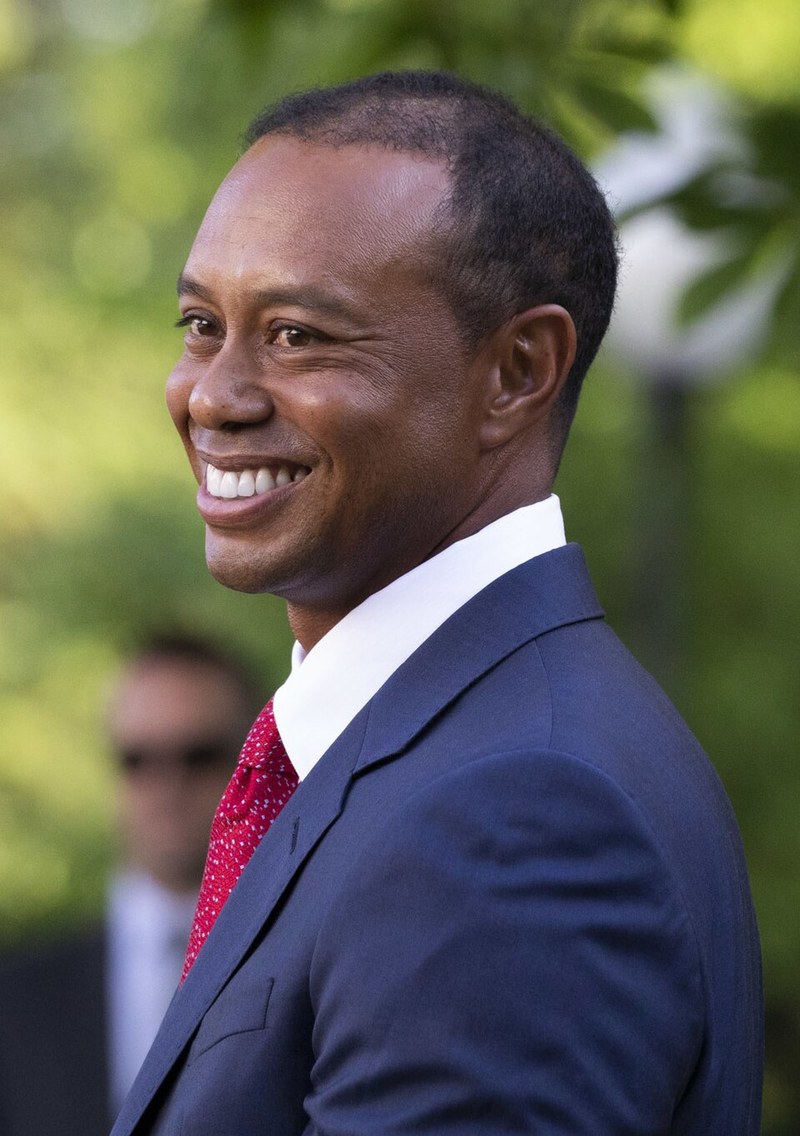
Introduction
Tiger Woods, born Eldrick Tont Woods on December 30, 1975, is an American professional golfer widely regarded as one of the greatest players in the history of the sport and one of the most famous athletes of the modern era. A 15-time major champion ranked second only to Jack Nicklaus, and tied with Sam Snead for the all-time record of 82 PGA Tour wins, Woods built a two-decade career as golf’s dominant figure and, according to Forbes, accumulated a net worth estimated at $1.5 billion as of April 2026. In March 2026, that standing collided with a Florida highway: Woods was arrested for driving under the influence after his SUV clipped a trailer and overturned near his home on Jupiter Island, an incident that prompted him to step away from golf and enter rehab in Switzerland. In September 2026 he resolved the criminal case with a no-contest plea that left him adjudicated guilty of reckless driving — a second offense — with a five-year license suspension and thousands of dollars in fines and costs.
Background Information
Woods turned professional in 1996 at age 20 and won his first major, the 1997 Masters, by a record 12 strokes the following April, reaching world No. 1 less than a year after turning pro. He went on to win 15 major championships, hold the record for most consecutive weeks as the world’s top-ranked player, complete the career Grand Slam three times, and earn 11 PGA Player of the Year awards. His 2000-2001 “Tiger Slam” — holding all four major titles at once — remains one of the sport’s signature achievements, and he was inducted into the World Golf Hall of Fame.
Off the course, Woods’ history behind the wheel is long and troubled. He was arrested for DUI in Jupiter in May 2017 — in the same community where he has lived for years — after police found him asleep at the wheel of his Mercedes, a case resolved with a DUI diversion program. In February 2021 he suffered serious leg injuries when his SUV crashed into a median and rolled over on a Los Angeles County road known for wrecks; he had to be pulled out through the windshield. The March 2026 arrest that forms the core of this page was, by the account of the sheriff who handled it, “his latest time hitting the roadway rough in Florida.”
The Controversy or Incident That Led to Their Cancellation
Allegations. The description of the crash scene in this section is drawn from law-enforcement statements, court filings released by prosecutors, and reporting on them. The criminal case ended in a no-contest plea to reduced charges, which is not an admission of guilt to the original DUI charge; Woods was not convicted of DUI.
On the afternoon of March 27, 2026, Woods was driving his Land Rover north on South Beach Road on Jupiter Island — a narrow two-lane road with a 30 mph limit near his home — when a pressure-cleaner truck hauling a small trailer ahead of him slowed to turn into a driveway. Martin County Sheriff John Budensiek said Woods approached at what he described as a “high rate of speed,” swerved to avoid a collision, clipped the back end of the trailer, veered off the road and came to rest on the driver’s side after sliding along the roadway. Woods, alone in the vehicle and not injured, crawled out through the passenger door.
Investigators said Woods showed signs of impairment and put him through roadside tests before taking him into custody. Woods told officers he had been momentarily distracted, looking down at his cellphone to change the radio station, when he failed to notice the truck slowing; officers described him as cooperative but sweating profusely. A breath test showed no alcohol in his system — Sheriff Budensiek said Woods “blew triple zeroes” — but he refused to provide a urine sample for drug testing. An arrest affidavit alleged he failed several field sobriety tests, and law enforcement reported finding two hydrocodone pills in his pocket after the crash. According to court filings released by prosecutors, Woods told investigators he had taken several medications that day, including drugs for high blood pressure and cholesterol as well as ibuprofen and the prescription painkiller Vicodin.
The filings also detailed a series of unusual remarks Woods made to officers at the scene: about an hour after the crash he spoke of “10 to 15 drones” equipped with GoPro cameras flying over his home and car, and at another point told an officer he had “just [been] talking to the president” before trailing off. Woods was booked at the Martin County Jail and held for about eight hours, as Florida law requires in intoxication cases, the sheriff said. He was charged with DUI with property damage and refusing a lawful test, both misdemeanors.
The professional fallout was immediate: days after the arrest, Woods announced he would step away from golf “to seek treatment and focus on my health.” A judge granted him permission to travel abroad to enter an inpatient treatment facility, which his attorney said was necessary for an intensive, individualized program; reporting later placed that rehab stay in Switzerland.
Public Reaction and Consequences
The arrest of arguably the most famous golfer alive dominated sports coverage and social media, with bodycam footage of the arrest released by the sheriff’s office drawing wide attention. County Judge Darren Steele, at the September 2 plea hearing, was blunt about the stakes: “Sir, I want you to understand that five years of driving is for the safety of the public. There are no exceptions. If you were to drive for any reason at all, you would go immediately back to jail.” Woods, who had initially pleaded not guilty to both counts, changed his plea to no contest to a reduced charge of willful and wanton reckless driving — adjudicated guilty as a second offense — and to refusing to submit to a lawful test, while prosecutors’ original DUI charge was dropped as part of the agreement.
The sentence: a $1,000 fine on the reckless-driving count and $500 on the refusal count, concurrent five-year driver’s license suspensions, a pledge not to seek a hardship exemption, and $2,131.44 in total fines and costs paid after the hearing — but no jail time. Woods remained mostly silent through the proceedings, letting his attorney Doug Duncan speak; “the ultimate decision was made to bring closure to the case and to allow Tiger and his family to move on with their lives,” Duncan told WPBF. He was accompanied in court by his girlfriend, Vanessa Trump. When State Attorney Thomas Bakkedahl was asked whether Woods could still drive a golf cart on his suspended license, he answered, “My gut reaction is no,” while conceding he would double-check how state law classifies golf carts.
Current Status
Woods, who pleaded no contest rather than guilty and was never convicted of DUI, has been returning to public life. On September 15, 2026, the TGR Foundation’s live-events Instagram account posted the first video of him hitting golf balls since the arrest — a clinic at Liberty National in New Jersey ahead of the Nexus Cup, the amateur event he hosts for his foundation — and the PGA Tour amplified it with the hint “Tiger Woods is back on the range!” Asked where his game stands as he recovers from disc replacement surgery and a torn Achilles tendon, Woods said, “I can hit pretty much anything,” while allowing he was “a little stiff” from the previous night’s festivities. He has not played a competitive round since the 2024 Open Championship, and his last tour start was July 2024; any comeback buzz is expected to center on the Hero World Challenge, which he hosts, beginning November 30 in the Bahamas. Under the plea deal, he cannot drive a car on public roads for five years — though he remains allowed to drive a golf cart on the course, at least in Florida.
Impact on Their Career/Life
The crash and its aftermath ended Woods’ 2026 playing season before it began and pushed him out of the public eye for months: step-away announcement, rehab in Switzerland, and silence until the September driving-range video. The legal resolution — an adjudication of guilt for willful and wanton reckless driving as a second offense, not the DUI he was originally charged with — leaves a second impaired-driving entry on the record of a man whose 2017 Jupiter DUI arrest already made “Tiger Woods and the police report” a recurring tabloid genre, and the five-year suspension means golf’s most photographed driver now cannot legally drive himself to the course. His commercial standing appears intact — the PGA Tour’s own account promoted his return within hours of the video, and his foundation events continue to draw the sport’s elite — but the incident has added a sober coda to the late-career comeback narrative: a $1.5 billion icon, banned from the road until 2031, working his way back one range session at a time.