Salim Said
Introduction
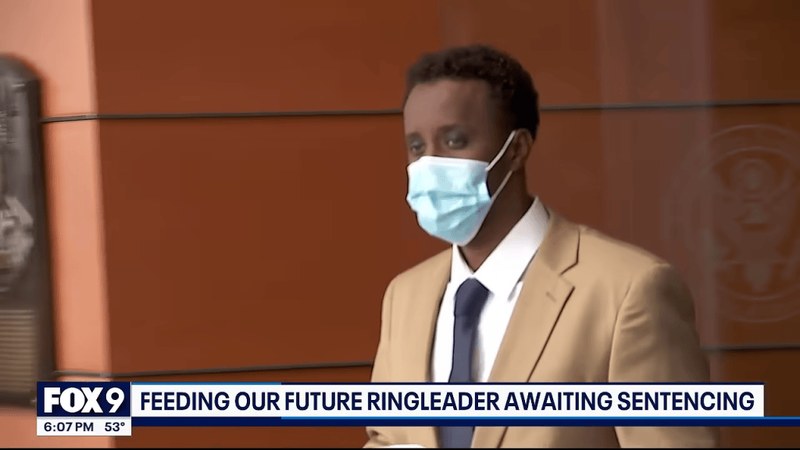
Salim Said is a Somali-born Minneapolis restaurateur who co-owned Safari Restaurant, a Lake Street restaurant specializing in dishes from Somalia. On October 28, 2026, U.S. District Judge Nancy Brasel sentenced him to 30 years in federal prison for his role in the Feeding Our Future scheme — what prosecutors describe as Minnesota’s largest fraud, the theft of millions of dollars from a federally funded child-nutrition program through claims of meals that were largely never served. In 2025, a jury convicted Said, then 37, on all 21 counts against him, including wire fraud, federal programs bribery and money laundering.
Background Information
The fraud grew out of a pandemic-era rule change: COVID-19 loosened a federal program that typically fed children through schools, allowing restaurants to participate and meal distribution to extend beyond school sites. KSTP reports that in 2020 Said enrolled Safari Restaurant in the Federal Child Nutrition Program under the sponsorship of Feeding Our Future — the Minnesota nonprofit whose founder, Aimee Bock, is now serving a nearly 42-year sentence — and then used nonprofits and shell companies to open additional meal sites across the state with his co-defendants. MPR News counts 81 defendants charged in the sprawling case since 2022, 32 of them sentenced so far.
The Controversy or Incident That Led to Their Cancellation
Convicted and sentenced. In 2025 a federal jury convicted Salim Said on all 21 counts against him — conspiracy, wire fraud, federal programs bribery and money laundering. On October 28, 2026, Judge Nancy Brasel sentenced him to 30 years in federal prison. There were no acquittals; the conduct described below was adjudicated by that jury, and the sentence is a matter of court record.
Prosecutors told the court that for 21 consecutive months Said submitted thousands of fraudulent reimbursement claims — “day after day, month after month” — for meals “purportedly provided to underprivileged children, yet the listed children themselves were entirely fictitious.” He claimed what prosecutors called a “ridiculous daily distribution of 6,000 meals” while FBI cameras showed about 40 people a day collecting food at his sites, and his filing argument that many meals were delivered off site was rejected. “The defendant and his sites did not serve thousands of children; he served a calculated, lucrative lie,” prosecutors wrote.
The government valued the fraud connected to Said and his Safari co-defendants at $44 million — some of it committed by others he recruited — with Said ordered to repay that $44 million jointly. Assistant U.S. Attorney Rebecca Kline told the court that Safari Restaurant stood “alone at the top of the mountain” of fraud recipients and that Said siphoned $13 million personally. Jurors also found he used a $310,000 purchase from Bock of a non-functioning childcare center in Burnsville to disguise a kickback to her, and KSTP reports he paid more than $100,000 in kickbacks to Feeding Our Future employee Abdikerm Eidleh through his shell companies.
The proceeds, per the government, bought a $1.2 million home, commercial real estate and an $87,000 pickup truck; KSTP itemizes a million-dollar house in Plymouth, a mansion on Park Avenue in Minneapolis, property in Columbus, Ohio, high-end vehicles and extravagant shopping sprees — all subject to forfeiture. At the 2025 trial Said denied the allegations, testifying that many meals were delivered off site; Kline countered at sentencing that he “has never taken responsibility” and “sat in that witness box and lied over and over and over.”
At the October 2026 sentencing hearing, prosecutors sought 40 years while defense attorney Barry Zone asked for 12, disputing that his client was the “architect” of the scheme: “My client, at no point was he in the position of Ms. Bock. Not even close. Ms. Bock signed every check. Ms. Bock was the gatekeeper of all the money.” Zone described Said’s traumatic childhood in Somalia, where he was abused and once left tied to a tree. Reading from a brief statement, Said apologized: “I’m deeply sorry for the actions and my involvement in this very serious case. And I know better.” Brasel, noting among the aggravating factors a prior fraud-related conviction, told him: “You took more than taxpayers’ dollars to enrich yourself. You took the reputation of our state down with you” — and observed that he had been “not in a financial tough spot,” running a restaurant, when he “made defrauding the public a scalable business model.”
Public Reaction and Consequences
The 30-year term is the third-longest handed down among the 32 people sentenced in the case so far, per MPR News — only Bock, who must repay $242 million, and Abdiaziz Farah, whose 28 years were extended by 10 consecutive ones for trying to bribe a juror, received longer. The case’s scale has repeatedly drawn the attention of President Trump, who ridiculed Minnesota’s Democratic governor over it and partly cited the fraud as grounds for an immigration crackdown in the state’s largest cities; in January, Gov. Tim Walz said he would not run for reelection. State auditors found the Minnesota Department of Education received numerous complaints about Feeding Our Future but often told the group to police itself. American Experiment adds that Said gained notoriety as the first voice on a 54-minute December 2021 recording of a meeting between state Attorney General Keith Ellison and Feeding Our Future figures, and that he gave a campaign donation to Councilman Jeremiah Ellison after that meeting.
Current Status
Said is serving his 30-year federal sentence, to be followed by three years of supervised release. He must pay $44 million in restitution jointly with the other Safari-connected defendants, and Brasel previously ordered him to forfeit $7.8 million along with a 2021 Chevrolet pickup, a 2021 Mercedes-Benz, real estate in Minneapolis and Plymouth, and a commercial building in Columbus, Ohio. Because he is a legal permanent U.S. resident rather than a citizen, MPR News reports he could face deportation. The fetched coverage records no appeal.
Impact on Their Career/Life
Safari Restaurant is closed — KSTP now calls Said its former co-owner — and the restaurant he built into the largest single fraud site in the scheme is remembered mainly as the place where the fictional meals were billed from. His 30-year term sits at the bottom of a sentencing-guidelines range that ran to 250 years, but it is among the longest sentences in what prosecutors describe as Minnesota’s largest fraud scheme to date. At 37, with the possibility of deportation waiting behind the prison term, the empire of shell companies and meal sites he assembled is forfeited, and the sentence is what remains.
Sources
- MPR News, “‘Central organizer’ of Feeding Our Future scheme gets 30 years,” October 28, 2026 — source
- KSTP, “Former Safari Restaurant owner Salim Said sentenced to 30 years for role in Feeding Our Future fraud case,” October 28, 2026 — source
- NY Post, “Minnesota Safari Restaurant fraudster Salim Said sentenced to 30 years in prison for Somali food fraud,” October 29, 2026 — source
- American Experiment, “Salim Said sentenced to 30 years in prison,” October 2026 — source