Yoon Suk Yeol
Introduction
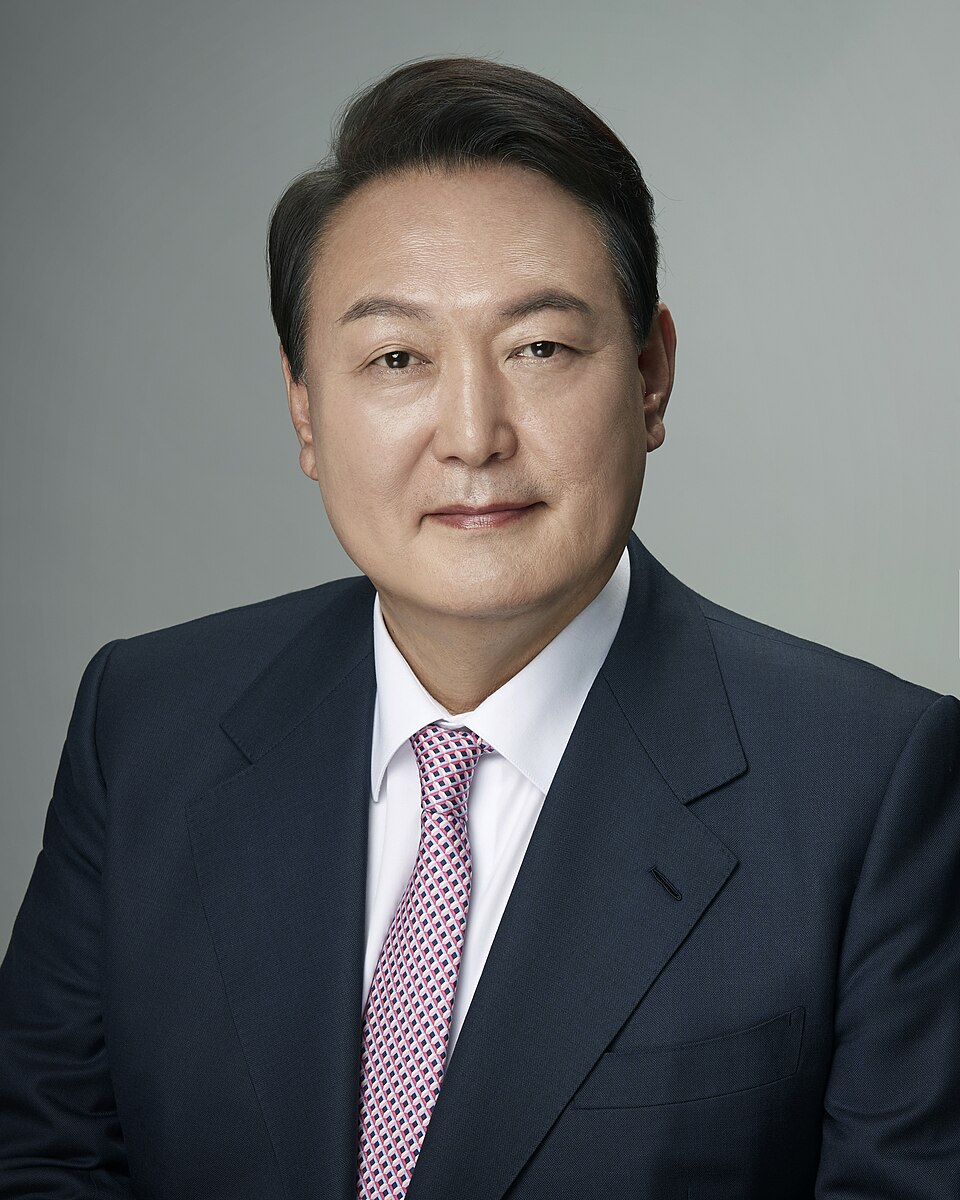
Yoon Suk Yeol, the 13th president of South Korea, was removed from office on April 4, 2025, when the Constitutional Court unanimously upheld his impeachment over the martial law he declared four months earlier. The ruling made him the second South Korean president removed through impeachment, after Park Geun-hye in 2017, and the first sitting president in the country’s history to be arrested.
Background Information
Born in Seoul on December 18, 1960, Yoon studied law at Seoul National University. As chief of the Seoul Central District Prosecutor’s Office he played a key role in convicting former presidents Park Geun-hye and Lee Myung-bak for corruption, and President Moon Jae-in appointed him Prosecutor General in 2019. He entered politics late: he announced his candidacy for the 2022 presidential election on June 29, 2021, joined the conservative People Power Party, and narrowly defeated Democratic Party nominee Lee Jae-myung by less than a percentage point on March 9, 2022. His presidency pursued friendlier relations with the United States and Japan and was described as hawkish toward North Korea, while his approval rating fell steadily — to 13 percent in a Gallup poll taken in the days after his martial law decree.
The Controversy or Incident That Led to Their Cancellation
Late on the night of December 3, 2024, Yoon declared martial law for the first time in South Korea since 1980, accusing politicians of being “communist” and vowing to “rebuild a democratic and free Korea”. He sent hundreds of soldiers to the liberal opposition-controlled National Assembly, election offices and other sites, and special operations soldiers smashed windows at the assembly and scuffled with protesters. Yoon said he acted because opposition politicians were paralyzing government and rigging votes; he later called the decree a “desperate decision made by me, the president, as the final authority responsible for state affairs”.
The decree lasted only six hours. Lawmakers, including some from Yoon’s own party, defied the security cordon and voted unanimously to nullify it, and Yoon lifted martial law after his cabinet convened. An impeachment motion failed on December 7 after a boycott by all but three People Power Party lawmakers left only 195 members present, short of the 200 needed, but a second motion passed on December 14 with 204 votes, including 12 from the ruling party, suspending his powers. Yoon refused summonses for questioning, holed up in the presidential residence while supporters clashed with police, and was arrested on January 15, 2025 — the first sitting South Korean president ever arrested — then indicted on January 26 as the alleged “ringleader of an insurrection”.
Public Reaction and Consequences
The court’s acting chief justice, Moon Hyung-bae, read the unanimous verdict on April 4, declaring that Yoon “committed a grave betrayal of the trust of the people” and that by declaring martial law he “brought back the history of abusing state emergency decrees, shocked the people and caused confusion in the society, economy, politics, diplomacy and all other areas.” The court found the substantive and procedural requirements for emergency martial law had not been met and that Yoon violated the constitution by sending military and police forces to obstruct lawmakers — conduct NPR reported political scientists described as a self-coup attempt to erase checks and balances.
Anti-Yoon protesters near the court erupted in tears and danced when the verdict was announced, while outside Yoon’s official residence his supporters cried and screamed, with one protest leader shouting, “Anyone who accepts this ruling and prepares for an early presidential election is our enemy.” Some supporters damaged police vehicles near the court building, and about 14,000 police were deployed in the capital, though no major violence was reported. Yoon’s People Power Party said it “solemnly accepts and humbly respects” the decision, while his lawyer Yoon Kap-keun called the ruling “completely incomprehensible” and a “purely political decision.” A Gallup Korea poll released the previous week had found 60 percent of South Koreans favored his permanent removal.
Current Status
Yoon, who was not in court and cannot appeal, said through a statement issued by his defense team that he “deeply regrets” failing to live up to the public’s expectations — “It has been the greatest honor of my life to serve our nation” — while stopping short of explicitly accepting the verdict. Acting president Han Duck-soo vowed to ensure “there are no gaps in national security and diplomacy” until South Koreans elect a new leader within 60 days, and an election to choose Yoon’s successor was held on June 3, 2025; Democratic Party leader Lee Jae-myung welcomed the ruling and credited the public for “protecting our democratic republic.” His removal also stripped Yoon of the presidential immunity that protected him from most criminal prosecutions, leaving him to face a separate trial on charges of rebellion, which carry a possible death penalty or life sentence.
Impact on Their Career/Life
Yoon left the People Power Party in May 2025. His insurrection trial had begun on April 14, 2025, with Yoon denying that his martial law attempt amounted to insurrection. Prosecutors sought the death penalty in January 2026; he was convicted of abuse of power, obstruction of justice and falsification of official documents and sentenced to five years, increased to seven years on appeal, and on February 19, 2026, he was convicted of leading an insurrection and sentenced to life imprisonment. He was also found guilty of treason and abuse of power for ordering drones flown toward North Korea to provoke the country, drawing a 30-year sentence in June 2026, and as of the most recent reporting is serving his sentences at Seoul Detention Center while facing additional trials. For a prosecutor who rose to power on the promise of accountability, the episode ended with him becoming the first former president in the country’s history to be removed from office, arrested and imprisoned over the abuse of his own authority.