Jenna Marbles
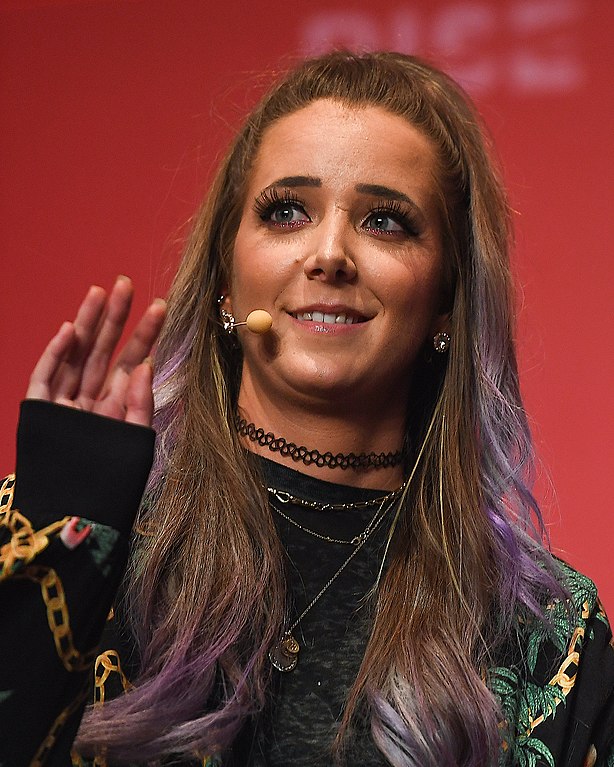
Introduction
Jenna Marbles — the pseudonym of Jenna Nicole Mourey — was one of YouTube’s earliest breakout stars, at her peak drawing over 20 million subscribers and more than a billion lifetime views. On June 25, 2020, she uploaded an 11-minute apology video titled “A Message” addressing past videos that involved blackface, anti-Asian jokes, and slut-shaming content, and announced she would “move on” from her channel. Unlike many in the 2020 wave of influencer apologies, she was not removed by a platform or sponsor — she removed herself, and has not posted online since.
Background Information
Mourey was born September 15, 1986, in Rochester, New York, and attended Brighton High School before moving to Boston, where she played softball while earning a psychology degree from Suffolk University and a master’s in education from Boston University. In 2010 she was living in Cambridge, Massachusetts, supporting herself with bartending, tanning-salon work, vlogging, and go-go dancing, and writing for Barstool Sports’ StoolLaLa until 2011.
Her YouTube channel launched in 2010. Her comedy video “How to Trick People into Thinking You’re Good Looking” gained around 5.3 million views in its first week — an enormous audience for the era — and has since surpassed 73 million views. Other early hits such as “Drunk Makeup Tutorial” and “I Hate Being A Grown Up” followed, and in August 2011 her “How to Avoid Talking to People You Don’t Want to Talk To” was featured by both The New York Times and ABC News. The pseudonym stems from her dog, Mr. Marbles: her mother, then unemployed and worried the viral content might put off employers, had objected that searching her real name returned only her videos.
Beyond YouTube, she appeared in an Epic Rap Battles of History episode, Smosh: The Movie, and Pitbull’s “Fireball” music video, and in 2015 she became one of the first YouTube personalities honored with a wax figure at Madame Tussauds New York. At her departure she had roughly 20.2 million YouTube subscribers.
The Controversy or Incident That Led to Their Cancellation
Fans had been asking her to address problematic early videos, and she had already set some to private. On June 25, 2020, she released “A Message,” an 11-minute apology covering three categories of past work:
-
The 2011 Nicki Minaj impersonation — a video widely described as blackface. “It was not my intention to do blackface,” she said. “All that matters is that people were offended and it hurt them, and for that I am so unbelievably sorry. This isn’t OK.” Vulture noted she maintained it was not blackface but accepted the fault anyway.
-
A 2011 video with anti-Asian slurs — in it, she rapped anti-Asian slurs while wearing a traditional Asian sedge hat, following them with the line, “Sorry, that was racist. I’m bad at rap songs.” In her 2020 apology she called the video “awful, it doesn’t need to exist. It’s inexcusable, it’s not OK.”
-
A 2012 video she called “slut-shamey” — “I had a lot of internalized misogyny, I feel like, at that time in my life,” she said. “It does not reflect my attitude towards anyone and their bodies.” She said no one had even demanded an apology for that video, but she felt responsible for anything she had made that could hurt someone, and that being called “unproblematic” had always made her uncomfortable because she knew it was not always true.
She closed the video by announcing her departure: “I think I’m just going to move on from this channel for now. I don’t know if that’s forever, I don’t know how long that’s gonna be. I just want to make sure that the things I put into the world are not hurting anyone.” Per Wikipedia, she said it was never her intent to hurt or offend anyone, called the actions “shameful” and “awful,” and wished “it wasn’t part of [her] past” before announcing an indefinite hiatus. Her then-boyfriend, Julien Solomita, followed by suspending their joint podcast, Twitch streams, and his own channel.
Public Reaction and Consequences
Reaction was overwhelmingly positive — an unusual outcome among 2020’s influencer apologies. In its year-end recap, Vulture concluded: “Jenna Marbles canceled herself.” The creator “received overwhelming praise, is credited with one of the only good YouTuber apologies, but has not posted anywhere online since this video.” The Berkeley Beacon likewise observed that Marbles “was not the first to use the term ‘accountability’ in a YouTube apology, but she may have been the first one to actually mean it.”
The consequences were immediate and self-imposed: a decade of near-weekly uploads simply stopped, her social media went dark, and her partner’s joint ventures went with her — none of it driven by a platform ban, a sponsor exodus, or a network firing.
Current Status
Her channel was never deleted. As of July 2026 it still lists 19.4 million subscribers and 1.88 billion total views, with Wikipedia describing her as on indefinite hiatus since 2020. Her catalogue remains watchable — “How to Trick People into Thinking You’re Good Looking” passed 73 million views by April 2026 — but she has not posted anywhere online since the June 2020 video.
Her personal life continued off-camera: she became engaged to Solomita in April 2021, married him in November 2022, and a fan photo published in July 2022 was described as the first image of her since leaving YouTube. In January 2023, an intruder broke into their home and was subdued with pepper spray and arrested.
Impact on Their Career/Life
Marbles’ exit stands as one of the clearest cases of self-removal in the cancellation era. At the peak of a career that included a Madame Tussauds wax figure, a 2014 Streamy Award, and one of the largest audiences on the platform, she walked away on her own terms and never returned. Her apology is remembered as a rare model of accountability — a creator who, in Vulture’s words, “canceled herself” rather than waiting to be canceled, and who has been credited with “one of the only good YouTuber apologies.”
The episode ended a decade-long run as one of YouTube’s most popular creators, but unfolded without the usual machinery of cancellation — no lost sponsorships, no platform action, no public pile-on. Her later milestones — engagement, marriage, and a frightening home-invasion incident — all unfolded outside the public eye, a striking contrast to her near-weekly self-documentation. Her channel remains an intact archive of the work that made her famous, and her departure is still cited as one of the only exits handled with what critics called genuine accountability.