Tamar Shirinian
Introduction
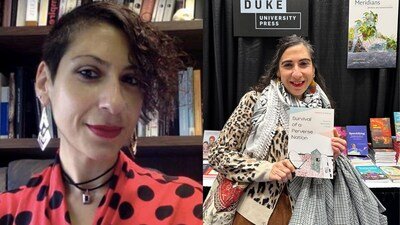
Tamar Shirinian is a cultural anthropologist who was an assistant professor at the University of Tennessee, Knoxville, until she was fired over a private Facebook comment she posted about the murder of conservative activist Charlie Kirk. Shirinian wrote the comment on September 12, 2025, two days after Kirk was assassinated, in a private Facebook group; a screenshot was soon shared publicly by conservative social media activist Robby Starbuck, who urged his followers to press the university to fire her. What followed was a swift institutional response — an investigation announced by UT System President Randy Boyd, a suspension and termination process launched by Chancellor Donde Plowman citing “gross misconduct,” and a federal lawsuit filed by Shirinian alleging political pressure from U.S. Rep. Tim Burchett and an anonymous donor. The saga ended more than a year later with a $1.9 million settlement between Shirinian and the UT System, which Knox News reported was one of the largest free-speech lawsuit settlements in the country stemming from comments made about Kirk after his September 2025 assassination — an outcome Shirinian herself called “not actual justice.”
Background Information
Shirinian was an assistant professor of cultural anthropology at UT Knoxville whose scholarly work includes gender-related topics. In her appeal letter to Plowman, she described herself as a member of the LGBTQ+ community, noted her Armenian heritage and her birth in Lebanon, and called herself “a descendant of genocide survivors” who had spent nearly two years absorbing posts and reports about the genocide in Gaza. Kirk himself had visited the UT campus: according to her letter, a student told him that one of her classes included scholarship on gender choice and spectrum — two topics Shirinian studies — and Kirk responded that the university should be defunded and should fire liberal professors. “Mr. Kirk was targeting me and my livelihood,” she wrote.
The Controversy or Incident That Led to Their Cancellation
The episode began on September 12, 2025, when Shirinian posted a comment on a friend’s Facebook post in a private group about Kirk’s murder. Sources describe the comment as crass and insensitive; she deleted it, and in her appeal letter she called it “ineloquent and heartless,” writing that it was “insensitive and, I assure you, uncharacteristic of me as a person, a mother, a friend, and someone who advocates for social justice and respect for all. And, for that, I apologize.” On September 14, Starbuck shared the comment and told his followers to urge the university and Boyd to fire her. Boyd announced an investigation on September 15, and the university suspended Shirinian that same day; Plowman sent a second letter on September 16 detailing the termination process and citing her for “gross misconduct.”
Shirinian responded on September 22 with a letter appealing the move to fire her. She explained that she had written “out of anger and grief” without considering that her words might reach a national audience, and pointed out that she did not “endorse, incite or suggest that anyone should resort to violence.” “While I despise his bigoted, often hateful rhetoric, Mr. Kirk did not deserve to be killed for his words. No one does,” she wrote, adding that as a cultural anthropologist who has read extensively on political violence, she knows it “does not solve social problems but always makes the situation far worse.” She asked Plowman to reconsider, saying that if she were fired she would appeal and consider suing.
Public Reaction and Consequences
After Starbuck shared the screenshot, droves of people directed comments at Shirinian filled with slurs and threats, and Plowman publicly announced the suspension and termination proceedings. Shirinian’s appeal also questioned the university’s consistency, asking why she was being punished when law professor Glenn Reynolds had faced no discipline for posting in 2016 about running down protestors — which she viewed as “an order to commit violence”; Plowman declined to comment on the previous administration’s decision not to discipline Reynolds. When the university did not reverse course, Shirinian sued it in federal court the following month, alleging political pressure from Burchett and an anonymous donor who threatened to withhold millions of dollars in contributions unless she was fired. During her legal fight, state lawmakers approved a law stripping tenure protections from professors and expanding university leaders’ power to fire faculty — a measure Shirinian called “a really terrifying law.”
Current Status
The dispute is resolved, at a price. Plowman finalized the firing in February 2026, and a settlement approved in June 2026 ended Shirinian’s federal lawsuit against the university with a $1.9 million payment from the UT System; the settlement also bars her from returning to UT. Knox News reported the payout on August 31, 2026, noting it represents one of the largest free-speech lawsuit settlements in the country stemming from comments made about Kirk after his assassination. Shirinian told Knox News the payout is “not actual justice.” “It can’t be justice because they robbed me of a year of my professional life,” she said, adding that the university “robbed me of a year of feeling just secure and stable in my family life.” “The settlement allows me to move on with my life, but it is not actual justice. And there can’t be,” she said, expressing hope that it is “large enough that it dissuades them away from ever doing this to anybody ever again.”
Impact on Their Career/Life
The firing cost Shirinian her professorship and, by her account, a year of professional and family stability, and she said the controversy and fallout have had a chilling effect on her speech and that of other academics. Because the new state law weakened tenure protections, she doubted she could have remained at UT even if the settlement had allowed a return, believing administrators would have used it to force her out again. She now encourages employees at the Knoxville campus and other universities not to let “powerful figures, state actors, billionaires” restrict their rights. “Speech actually can be dangerous, and it’s most dangerous to those in power,” she said, urging that “we need to take that risk and we need to fight for that right.” Her next projects include an edited volume on social reproduction due out in January, a volume on political solidarity with a colleague, and a monograph on feminism. “I have plans. I will be in Knoxville some of the time,” she said. “I eventually will return to the classroom.”