Lynn Mahoney
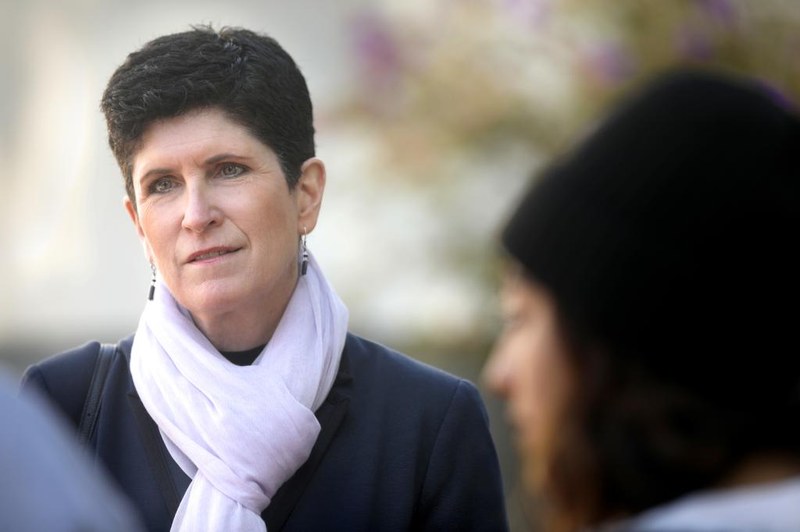
Introduction
Lynn Mahoney, the 14th president of San Francisco State University and the first woman to hold the job permanently, announced on September 8, 2026 that she will step down at the end of the academic year, departing next summer after eight years leading one of California’s largest public campuses. The announcement, reported nationally by the New York Post under the headline “Embattled NorCal university president heads for exit as students vanish,” closes a tenure defined by a bruising enrollment collapse — roughly a third of the student body gone since 2019 — hundreds of canceled courses and programs, and a divided faculty that increasingly pinned the campus’s contraction on her leadership.
Background Information
Mahoney, born in 1964, earned her bachelor’s degree in American studies at Stanford University in 1986 and a Ph.D. in history from Rutgers University in 1999, establishing herself as a social historian of the United States with scholarship focused on women’s history, race and ethnicity; her books include a study of nineteenth-century author Elizabeth Stoddard. Before San Francisco State, she held faculty and administrative posts at SUNY Purchase, Cal State Long Beach (2008–2015) and Cal State Los Angeles, where she served as provost and vice president for academic affairs from 2015 until 2019. She was appointed SF State’s president in May 2019, took office that July as the campus’s first woman president, and is married to history professor Charles Ponce de Leon.
The Controversy or Incident That Led to Their Cancellation
Contested tenure. The criticisms recounted in this section are opinions and characterizations from faculty members and commentators, not findings by any court or regulator, and nothing here alleges personal wrongdoing by Mahoney. Her defenders — including the CSU chancellor and the chair of the campus Academic Senate — credit her with guiding the university through genuinely dire conditions. Mahoney has not been accused of, charged with, or adjudicated for any crime.
The central grievance is arithmetic. When Mahoney arrived in 2019, San Francisco State enrolled roughly 30,000 students; this fall it counts just 20,563 — a loss of about a third of the campus in seven years. Under her tenure the university eliminated nearly 600 courses and more than 2,000 class sections, along with bachelor’s degree programs in German, Italian, and comparative and world literature, while roughly 200 part-time lecturers and 86 tenure-track faculty positions disappeared over the past decade.
The sharpest institutional critic has been Michael Bar, chair of SF State’s economics department, who sent an email titled “toxic environment and mismanagement at SF State” blaming Mahoney’s administration for treating lecturers as “highly expendable” and for canceling and consolidating classes with little or no warning, leaving students in confusion. “The savings from canceling a handful of lecturer sections are pennies relative to the university’s overall budget, but the damage to morale, trust, student experience, retention, and reputation can be substantial,” Bar told the San Francisco Chronicle.
Her tenure also produced repeated national flashpoints. In September 2020, the university became embroiled in the Leila Khaled controversy, when Zoom canceled a virtual campus event featuring the Palestinian activist, drawing national debate over academic freedom and leaving Mahoney fielding questions about her support for the Middle Eastern studies program. In April 2023, she publicly condemned a Turning Point USA event featuring Riley Gaines on campus, saying it harmed the LGBTQ campus community, after Gaines claimed she was assaulted twice following the event. The resignation announcement itself was framed by the Post as an “embattled” exit, though Mahoney attributed the decision to family — “supporting my growing family, especially my beautiful granddaughters, calls,” she said in her statement — while acknowledging a “profound but not easy” journey through the pandemic, the “enrollment cliff” and steep state funding declines.
Public Reaction and Consequences
The reaction split cleanly along the campus’s fault lines. CSU Chancellor Mildred García praised Mahoney’s “extraordinary service,” saying “student success measures have continued to climb under President Mahoney’s leadership, particularly the four-year graduation rate for first-time students,” and that “the future of San Francisco State is indeed bright.” Jackson Wilson, chair of the campus Academic Senate, called her “the leader San Francisco State University needed during the last eight years of challenges and growth” and an “inclusive administrator who has the courage to authentically engage in difficult conversations.” On the other side, critics like Bar pointed to the enrollment exodus and the gutted course catalog as the defining judgment of her presidency, and the New York Post framed the departure as an embattled president fleeing the wreckage of vanishing students. The university and the CSU system said a national search for her successor will begin while she serves out her final year.
Current Status
Mahoney remains president of San Francisco State University and will serve through the end of the academic year before stepping down in summer 2027, with the CSU Board of Trustees conducting a national search for her replacement in the meantime. In her final year she says she will focus on creating stronger pathways to internships and careers, increasing philanthropic support — her tenure raised nearly $176 million — and continuing to reshape academic programs. There are signs the tide may be turning without her: this fall, first-time freshman enrollment rose 18% (roughly 400 more new freshmen than last fall) and transfers climbed 23%, gains campus officials credit to intense statewide marketing and San Francisco Mayor Daniel Lurie’s city-rebound promotion, though total enrollment remains far below 2019 levels.
Impact on Their Career/Life
After eight years as president and 18 years in the California State University system, Mahoney exits a $520,000-per-year post that the Post summed up with brutal economy: students vanished, and the president followed. Her legacy will be argued in two registers — the administrator who kept a struggling urban university standing through a pandemic, demographic decline and budget cuts, opening the Science and Engineering Innovation Center, Marcus Hall and two new residence halls; or the president under whom a third of the student body, hundreds of courses and dozens of degree programs walked away. For a career academic who broke the glass ceiling as SF State’s first woman president, the departure closes the highest-profile chapter of a career spent in California public higher education, and makes her a case study in the enrollment-cliff era now squeezing campuses nationwide — a squeeze the Western Interstate Commission for Higher Education predicts will cut high-school-graduate college enrollment another 13% over the next 15 years.