Alex Mashinsky
Introduction
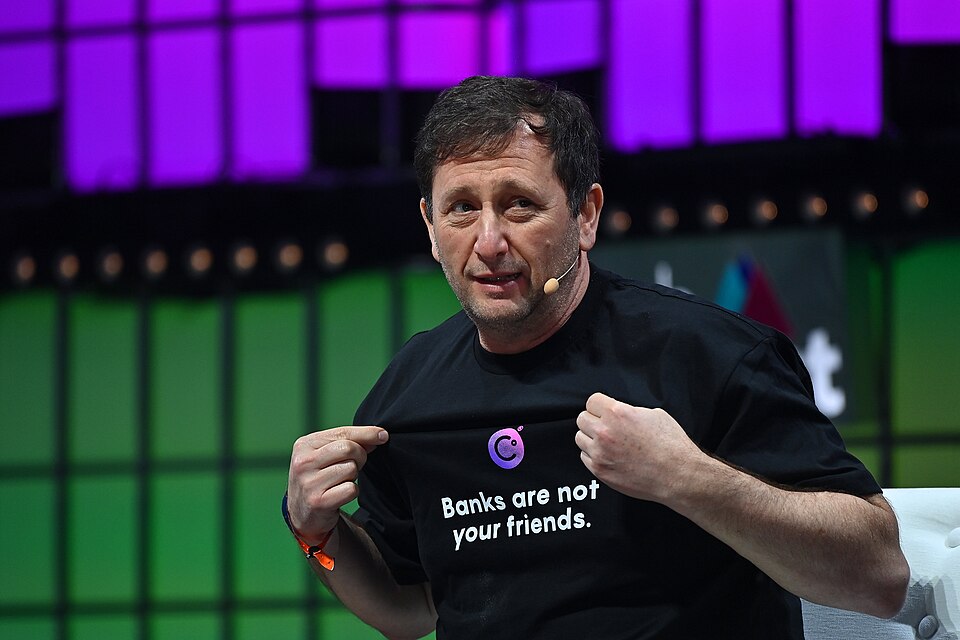
Alex Mashinsky, the founder and former CEO of Celsius Network, was once one of the most recognizable figures in cryptocurrency — a self-styled crusader against traditional finance who wore T-shirts reading “Banks are not your friends.” His empire unraveled in 2022 when Celsius froze customer withdrawals and filed for bankruptcy. In July 2023, Mashinsky was arrested on federal fraud charges alleging he misled customers and manipulated the price of Celsius’s proprietary token. He pleaded guilty in December 2024 and was sentenced to 12 years in prison in May 2025 — a spectacular fall.
Background Information
Alexander Mashinsky was born in October 1965 in the Soviet Union to a Jewish family that later moved to Israel, and he served in the Israeli Army from 1984 to 1987. After moving to the United States in 1988, he became a serial entrepreneur: he founded VoiceSmart in the early 1990s, one of the first firms to offer Voice over IP phone service; Arbinet, a marketplace for VoIP telephone service, in 1996; and later GroundLink, a limousine-booking service, and Q-Wireless, part of the venture that brought cell service and Wi-Fi to New York’s subway. The Wall Street Journal described him in 2022 as “a brash, confident serial entrepreneur with a constant stream of big ideas.”
Mashinsky founded Celsius Network in 2017, a borrowing and lending platform for digital assets such as Bitcoin and Ethereum that promised to “unbank” customers and offered interest rates as high as 18.6% on cryptocurrency deposits. As CEO, he hosted “Ask Mashinsky Anything,” a weekly YouTube livestream, and was known for publicity stunts such as attempting to vandalize a Chase Bank branch.
The Controversy or Incident That Led to Their Cancellation
Celsius grew rapidly: by the fall of 2021 it was one of the largest crypto platforms in the world, purportedly holding approximately $25 billion in assets. But prosecutors alleged he pitched Celsius to customers as “a modern-day bank where they could safely deposit crypto assets and earn interest” while operating it like a risky investment fund that took in customer money under false and misleading pretenses. Employees who noticed false and misleading statements in his weekly sessions warned him but were ignored, the indictment said, and his portrayal of Celsius as safe and secure drew in retail investors in large numbers.
The collapse came in 2022, when Mashinsky took control of Celsius’s trading strategy, personally directing large trades and overruling executives, insiders said. In May he withdrew $10 million from Celsius as customers fled; a spokesperson said the funds went to tax payments and estate planning. Celsius paused withdrawals in June, filed for Chapter 11 bankruptcy on July 13, 2022, and Mashinsky resigned as CEO that September. A court-appointed examiner’s report filed in January 2023 documented alleged “blatant fraud”: it said he claimed the CEL token was “registered” with the SEC when it was not and profited from selling CEL tokens whose value Celsius pumped at his direction.
On January 5, 2023, New York Attorney General Letitia James sued Mashinsky, saying he misled hundreds of thousands of investors. On July 13, 2023 — the same day Celsius agreed to a $4.7 billion settlement with the Federal Trade Commission — Mashinsky was arrested and charged with securities, commodities and wire fraud, and with illegally manipulating the price of Celsius’s proprietary token while secretly selling his own tokens at inflated prices. He pleaded not guilty and was freed on a $40 million bond; his attorney said he “vehemently denies the allegations brought today.”
Public Reaction and Consequences
The Securities and Exchange Commission sued Mashinsky and Celsius the same day, saying they misled investors through unregistered and often fraudulent offers and sales of crypto asset securities. U.S. Attorney Damian Williams said the arrest was proof his office would hold accountable those who cheat ordinary investors: “Whether it’s old-school fraud or some new-school crypto scheme, it doesn’t matter one bit. It’s all fraud to us. And we’ll be here to catch it.”
Mashinsky fought the charges for more than a year. On December 3, 2024, before U.S. District Judge John Koeltl, he pleaded guilty to two of the seven counts he was originally charged with: commodities fraud, and a fraudulent scheme to manipulate the price of CEL, Celsius’s in-house token. He admitted to giving customers “false comfort” by saying in a 2021 interview that Celsius had received regulatory approval for its “Earn” program, which it had not, and to failing to disclose that he had been selling his own CEL holdings. “I know what I did was wrong, and I want to try to do whatever I can to make it right,” he said. As part of the plea deal, he agreed to forfeit $48 million and not to appeal any sentence of 30 years or less.
Many customers were initially unable to access their funds, and prosecutors said Mashinsky personally reaped approximately $42 million from CEL sales. “Mashinsky made tens of millions of dollars selling his own CEL at artificially high prices, while his customers were left holding the bag when the company went bankrupt,” Williams said. Celsius’s former chief revenue officer also pleaded guilty and agreed to cooperate, part of a wave of crypto moguls charged after the 2022 slump that included FTX founder Sam Bankman-Fried, sentenced to 25 years.
Current Status
On May 8, 2025, Mashinsky was sentenced to 12 years in federal prison on top of the $48 million forfeiture, and he is now incarcerated at FCI Fort Dix in New Jersey. Celsius has exited bankruptcy and pivoted to Bitcoin mining. As of late August 2026, Mashinsky remains in federal custody.
Impact on Their Career/Life
The fall was total. Mashinsky went from a celebrated figurehead of the crypto lending boom — a CEO who courted retail investors on weekly livestreams — to a convicted fraudster serving a 12-year federal sentence. Celsius is now run by others as a Bitcoin miner, and his finances were marked by the $48 million forfeiture and the roughly $44 million in CEL sales that Arkham Intelligence estimates. He once lived in New York City with his wife and six children; he is now separated from them.
His case became a cautionary symbol of the crypto industry’s excesses. Alongside other executives charged after the 2022 crash, Mashinsky’s arrest, guilty plea and 12-year sentence — capped by his own admission that he had given customers “false comfort” — showed how quickly crypto’s promises of high yields could curdle into fraud, and how completely a celebrated founder could fall once customers’ savings were gone.