Brock Turner
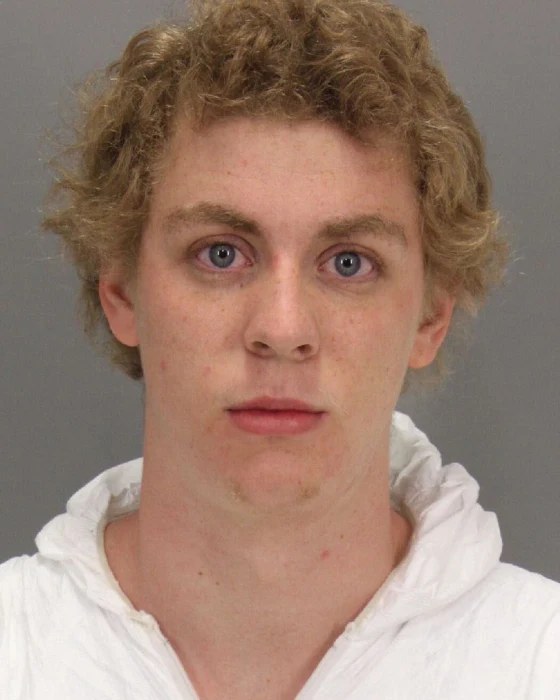
Introduction
Brock Turner, a former Stanford University swimmer, was convicted in 2016 of sexually assaulting an unconscious woman behind a dumpster on the campus in January 2015. He was sentenced to six months in county jail — prosecutors had asked for six years in state prison — and the sentence, together with his father’s complaint that it was “a steep price to pay for 20 minutes of action out of his 20 plus years of life,” made him the most notorious figure of that decade’s reckoning over campus sexual assault. The judge who imposed it, Aaron Persky, became the first California judge recalled from office since 1932. Turner served three months, is a registered sex offender for life, and was banned for life by USA Swimming, ending his competitive career.
Background Information
Turner was born on August 1, 1995, in Dayton, Ohio, and graduated from Oakwood High School in 2014. He enrolled at Stanford on a swimming scholarship and was a 19-year-old freshman sprinter at the time of his arrest. The woman he assaulted was 22 and a graduate of a different college. Known during the trial and for three years afterward only as “Emily Doe”, she identified herself as Chanel Miller in September 2019, ahead of her memoir Know My Name.
The Controversy or Incident That Led to Their Cancellation
Adjudicated vs. alleged. Turner’s convictions on three felony counts of sexual assault were affirmed by the California Court of Appeal in 2018 and are a matter of court record. Two of the five counts he was indicted on — rape of an intoxicated person and rape of an unconscious person — were withdrawn by the prosecution, and that conduct was never adjudicated.
Shortly after 1 a.m. on January 18, 2015, two Swedish graduate students, Peter Lars Jonsson and Carl-Fredrik Arndt, were cycling across the Stanford campus when they came upon Turner on top of an unconscious woman behind a dumpster. They intervened, chased him when he ran, and held him until police arrived. Turner was arrested and released the same day after posting $150,000 bail, and Stanford announced two days later that he had been banned from campus. He withdrew rather than face disciplinary proceedings, and in June 2016 Stanford said its investigation had barred him from campus permanently.
He was indicted on January 28, 2015, on five charges, including rape of an intoxicated person, rape of an unconscious person, and assault with intent to commit rape, and pleaded not guilty the following week. A jury trial ran from March 14 to March 30, 2016, and ended with guilty verdicts on three felony counts: sexual penetration of an unconscious person, sexual penetration of an intoxicated person, and assault with intent to commit rape. Prosecutors urged a six-year state prison term, arguing in a sentencing memo that his conduct the night of the assault was “more akin to a predator who is searching for prey.”
On June 2, 2016, Santa Clara County Superior Court Judge Aaron Persky sentenced Turner to six months in the county jail followed by three years of probation and lifetime sex-offender registration. Persky said he had weighed Turner’s age and lack of criminal history: “A prison sentence would have a severe impact on him. I think he will not be a danger to others.” Ten days later, USA Swimming reiterated that Turner had been banned for life under its zero-tolerance policy for sexual misconduct — a ban that made him ineligible for sanctioned meets in the United States, including the Olympic trials, and effectively ended his competitive swimming career.
Public Reaction and Consequences
The sentence detonated. Within a week, more than 191,000 people had signed a Change.org petition demanding Persky’s removal, and prosecutors and commentators alike called the punishment a travesty. The case’s most durable artifact was Miller’s victim impact statement, read in court and published by BuzzFeed: shared more than 11 million times in four days, read aloud at length on CNN, and entered into the Congressional Record. A letter Turner’s father sent to the court, calling jail “a steep price to pay for 20 minutes of action,” drew its own fury; Santa Clara County District Attorney Jeff Rosen said it reduced a brutal assault to “20 minutes of action.” Petitions to remove Persky passed a million signatures by June 10.
Turner was released from the Santa Clara County Main Jail on September 2, 2016, after serving three months — half his sentence, credited for good behavior — saying he intended to return to Ohio to live with his parents. California law changed around him: in 2016 the legislature passed and Governor Jerry Brown signed AB 2888, which bars probation and sets a mandatory three-year prison minimum for sexually assaulting an unconscious victim, citing the Turner case; the ACLU and the California Public Defenders Association opposed it. Turner appealed his conviction in December 2017, arguing among other things that his conduct was outercourse rather than intercourse; the Court of Appeal heard argument in June 2018 and affirmed the conviction and sentence on August 8, 2018. On June 5, 2018, Santa Clara County voters recalled Persky by 61.51 percent — the first judicial recall in California since 1932.
Current Status
Turner is a registered sex offender for the rest of his life and served three years of supervised probation following his release. He returned to the Dayton area, where the sheriff’s office said he would be treated “no differently than any other sex offender we monitor.” He has no professional or athletic profile: the lifetime ban closed off his sport, and he has not been the subject of significant reporting since his appeal failed in 2018 except as a reference point in coverage of other sexual-assault cases. In September 2026 he was still being invoked by name in viral posts about sexual assault, including one with more than half a million views asking for “a shout out to Brock Turner.”
Impact on Their Career/Life
Turner’s swimming career ended permanently with the USA Swimming ban — sanctioned competition in the United States is open only to members of the governing body, which closed off collegiate, national, and Olympic-track meets. His time at Stanford ended in withdrawal and a permanent campus ban, and he left the county jail with three felony convictions, a lifetime registration requirement, and probation conditions including an offender-management program and no alcohol. The judge who gave him his lenient sentence lost his job over it, California rewrote its sentencing law, and the case — widely referred to by his name — became the standard example cited whenever a sexual-assault sentence is called too light.
Sources
- *Wikipedia, “People v. Turner” — source
- *CNN, “Outrage over 6-month sentence for Brock Turner in Stanford rape case,” 6 June 2016 — source
- *Palo Alto Online, “Brock Turner sentenced to six months in county jail, three-year probation,” 2 June 2016 — source
- *CNN, “USA Swimming bans Brock Turner for life,” 10 June 2016 — source
- *BBC News, “Brock Turner: Stanford sex attack swimmer freed from jail,” 2 September 2016 — source
- *Wikipedia, “Aaron Persky” — source
- *NPR, “Voters Recall Aaron Persky, Judge Who Sentenced Brock Turner,” 5 June 2018 — source
- *Syracuse Law Review, “California Passes Bill to Protect Sexual Assault Victims,” 11 October 2016 — source
- *BBC News, “Stanford sexual assault: Chanel Miller reveals her identity,” 4 September 2019 — source
- *X, @mobinfiltrator, 28 September 2026 — source