Gianni Infantino
Introduction
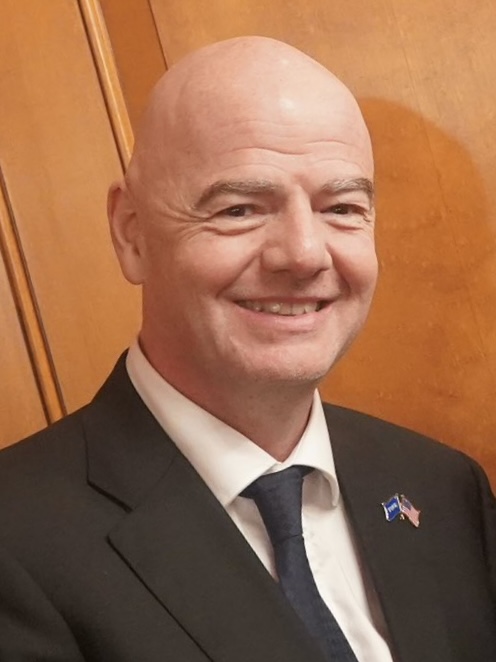
Gianni Infantino, president of FIFA since 2016, is facing the sharpest scrutiny of his decade running world soccer after a New York Times investigation, published November 2, 2026, reported that FIFA has been quietly paying his personal United States tax bill — a benefit expected to total about $4 million that was never disclosed in FIFA’s filings . The New York Post carried the report the same day, days before the one-year mark of a separate World Cup sell-off scandal that FIFA’s own membership forced him to abandon . The tax arrangement was approved by a three-person compensation committee that included a longtime friend of Infantino’s, and it surfaced months before he stands for re-election in March .
Background Information
Infantino, a Swiss-Italian lawyer, took charge of FIFA in 2016 in the aftermath of the corruption scandal in which the US Justice Department charged more than 40 soccer officials, and he rose on a platform of the transparency reforms FIFA adopted in response — including a bylaw requiring that the compensation of top leadership be made public . He recently marked ten years as president and earns about $6 million per year according to FIFA’s annual report . He relocated from Switzerland to Miami in 2023 ahead of the 2026 World Cup — the move that set up the tax arrangement now under scrutiny . His benefits package also includes housing in any location where FIFA maintains an office and the use of a private jet provided by sponsor Qatar Airways .
The Controversy or Incident That Led to Their Cancellation
Allegations. The claims in this section are findings from a New York Times investigation based on documents and interviews, corroborated by the New York Post and Insideworldfootball. They were never admitted by Infantino, never criminally charged, and never adjudicated in court. Infantino has not personally responded to the tax report; FIFA says all of its internal regulations and processes, and all applicable laws, were followed and that its reporting and taxation requirements are met.
At a winding-down meeting of the three-person committee that sets FIFA’s most senior salaries, held in Bangkok in May 2024, committee chair Bruno Chiomento — FIFA’s chief of governance, compliance and audit, and a Swiss accountant who has known Infantino for roughly 20 years — raised the fact that Infantino’s move from Switzerland to Miami exposed him to higher US income taxes. Chiomento argued FIFA should offset that extra burden through 2026, noting it was already covering additional taxes for about a dozen staff members relocating for the World Cup. The other two members agreed without much discussion, according to documents reviewed by the Times, and FIFA ultimately paid 100 percent of Infantino’s US tax bill — a sum expected to reach about $4 million by the end of his three-year American assignment . The New York Post noted the funds were paid without public disclosure despite FIFA’s promises of transparency .
The decision’s provenance drew the conflict-of-interest questions. Chiomento sought advice from outside experts including David Zollinger, Infantino’s personal lawyer, and FIFA’s own administrative staff raised concerns about hiring a lawyer whose client was the president, according to the Times reporting . UEFA itself has formally questioned Chiomento’s independence: in a letter to FIFA’s general secretary, the European body noted his roughly 20-year relationship with Infantino, that he attended the entire 2026 World Cup at FIFA’s expense, and it asked FIFA to consider his recusal and replacement as chair of the electoral committee for the duration of the presidential election .
The tax benefit sits inside what the reporting describes as a broader pattern of personal benefit on FIFA’s account. FIFA pays roughly $600,000 a year to rent Infantino’s Miami home on top of an apartment in Switzerland and a rental in Paris; after moving to Miami he lived for more than two years in a $27 million waterfront mansion owned by former Google CEO Eric Schmidt — a spokesperson confirmed he paid market rates — and has since moved into an apartment that an ownership-opaque Delaware company bought from singer Marc Anthony for $8.6 million . Before the World Cup, Infantino unilaterally replaced FIFA-assigned drivers with GRIZ Global Solutions, a security firm billing itself as providing “tier one” service, and had the same level of service extended to his wife for June and July at a rate of $1,300 per agent per day; Chiomento approved the additional agreement within hours, and FIFA spent hundreds of thousands of dollars with the firm . Chiomento’s own committee salary was changed from $250,000 to 250,000 Swiss francs, worth about $50,000 more at exchange rates, while every other committee head’s salary stayed in dollars .
The institutional rules themselves moved in Infantino’s favor during his tenure. Statute revisions drafted in 2024 with help from Zollinger and Gianni Rizzello — a lawyer not on FIFA’s staff who studied law alongside Infantino — formally increased the president’s powers, reversing curtailments put in place under the reforms Infantino had once championed. A compensation and benefits policy approved just before the World Cup eased restrictions on gifts, loosened VIP-invitation rules, expanded discretion over private-jet use, and for the first time arranged fixed FIFA payments to the leaders of advisory committees whose members can vote in the presidential election — a change some administrative staff worried created the appearance of currying favor with electors .
The tax report also lands on an existing record. In July 2026, news emerged that Infantino had secretly held talks to sell a share of World Cup rights to a company owned by the brother of Jared Kushner; the earlier sell-off plan, valued by the Post at $4.2 billion, was scrapped after a global outcry from soccer officials, with Infantino promising an independent audit of how FIFA functions . He had previously come under fire for undoing a World Cup red card against US star Folarin Balogun following a phone call with President Trump, according to the Post . The Times reporting also cites his courtship of President Trump and efforts to steer the World Cup toward Saudi Arabia as part of the same pattern of controversy .
Public Reaction and Consequences
The reaction inside FIFA has been consternation rather than consequence so far: several senior officials questioned both the calculation that Infantino should contribute nothing toward his American tax bill and the message it sent about the privileges of the organization’s most senior figures, and at least one official internally questioned the necessity of the security detail provided for Infantino’s wife . The July sell-off revelation produced a global outcry, with governments and global soccer officials publicly calling into question his suitability to continue running the 122-year-old institution . UEFA’s letter formally challenging the independence of the official who approved his tax benefit — and asking for that official’s recusal from the election process — is the most concrete institutional response to date . Takeshi Okada, a two-time World Cup coach, resigned as vice president of the Japanese soccer federation in protest at the politics surrounding FIFA during Infantino’s re-election campaign .
Current Status
FIFA’s response to the tax report has been a denial of wrongdoing rather than a reversal: “All FIFA’s internal regulations and processes, and all applicable laws, have been followed,” the organization told the Times, adding that it “ensures all reporting and taxation requirements are met” and that payments to senior management are independently audited . FIFA declined to explain why figures connected to Infantino personally advised on his tax affairs; Chiomento did not respond to multiple requests for comment, Zollinger declined citing attorney-client privilege, and Rizzello declined citing client confidentiality . The Post reported it sought comment from FIFA, Infantino and Chiomento . No criminal charge, regulatory investigation, suspension or FIFA disciplinary proceeding has been announced against Infantino; the findings rest on documents reviewed by the Times and unnamed officials authorized to discuss internal matters only anonymously. He remains FIFA president and is standing for re-election in March .
Impact on Their Career/Life
The Times frames the undisclosed tax benefit as part of Infantino’s “biggest crisis” — a striking position for a leader who came to power on the transparency reforms adopted after the 2015 corruption scandal and whose own bylaw requires top-leadership compensation to be public . With the vote months away, the reporting hands his critics a concrete grievance — multi-million-dollar personal benefits approved by a friend and kept out of the filings — at the same moment as the UEFA challenge to the independence of his election overseer, and it converts his re-election from a coronation into a referendum on whether the transparency era he inherited survived his tenure .
Sources
- The New York Times, “FIFA Quietly Paid Millions in Gianni Infantino’s Taxes,” November 2, 2026 source
- New York Post, “FIFA paying millions of embattled boss Gianni Infantino’s US tax bill: report,” November 2, 2026 source
- The Philadelphia Inquirer (syndicated from The New York Times), “FIFA quietly paid millions in taxes for its president,” November 2, 2026 source
- Insideworldfootball, “FIFA paid $4m of Infantino’s tax bill in the US but failed to disclose the sum to its members,” November 2, 2026 source