Alexi McCammond
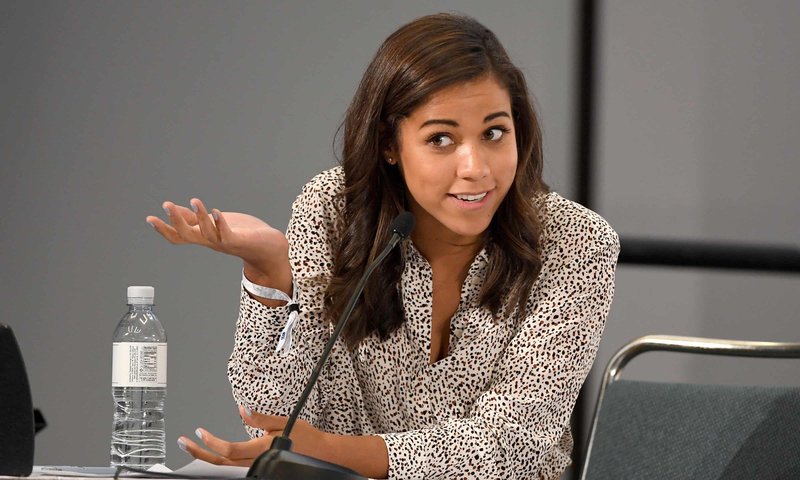
Introduction
Alexi McCammond, an American political journalist who rose to prominence covering the 2020 presidential campaign for Axios, was appointed editor-in-chief of Teen Vogue in March 2021 — and resigned before ever starting the job. On March 18, 2021, Condé Nast announced it had parted ways with the 27-year-old after anti-Asian and homophobic tweets she had posted around 2011 resurfaced earlier that month. She was due to begin at the magazine the following week.
Background Information
McCammond was born in 1993 in Rockford, Illinois, and is biracial, the daughter of an African American father and a white mother. She attended Guilford High School in Rockford and then the University of Chicago on a full four-year QuestBridge scholarship, graduating in 2015 with a B.A. in sociology and Spanish language and literature. She began her career as a freelance political writer for Cosmopolitan and later became a news editor at Bustle, then joined the political website Axios in 2017. At Axios she covered the 2020 campaign, reporting on Michael Bloomberg’s withdrawal from the Democratic primary in March 2020 and on leaked presidential schedules revealing that 60% of Donald Trump’s days were devoted to “executive time” while he was president. She also worked as a contributor on NBC and MSNBC.
In 2019 she received the National Association of Black Journalists’ Emerging Journalist Award and in 2020 was named to Forbes’ 30 Under 30 list. That same year she accused former NBA star Charles Barkley of threatening her in an Atlanta bar, reporting that he told her “I don’t hit women, but if I did I would hit you” after a remark he made was challenged; Barkley later issued a public apology for what he called an “attempted joke that was not funny at all.” During the campaign she began a relationship with TJ Ducklo, a Biden campaign aide who later became deputy White House press secretary; she stepped off the Biden beat in November 2020 after the relationship began, and Ducklo resigned from the White House in February 2021 after threatening a reporter who inquired about their relationship.
The Controversy or Incident That Led to Their Cancellation
In March 2021, Condé Nast named McCammond editor-in-chief of Teen Vogue. After the appointment, a series of racist, bigoted and homophobic tweets she had posted roughly a decade earlier resurfaced. In the posts she had used anti-Asian and homophobic terms; she would later describe them, in an internal email, as “offensive, idiotic tweets from when I was a teenager that perpetuated harmful and racist stereotypes about Asian Americans.” The tweets had originally resurfaced in 2019, when she deleted them and apologized, saying the old posts did not reflect her current views.
The backlash built quickly. Twenty current members of the magazine’s editorial staff wrote a letter to Condé Nast questioning her appointment at a time when anti-Asian hate crime was on the rise; during the pandemic, 3,800 incidents of hate crime were reported. Several media makers of Asian descent called for her removal, citing racism against Asians in the U.S. fashion industry and a rise in anti-Asian violence during the COVID-19 pandemic, and former Teen Vogue editor Elaine Welteroth called the tweets and the feelings behind them “racist and abhorrent and indefensible.” Ulta Beauty paused $1 million in advertising in the online-only publication.
McCammond apologized publicly on March 10, 2021, saying that making Asian Americans feel more invisible was “the last thing I’d ever want” and that she was “sorry to have used such hurtful and inexcusable language.” She also apologized to the Teen Vogue staff directly.
Public Reaction and Consequences
On March 18, 2021, Condé Nast announced it had parted ways with McCammond. “After speaking with Alexi this morning, we agreed that it was best to part ways, so as to not overshadow the important work happening at Teen Vogue,” a company spokesperson wrote in an internal email, adding that her appointment “brought many difficult and important conversations to the forefront.” The company’s chief people officer, Stan Duncan, said McCammond “was straightforward and transparent about these posts during our interview process and through public apologies years ago.”
In a statement on Twitter, McCammond said her “past tweets have overshadowed the work I’ve done to highlight the people and issues that I care about.” “I should not have tweeted what I did and I have taken full responsibility for that,” she wrote. Axios co-founder Jim VandeHei replied that she “will always be a part of the Axios family,” while Diane Tsui, one of the first journalists to report on the tweets, wrote: “I’m glad we spoke up and I’m glad Alexi took full accountability for her actions.”
Current Status
McCammond’s departure from Teen Vogue did not end her journalism career. She rejoined Axios in July 2021 as a political reporter. In August 2023 she joined The Washington Post as an opinions editor. In July 2024 she faced criticism over an Instagram post about Ducklo, in which she called him “my toxic ex who works for the Biden campaign and has to play cleanup after that disastrous debate,” and soon after announced her departure from the Post.
Impact on Their Career/Life
The March 2021 episode cost McCammond the most senior job of her career before she had even begun it: she parted ways with Condé Nast amid staff objections by more than twenty members of the Teen Vogue editorial team, an advertiser pause, and a wave of public criticism over posts she had apologized for years earlier. Yet the fallout proved temporary: within four months she was reporting again at Axios, and two years later she moved to The Washington Post’s opinion section.
The controversy nonetheless remains a defining chapter in her public record. The resurfaced tweets — first apologized for in 2019, apologized for again in 2021, and ultimately costing her the editorship — continued to shadow her career, and her departure from The Washington Post in 2024 came days after fresh criticism of a social media post. Her case is frequently cited as an example of how quickly a rising young journalist’s appointment could be undone by decade-old social media posts, and of how staff objections, advertiser pressure and a publisher’s inclusion commitments could combine to force a resignation before the journalist’s first day on the job.