Paul George
Introduction
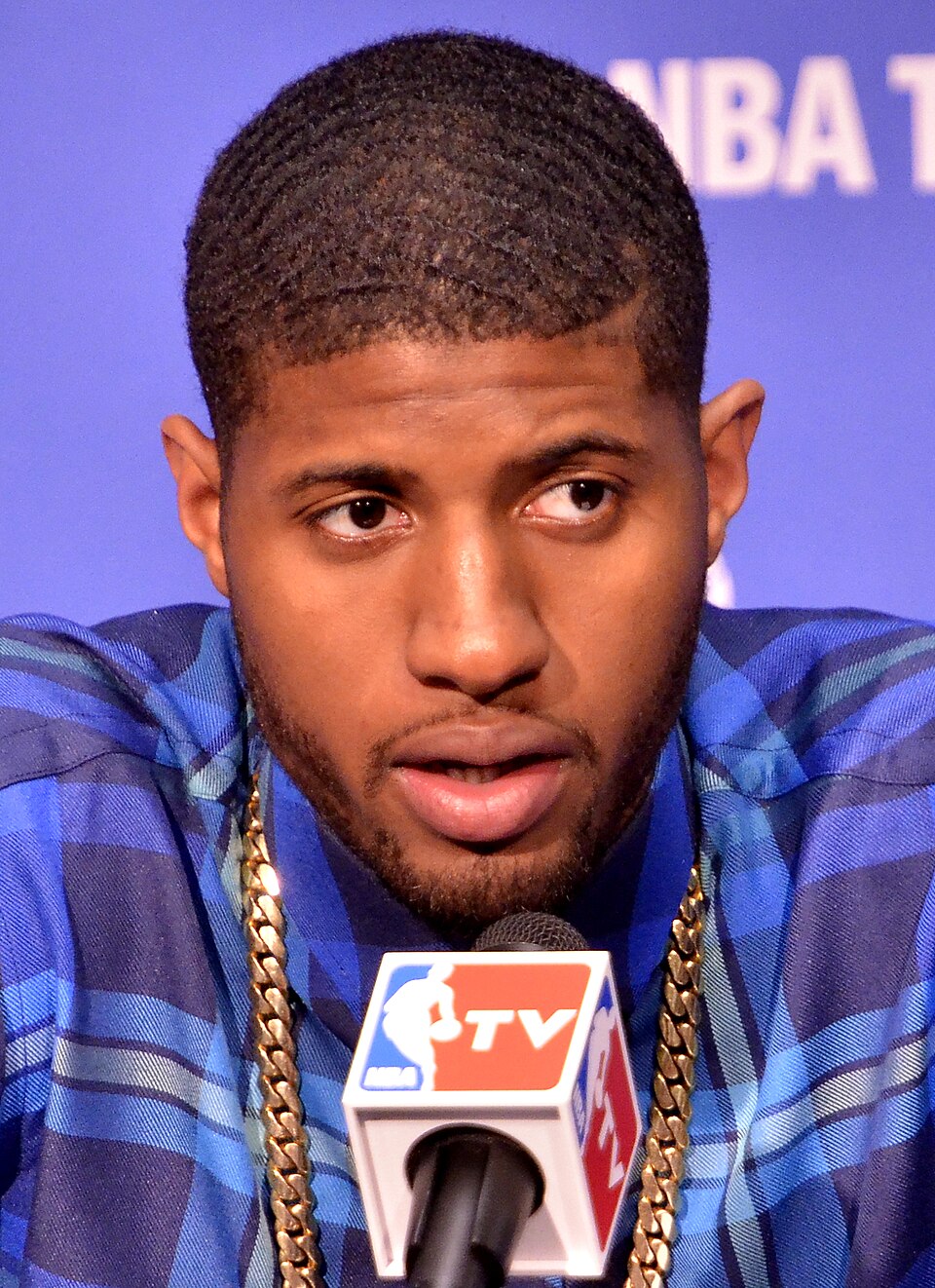
Paul George, the nine-time NBA All-Star forward, was suspended without pay for 25 games on January 31, 2026, after the NBA announced he had violated the terms of the NBA/NBPA Anti-Drug Program. The suspension began with the Philadelphia 76ers’ game against the New Orleans Pelicans at Xfinity Mobile Arena that same evening. George responded with a statement to ESPN saying he had made “the mistake of taking an improper medication” while recently seeking treatment “for an issue of my own,” and apologized to the Sixers organization, his teammates, and Philadelphia fans.
Background Information
Born May 2, 1990, in Palmdale, California, George starred at Knight High School and played two college seasons at Fresno State before the Indiana Pacers selected him with the 10th overall pick of the 2010 NBA draft. He was named to the NBA All-Rookie Second Team as a rookie, won the NBA Most Improved Player Award in 2013 — the same year he earned his first All-Star selection — and helped lead the Pacers to the Eastern Conference Finals. After suffering a broken leg in 2014 while competing for a roster spot on the U.S. national team, he recovered in time to win an Olympic gold medal in 2016.
Nicknamed “PG-13,” George was traded to the Oklahoma City Thunder in 2017 and to the Los Angeles Clippers in 2019, where the Clippers reached the playoffs four times during his tenure, including their first Western Conference Finals appearance in 2021. He signed a four-year, $212 million contract with the Philadelphia 76ers in free agency in July 2024 to team with Joel Embiid and Tyrese Maxey. His first season in Philadelphia was limited to 41 games by adductor and knee injuries, and he missed the start of the 2025–26 season while recovering from a knee injury.
The Controversy or Incident That Led to Their Cancellation
On January 31, 2026, the NBA announced that George had been “suspended without pay for 25 games for violating the terms of the NBA/NBPA Anti-Drug Program.” The league’s official release said the suspension would begin with the 76ers’ game against the New Orleans Pelicans at Xfinity Mobile Arena that night.
In a statement given to Shams Charania of ESPN, George said:
“Over the past few years, I’ve discussed the importance of mental health, and in the course of recently seeking treatment for an issue of my own, I made the mistake of taking an improper medication. I take full responsibility for my actions and apologize to the Sixers organization, my teammates and the Philly fans for my poor decision making during this process. I am focused on using this time to make sure that my mind and body are in the best condition to help the team when I return.”
The suspension kept George out through March 25, when the 76ers host the Chicago Bulls, and made him eligible to return for the final 10 games of the regular season. Because the suspension was without pay, it cost George $11.7 million in salary.
Public Reaction and Consequences
The announcement came as George was averaging 16 points, 5.1 rebounds, and 3.7 assists in 27 games — just 27 of the team’s 47 — after missing 20 games this season due to an assortment of injuries. The 76ers sat sixth in the Eastern Conference at 26–21, holding the last guaranteed playoff spot, one game ahead of the Orlando Magic and the Miami Heat. Media coverage emphasized that his absence would test Philadelphia’s depth and shift more scoring responsibility onto Tyrese Maxey and Joel Embiid, whose knee the team was already managing. The Sixers’ defensive rating was 110.1 with George on the floor versus 114.9 without him, his defensive versatility called the hardest part to replace; reports projected Dominick Barlow into the starting lineup, with Jabari Walker and Trendon Watford seeing increased minutes off the bench. NBC Sports noted a +4.7 net rating with George on the court this season and -1.9 without him.
The suspension also shifted the 76ers’ financial picture: about $7 million into the luxury tax, Philadelphia received a tax credit worth roughly $5.9 million — half of the salary George forfeited — leaving the franchise just $1.3 million into the tax and making it easier to avoid the tax without trading rotation players at the deadline.
It was not George’s first brush with online backlash. During the 2020 NBA playoffs in Orlando, he drew frequent criticism from fans and media for inconsistent play and was tagged on Twitter with the nickname “Pandemic P” — an ironic play on his self-styled “Playoff P” moniker.
Current Status
As of the January 31, 2026 announcement, the suspension is in effect: George will sit out the 76ers’ next 25 games and becomes eligible to return March 25, 2026, for the final 10 games of the regular season. Wikipedia’s account of the season records that George returned and, on April 1, 2026, scored 39 points against the Washington Wizards — his highest total since joining the 76ers — and that on July 6, 2026, he was traded to the Boston Celtics, along with draft picks, in exchange for Jaylen Brown.
Impact on Their Career/Life
The unpaid suspension cost George $11.7 million in salary and placed a violation of the NBA/NBPA Anti-Drug Program on his record. His own account attributed the incident to an improper medication taken while seeking treatment for a mental-health issue, a context the league’s determination did not address. For a veteran whose Philadelphia tenure had already been marked by injuries — his 2024–25 season has been described as “disappointing” and “disastrous” — the suspension interrupted a resurgent stretch that included a 32-point outing against the Bucks the week before.
Unlike many cases of social-media cancellation, the documented fallout here centered on league-level and team-level consequences — salary forfeiture, the playoff positioning of the 76ers, and the luxury tax ledger — rather than a spectator-driven boycott, with the sources reviewed recording no coordinated fan campaign. His career continued: he returned in April and was traded to the Boston Celtics in July 2026. Still, the incident shows how quickly a league determination can interrupt an established career, and it has permanently attached the anti-drug program violation — and George’s explanation of it — to his public record.