Scott Pelley
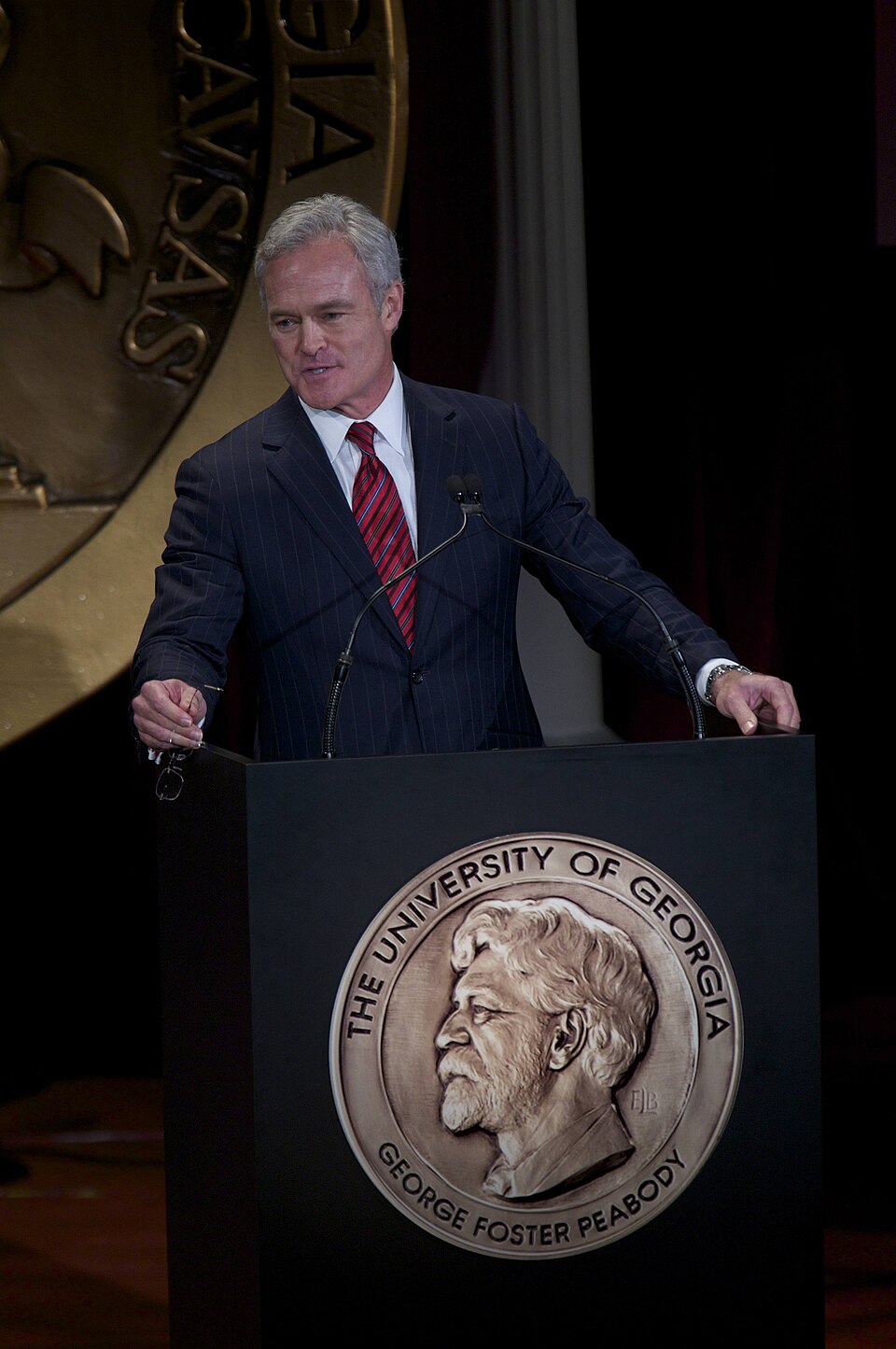
Introduction
Scott Pelley, one of the most well-known and respected journalists in American broadcast journalism, was fired by CBS News on June 2, 2026, a day after a heated staff meeting in which he clashed with the new executive producer of 60 Minutes and rebuked the network’s editor-in-chief amid a severe round of cuts at the show. The “terminated for cause” dismissal ended a CBS career spanning nearly four decades and removed the most awarded correspondent in 60 Minutes history from the broadcast.
Background Information
Born Scott Cameron Pelley on July 28, 1957, in San Antonio, Texas, Pelley grew up in Lubbock, where he got his first journalism job at age 15 as a copyboy for the Lubbock Avalanche-Journal and studied journalism at Texas Tech University, leaving a few credit hours short of completing his degree.
After working at local Texas stations, Pelley joined CBS News in 1989 and went on to cover the Gulf War, the Waco siege and the Oklahoma City bombing. He served as the network’s chief White House correspondent from 1997 to 1999, breaking the news that Monica Lewinsky had become a cooperating witness in the independent counsel’s investigation, and joined the 60 Minutes franchise as a correspondent for the spin-off 60 Minutes II in 1999 before becoming a correspondent on 60 Minutes itself in 2004.
In June 2011, Pelley succeeded Katie Couric as anchor and managing editor of the CBS Evening News, a tenure that lasted until 2017. He later told CNN he had been removed from the anchor chair for complaining about a hostile work environment for the news division’s employees. Over his career he has won 51 national Emmy Awards, four Alfred I. duPont-Columbia Silver Batons and three George Foster Peabody Awards, and he authored the 2019 book Truth Worth Telling.
The Controversy or Incident That Led to Their Cancellation
Pelley’s firing followed months of tension between 60 Minutes staff and Bari Weiss, the opinion commentator who joined CBS in October 2025 as editor-in-chief with no experience in television and sought to assert control over its most prestigious and profitable news program. In the week before Pelley’s dismissal, management fired the show’s executive producer, its executive editor and two award-winning correspondents, Cecilia Vega and Sharyn Alfonsi, without giving a specific reason, and Weiss had been accused of holding up stories and inserting material more favorable to President Trump and to Israel.
On the morning of June 1, 2026, during an extremely heated all-staff meeting with the show’s newly appointed executive producer, technology journalist and filmmaker Nick Bilton, Pelley rebuked Weiss, who was not present, and told Bilton he was not welcome and not qualified for the job. “She’s murdering 60 Minutes,” Pelley said, as first reported by the Guardian. “She does not love this place. She was brought in to kill it and is doing exactly that.” The Associated Press, citing a detailed report on the Status website, reported that Pelley had reportedly said Weiss was “murdering the show” and accused its new producer of having “slender qualifications” for the job.
After executives failed to reach Pelley, he met with Weiss and fellow executives on Tuesday, June 2, and received a message from Bilton that evening informing him he had been “terminated for cause effective immediately.” Bilton wrote: “Yesterday, you hijacked my first meeting with staff to disparage me, my qualifications, and my intentions with remarkable incivility and contempt.” In an email to the show’s staff, Bilton wrote, “You should hear this from me first. We have parted ways with Scott Pelley.”
In response, Pelley issued a statement saying 60 Minutes had lost its DNA under new management and accusing the new leadership of asking him to “inject falsehoods and bias” into his work. “The collapse of values at the top has become untenable. The leadership of 60 Minutes is no longer recognizable. The principles I hold dear are gone, and so I must leave as well,” he wrote.
Public Reaction and Consequences
The firing deepened turmoil at 60 Minutes, the most-watched television news show in America. The next day, Weiss said, “I’m only interested in working in a newsroom that is built on trust and mutual respect,” while that night on the CBS Evening News, anchor Tony Dokoupil described Pelley as a “journalist who valued truth at all costs.”
Veterans of the show rallied around Pelley. Jeff Fager, executive producer of 60 Minutes from 2003 to 2018, called him “the heart and soul of 60 Minutes” and “the present-day Mike Wallace of the program,” and longtime producer Rome Hartman praised him as “among the all-time greats of CBS News and of 60 Minutes.” The consequences for the show were immediate: with Anderson Cooper having announced earlier in 2026 that he would be leaving, Pelley’s departure left 60 Minutes with only three full-time correspondents — Lesley Stahl, Bill Whitaker and L. Jon Wertheim — months ahead of the launch of its 59th season.
Current Status
As of early June 2026, Pelley is out of CBS News. He later said in an interview that the story in which management intervened was a report about the 2026 ICE protests in Minnesota, and that the falsehood he was asked to include was a description of protester Renée Good as driving her car toward the officer who killed her — an account he said contradicts video evidence. Five days before the firing, Weiss and CBS News president Tom Cibrowski had told staff in a memo that it was time for a “new approach,” with a goal of “building a show that thrives in the 21st century” that could include extending the program beyond a 60-minute broadcast.
Impact on Their Career/Life
The firing brought a sudden end to a 37-year CBS career for a journalist who had reported extensively from war zones, interviewed presidents, and anchored the network’s flagship evening newscast. Dismissed “for cause” at age 68, Pelley framed the exit as a matter of principle, writing that the show’s leadership was “no longer recognizable” and that “the principles I hold dear are gone.”
The episode also became a flashpoint in the debate over cancel culture in American media, with critics noting that Weiss — whose Free Press built its brand on opposing cancel culture — presided over the ouster of a veteran journalist for challenging management in a staff meeting. Whether Pelley will return to television news remains unclear; the controversy has attached a public asterisk to the end of his decades-long CBS tenure.