Changpeng Zhao
Introduction
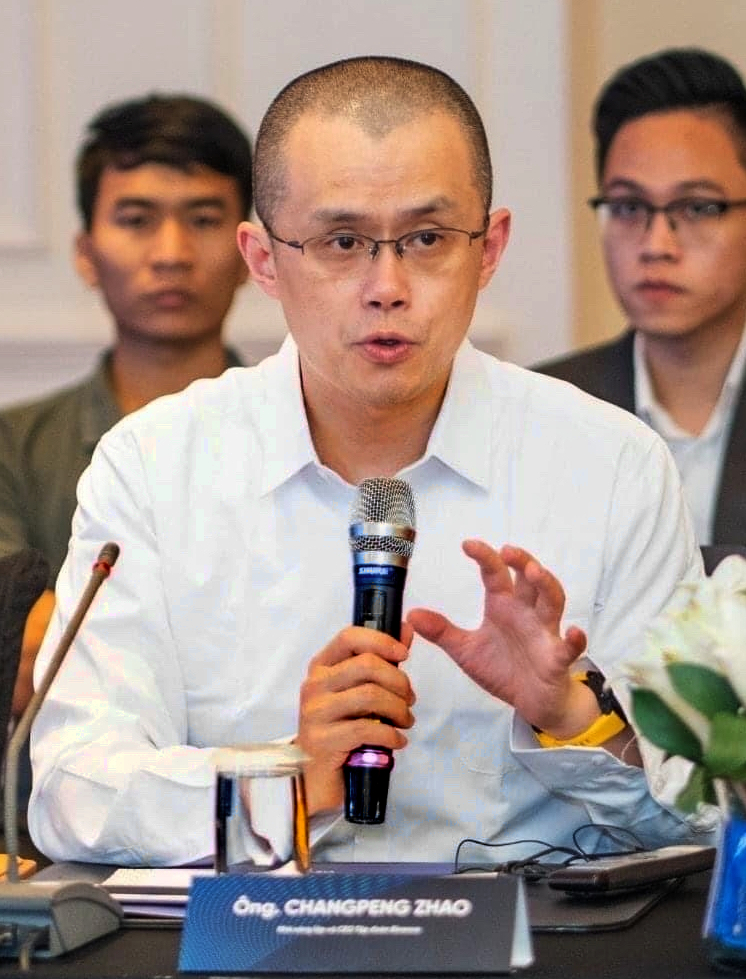
Changpeng Zhao, known as CZ, founded Binance in 2017 and built it into the largest cryptocurrency exchange in the world before pleading guilty in November 2023 to U.S. charges that he put growth ahead of American anti-money-laundering law. On November 21, 2023, he pleaded guilty to violating the Bank Secrecy Act (BSA) and resigned as Binance’s chief executive as the company agreed to pay $4.3 billion in penalties — the Justice Department’s largest corporate guilty plea to also involve a chief executive’s own plea. He was sentenced to four months in prison in April 2024, the first prison sentence ever handed down for such violations, and was released that September. On October 23, 2025, President Donald Trump pardoned him.
Background Information
Zhao was born in 1977 in Ganyu, Jiangsu province, China, to schoolteacher parents; his father was branded a “pro-bourgeois intellect” and exiled to rural areas shortly after his birth. In late 1989, at 12, he emigrated with his family to Vancouver after the Tiananmen Square protests and massacre, working during his teens at a McDonald’s restaurant and a gas station. He studied computer science at McGill University in Montreal.
After graduation he spent four years at Bloomberg Tradebook developing futures trading software, then moved to Shanghai in 2005 and founded the high-frequency trading startup Fusion Systems. He first encountered bitcoin in 2013, sold his Shanghai apartment to invest, and worked on Blockchain.info and as OKCoin’s chief technology officer before launching Binance in July 2017; the exchange raised $15 million in an initial coin offering and became the world’s largest by trading volume within eight months. Forbes has ranked him among the richest people in cryptocurrency, estimating his net worth at $111.1 billion as of April 2026 — the richest Canadian.
The Controversy or Incident That Led to Their Cancellation
The U.S. crackdown preceded the criminal case. On March 27, 2023, the Commodity Futures Trading Commission sued Binance and Zhao, alleging willful evasion of U.S. law and pointing to internal communications describing transactions by Hamas and suspected criminals. In June 2023, the Securities and Exchange Commission sued Zhao and Binance on 13 charges of alleged securities violations.
On November 21, 2023, the Justice Department announced that Zhao had pleaded guilty to violating the BSA by causing Binance to violate it, while Binance Holdings Limited pleaded guilty to conspiracy to violate the BSA, failure to register as a money transmitting business, and violating the International Emergency Economic Powers Act (IEEPA). The government said Binance had “prioritized growth, market share, and profits over compliance with U.S. law in a deliberate and calculated effort to profit from the U.S. market without implementing controls required by U.S. law,” agreeing to pay $4.3 billion, overhaul its compliance, and retain an independent monitor. Zhao resigned as CEO, agreed to a $50 million fine, and was replaced by Richard Teng.
At sentencing on April 30, 2024, prosecutors said Zhao had told employees “Better to ask for forgiveness than permission” about U.S. law and had directed the company to disguise customers’ locations in the U.S.; they said Binance allowed more than 1.5 million virtual currency trades totaling nearly $900 million that violated U.S. sanctions, including transactions involving Hamas’ al-Qassam Brigades, al-Qaeda and Iran. U.S. District Judge Richard A. Jones sentenced Zhao to four months — far less than the three years prosecutors sought, but the first prison sentence for such BSA violations — telling him, “No person — regardless of wealth — is immune from prosecution or above the laws of the United States.”
Public Reaction and Consequences
Zhao told the court, “I failed here. I deeply regret my failure, and I am sorry,” and wrote that there was “no excuse for my failure to establish the necessary compliance controls at Binance.” The judge credited him for taking responsibility; his attorneys argued there was no evidence he knew of any specific barred transaction and that the sanctioned trades were a minuscule portion of the trillions the platform processed each year.
Zhao served his sentence at the Federal Correctional Institution, Lompoc I, and was released on September 27, 2024. On October 23, 2025, two years after his conviction, President Trump pardoned him; a White House statement said “President Trump exercised his constitutional authority by issuing a pardon for Zhao, who was prosecuted by the Biden administration in their war on cryptocurrency. The war on crypto is over.” Zhao thanked Trump for the pardon, and on 60 Minutes Trump said, “I don’t know who he is,” adding that he had heard Zhao’s case was “a Biden witch hunt.” The pardon drew criticism from Democrats and some Republicans as brazen corruption; Zhao’s lawyer called it “an unlawful attempt to usurp the pardon power.”
Current Status
As of the most recent reporting, Zhao lives in Abu Dhabi and, pardoned, is no longer barred from running financial ventures. The pardon followed reported lobbying: Binance had spent $800,000 on it, and a lobbyist introduced by Donald Trump Jr. met with Trump about a pardon in October 2025, per Wall Street Journal and New York Times reporting summarized by Wikipedia. Since his release, Zhao has served as an advisor to Pakistan’s Crypto Council and to Kyrgyzstan’s president on digital assets, and on April 8, 2026, he published his memoir, Freedom of Money: A Memoir of Protecting Users, Resilience, and the Founding of Binance.
Impact on Their Career/Life
Zhao’s conviction ended his tenure atop the world’s largest exchange: he resigned as CEO in November 2023, paid $50 million personally, and Binance paid $4.3 billion and accepted an independent monitor. He served the first prison sentence ever imposed for such violations of the Bank Secrecy Act, and his legal exposure continued when FTX sued Binance, Zhao and other executives in November 2024, seeking nearly $1.8 billion it alleges was fraudulently transferred in a July 2021 stock repurchase. The financial fallout proved brief — Forbes put his net worth at $111.1 billion as of April 2026 — and the pardon lifted the ban on his managing financial ventures, closing a case that stands as the crypto era’s largest corporate prosecution to include a chief executive’s own plea.