Igor Lytvynchuk
Introduction
Igor Mykhaylovych Lytvynchuk, a 38-year-old fisherman and businessman from Covington, Washington, is charged in federal court with harassing an endangered Hawaiian monk seal — by his own account unwittingly, by the government’s account deliberately — after he threw a large rock at the head of a monk seal known as Lani off Lahaina, Maui, on May 5, 2026. Formally charged on May 26 under the Endangered Species Act and the Marine Mammal Protection Act, he has pleaded not guilty and is scheduled for trial on November 16, 2026. His defense is now subpoenaing Delta Air Lines for records of what passengers on his April 28 flight were told about Hawaii’s protected wildlife.
Background Information
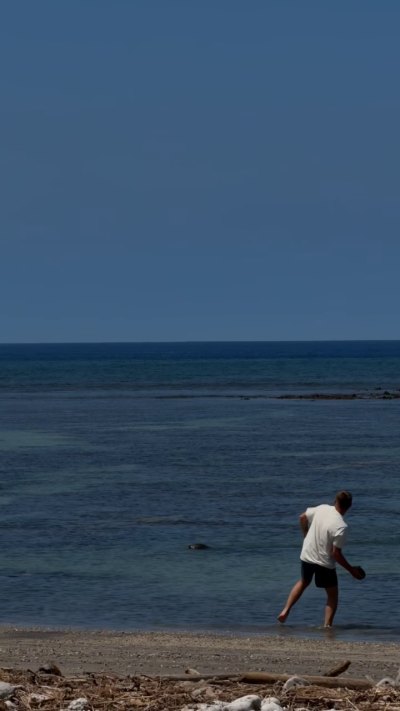
The incident that put Lytvynchuk in federal custody unfolded on a Lahaina shoreline, where court records say he was filmed tracking the movements of Lani — a monk seal federal prosecutors identify as endangered — as she playfully pushed a floating log close to the shore. According to the criminal complaint, he picked up a large rock, took aim, and threw it directly at her head; the rock narrowly missed her nose, startling her and causing her to rear up out of the water. Witnesses told investigators the seal then remained largely immobile for an extended period, raising concern for her welfare.
The Controversy or Incident That Led to Their Cancellation
Allegations. The claims in this section are allegations from a federal criminal complaint and a subsequent Information filed by the U.S. Attorney’s Office for the District of Hawaii, based on witness accounts and video of the encounter. Lytvynchuk has been charged but not tried; he has pleaded not guilty, is presumed innocent unless and until proven guilty in court, and no conviction has been entered on any count. His denial and his defense’s account are stated below.
When witnesses confronted Lytvynchuk immediately after the throw and told him they had contacted law enforcement, he reportedly responded that he was “rich enough to pay the fines” before walking away, according to the Justice Department. Video of the encounter circulated online and prompted what prosecutors called widespread condemnation; Maui Mayor Richard Bissen said “behavior like this will not be tolerated.” NOAA special agents arrested him near Seattle on May 13, 2026; he was charged by criminal complaint on May 12 and formally by Information on May 26 with harassing and taking an endangered marine mammal. If convicted, he faces up to one year in prison on each count and fines that stack to as much as $170,000 under federal law.
Lytvynchuk has denied any intent to harm the seal. His attorney, Myles Breiner, told Hawaii News Now that two large turtles were in the water and his client — a Washington fisherman accustomed to aggressive sea lions — threw the rock only to scare the seal away, believing he was protecting the turtles: “He had no idea, again, the significance of monk seals. He frankly didn’t know we had seals in Hawaii.” Breiner said his client “is devastated at the notion that people thought he wanted to injure the seal,” and explained the “rich enough” remark as pressure of the moment from a man who is not wealthy, embarrassed and doubling down. In an October court filing, his lawyers argued the footage “can also be interpreted as an attempt to protect a sea turtle that was being attacked by the monk seal,” adding that “a video may record conduct. It does not necessarily resolve intent, knowledge, perception, purpose, or every legal inference to be drawn from that conduct.”
Public Reaction and Consequences
The viral video made the case a national flashpoint within hours: residents, officials and online commentators condemned the throw, the Maui mayor publicly vowed prosecution, and federal prosecutors announced the charges themselves as a statement — U.S. Attorney Ken Sorenson called them a demonstration of “solemn commitment to not only protect Hawaii’s endangered monk seals, but all of our unique and endangered wildlife species from those who illegally harass, injure, or attempt to take them.” The reaction reached Lytvynchuk personally: Breiner said that after the video surfaced, another man assaulted him, beating him badly enough to leave welts across his back, head and shoulders though no broken bones; he declined to press charges. The story stayed alive for months through the defense’s aggressive posture — and, in October 2026, through its new target: the airline that flew him to Maui.
Current Status
Lytvynchuk’s case is pending in the U.S. District Court for the District of Hawaii. He has pleaded not guilty to both counts, and trial is set for November 16, 2026, though his attorneys are seeking a postponement. In an October 7 filing they argued prosecutors have “no information in its possession” showing that Delta — which flew him from Seattle to Maui on April 28 — aired anything like Hawaiian Airlines’ “Travel Pono” wildlife-education video, and they want to subpoena the airline’s onboard videos, passenger advisories and communications, saying “the absence of a warning may itself be probative” of his knowledge and state of mind. Prosecutors, who note Delta was not required to show any such video, oppose delaying the trial and question why some investigative steps were not taken sooner. The filing does not establish that Delta had any legal duty to warn passengers, or that a missing warning would excuse the alleged conduct.
Impact on Their Career/Life
The case has become an early federal test of how the ESA and MMPA apply to tourists who harass Hawaii’s protected wildlife — and of how far a defense can reach to reframe intent, from a rock thrown at a seal’s head to an airline’s failure to warn. Lytvynchuk, a fisherman by trade, faces up to two years in prison and six-figure fines if convicted, and the government has signaled it will pursue the case as a deterrent. For Hawaii’s tourism industry, the case has already done the education the defense says was missing: the exchange that ended with a federal indictment is now the cautionary tale told about touching, feeding or throwing anything at a monk seal.
Sources
- New York Post, “Hawaii monk seal attack suspect blames Delta for lack of warning,” Oct. 13, 2026 — source
- Newsweek, “Hawaii Tourist Accused of Monk Seal Attack Seeks Proof Delta Warned Him,” Oct. 13, 2026 — source
- U.S. Attorney’s Office, District of Hawaii, “Washington Man Charged with Harassing Endangered Monk Seal ‘Lani’ by Hurling Large Rock at Her Head,” May 13, 2026 — source
- U.S. Attorney’s Office, District of Hawaii, “Washington Man Formally Charged by Information with Harassing Endangered Monk Seal by Hurling Large Rock at Its Head,” May 26, 2026 — source
- Hawaii News Now, “Defense attorney explains why rock was hurled at endangered monk seal,” May 15, 2026 — source
- Hawaii News Now, “Washington man formally charged in monk seal harassment case,” May 26, 2026 — source