Yousif Abdulmasih
Introduction
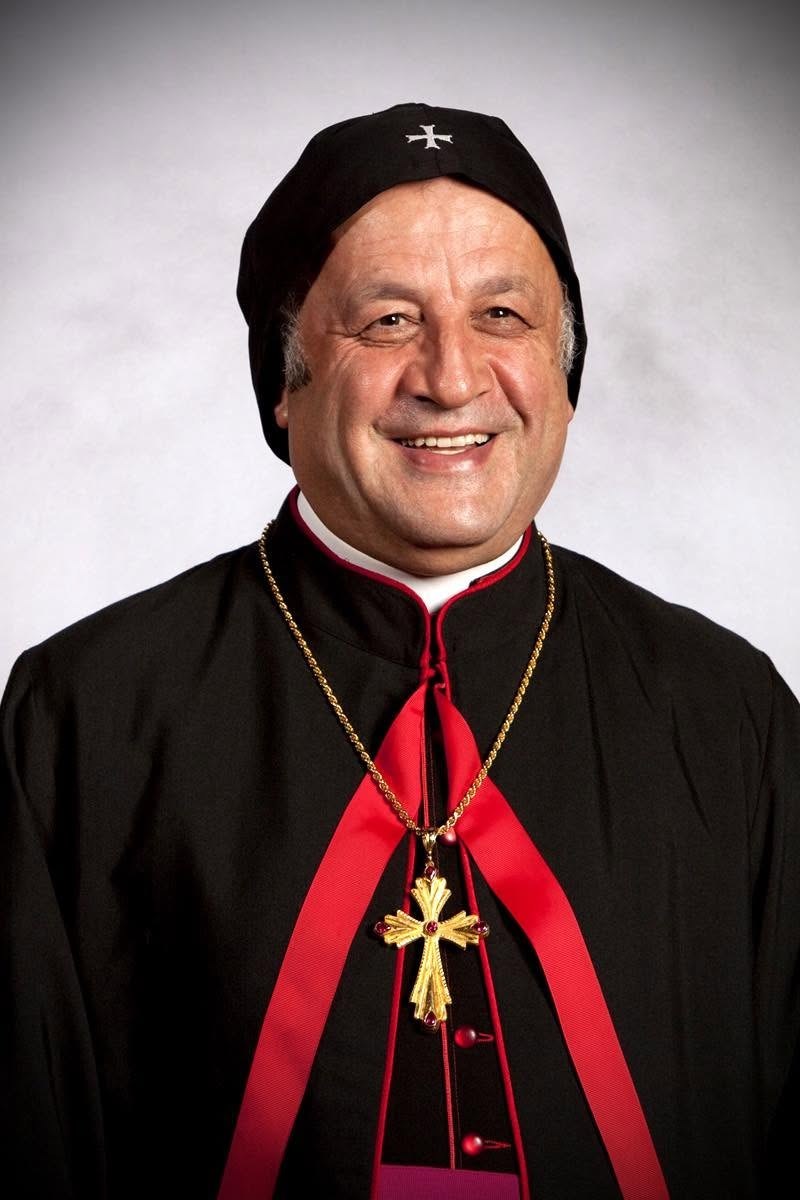
Yousif Abdulmasih, identified in news reports as Bishop Marnaba Yousif Habash, is a Syriac Catholic bishop in San Diego County, California, who has been sued by a member of his own congregation over an alleged $200,000 cash betrayal. According to a civil lawsuit filed in San Diego County Superior Court on September 2, 2026, Abdulmasih persuaded parishioner Hani Toma to donate $200,000 in cash for a church renovation project, then kept the money for his personal use and left California for Michigan. The case draws its setting from Our Mother of Perpetual Help Syriac Catholic Church in El Cajon, a congregation with deep ties to the Iraqi Christian community of San Diego County. Abdulmasih has not publicly responded to the allegations, and no criminal charges have been filed; the claims against him remain contentions made in pending civil litigation.
Background Information
Abdulmasih serves as a bishop of the Syriac Catholic Church, an Eastern Catholic church whose roots trace to ancient Christian traditions in the Middle East and whose patriarchal seat is now in Beirut, Lebanon. Our Mother of Perpetual Help Syriac Catholic Church, where he is based, sits in El Cajon in San Diego County’s East County region, part of a metropolitan area that is home to one of the largest Iraqi Christian communities in the United States. The relationship at the center of the lawsuit was a close one: plaintiff Hani Toma identifies himself as a member of the congregation, and according to the suit, the bishop cultivated Toma’s generosity toward the church’s building needs. The New York Post described Toma as a wealthy CEO. According to ABC 10News, which first reported the lawsuit, the bishop told Toma that the church needed remodeling but lacked the funds to complete the project and was relying on donations to get it done. Toma agreed to help — on one unusual condition.
The Controversy or Incident That Led to Their Cancellation
According to the lawsuit and ABC 10News’ reporting on it, the sequence of events alleged in court filings unfolded like this:
- Toma agreed to contribute $200,000 toward the church remodeling on the condition that his donation remain anonymous.
- On June 8, 2026, Abdulmasih allegedly went to Toma’s workplace and personally collected the entire $200,000 in cash.
- Later that month, Toma spoke with a priest at the church and received a very different account of its finances.
- The priest allegedly told Toma that the church had always had enough money of its own to pay for the remodeling — and that no donation had ever come in.
- Toma alleges Abdulmasih kept the money for his personal use, and filed a civil lawsuit against him in San Diego County Superior Court on September 2, 2026.
The suit accuses the bishop of taking the parishioner’s money under false pretenses. Toma is seeking the return of his $200,000 plus damages. According to the lawsuit, Abdulmasih has since left California for Michigan, and ABC 10News reported that it attempted to contact the bishop but has not been able to reach him. The church declined to comment when asked about the lawsuit.
Public Reaction and Consequences
The story reached a national audience on September 15, 2026, when the New York Post picked up ABC 10News’ report under a headline stating that the bishop “bilks” a wealthy CEO out of $200,000 “before fleeing to Michigan” — framing that presents the plaintiff’s allegations as established fact even though no court has ruled on them. The episode also lands on top of an uncomfortable precedent in the same town: El Cajon was already the site of a separate, unrelated embezzlement case in which another bishop — Chaldean Catholic Bishop Emanuel Shaleta of St. Peter’s Chaldean Catholic Cathedral, a different person from a different church — was accused by prosecutors of taking more than $270,000 of parish funds, was arrested in March 2026 at San Diego International Airport while allegedly trying to leave the country, saw the Vatican accept his resignation, and pleaded not guilty to multiple felony counts. For the Syriac Catholic congregation at the center of the new lawsuit, the immediate consequence is practical as well as spiritual: per the suit, the $200,000 meant to fund the remodeling never reached the church, and the bishop who allegedly collected it has reportedly left the state.
Current Status
The case is a pending civil lawsuit, not a criminal prosecution: El Cajon police told ABC 10News they are not involved in the case and found no criminal case against the bishop. Toma’s suit, filed September 2, 2026, seeks the return of the $200,000 plus damages; no public response from Abdulmasih has been reported, and no court has ruled on any of the claims. The bishop has reportedly remained out of reach since leaving California for Michigan, according to the lawsuit and ABC 10News, which was unable to contact him for comment; his parish has declined to comment as well. All allegations described here are contentions made by the plaintiff in pending litigation; Abdulmasih has not been charged with any crime and is presumed innocent of any wrongdoing.
Impact on Their Career/Life
If the lawsuit’s account stands up in court, the fallout for Abdulmasih’s standing in one of America’s most tight-knit Eastern Christian diaspora communities would be severe: a bishop found to have taken a devoted parishioner’s anonymous $200,000 gift to his own church. The New York Post’s framing — a bishop who “bilks” a CEO and flees the state — has already fixed the story in the public record, reaching an audience far beyond El Cajon. In the near term, Abdulmasih reportedly lives in Michigan, out of reach of the journalists covering the story, while his church has declined to explain the missing renovation money. The case adds a second bishop financial-misconduct scandal to the same small city within a single year, a pattern that puts El Cajon’s Eastern Catholic institutions under an uncomfortable spotlight. For Toma, the lawsuit is about recovery — of his money and, he says, of the truth about where it went — and for the wider community, it is a test of whether its institutions will hold their own leaders to account.