Karen Attiah
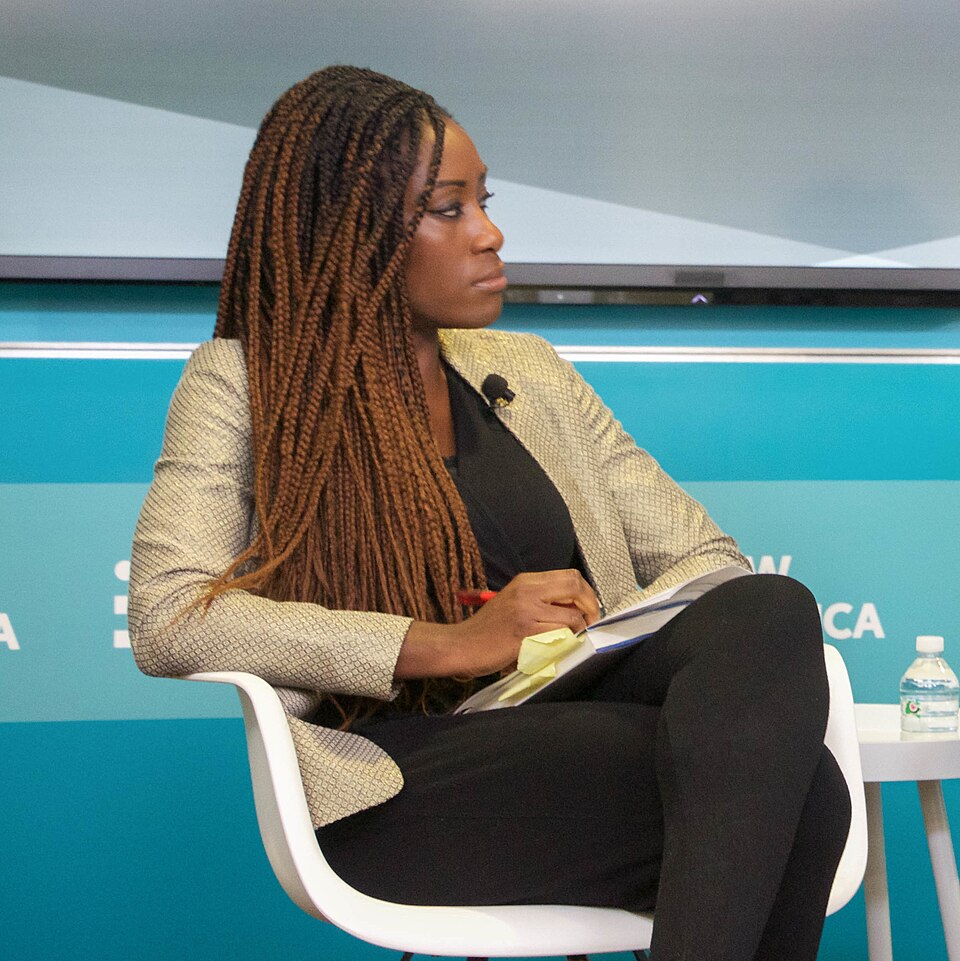
Introduction
Karen Attiah is an American writer, commentator, and editor formerly employed by The Washington Post. She was dismissed by the newspaper in September 2025 following social media posts she made about the assassination of conservative activist Charlie Kirk — posts on Bluesky, one referencing past comments Kirk had made about Black women. On August 24, 2026, an independent arbitrator ordered the Post to reinstate her with back pay, ruling the newspaper lacked grounds for the termination.
Background Information
Born August 12, 1986, in northeastern Texas to a Nigerian-Ghanaian mother and Ghanaian father, Attiah studied at Northwestern University, earned a Fulbright Scholarship to Accra, Ghana, and completed a master’s degree in international affairs at Columbia University in 2012.
After graduate school she was a media consultant for the World Bank’s Africa program and a freelance reporter for the Associated Press in Curaçao. She was hired by The Washington Post in 2014, became the founding editor of its Global Opinions section in 2016, and was elevated to Opinions columnist in 2021. Her writing focused on race, gender, culture, human rights, and international affairs, and she hosted TL;DR, a Post video series that won the National Association of Black Journalists’ Salute to Excellence Award for digital commentary in 2018.
Attiah recruited Saudi writer Jamal Khashoggi for the Post’s Global Opinions section; after he went missing in October 2018 she was named 2019 Journalist of the Year by the National Association of Black Journalists and shared the 2019 George Polk Award with David Ignatius for her work on his assassination.
The Controversy or Incident That Led to Their Cancellation
Conservative activist Charlie Kirk was assassinated in September 2025. On September 15, 2025, Attiah announced in a newsletter that she had been fired by The Washington Post. According to the termination letter, her “public comments regarding the death of Charlie Kirk violate The Post’s social media policies” and constituted “gross misconduct.” The Post said the posts breached a policy requiring employees to ensure their online conduct remains respectful and does not damage the integrity of the newspaper’s journalism.
The dispute stemmed from posts Attiah made on Bluesky after Kirk was killed; one post referenced past comments Kirk had made about Black women. The termination letter specifically quoted two Bluesky posts: “Refusing to tear my clothes and smear ashes on my face in performative mourning for a white man that espoused violence is…not the same as violence” and “Part of what keeps America so violent is the insistence that people perform care, empty goodness and absolution for white men who espouse hatred and violence.”
Her only recent direct social media reference to Kirk was a Bluesky post paraphrasing his 2023 comments that Sheila Jackson Lee, Michelle Obama, Ketanji Brown Jackson, and Joy Reid “do not have the brain processing power to otherwise be taken really seriously” and “had to go steal a white person’s slot to go be taken somewhat seriously.” Some challenged her phrasing, saying Kirk had referred to specific individuals, not all Black women.
Attiah’s firing came amid a broader conservative campaign seeking professional consequences for people whose comments about Kirk’s assassination were deemed offensive.
Public Reaction and Consequences
The Washington Post Guild, the newspaper’s editorial employee union, condemned her firing. In her newsletter, Attiah wrote, “As a columnist, I used my voice to defend freedom and democracy, challenge power and reflect on culture and politics with honesty and conviction. Now, I am the one being silenced—for doing my job.”
The Poynter Institute said “it did not appear that it was that post, or any one specific post, that led to her firing,” and The New York Times noted her posts did not celebrate Kirk’s killing. The Independent and The Guardian reported that Attiah’s job may already have been in danger due to confrontations with opinion editor Adam O’Neal, who had reportedly offered buyouts to columnists whose work did not align with the opinion section’s conservative shift announced in 2025; Attiah was also the Post’s last remaining Black full-time opinion columnist.
Following her termination, Attiah filed a grievance through the Post’s labor union, arguing her social media comments were well-supported within her purview as an opinion writer and permissible under the company’s social media policy and labor agreement. The Post declined to comment on her firing, directing reporters instead to its employee social media use standards.
Current Status
On August 24, 2026, private arbitrator Sarah Miller Espinosa ordered the Washington Post to reinstate Attiah and award her back pay, finding the Post violated its labor agreement and lacked adequate cause to terminate her. “The Washington Post failed to establish the grievant engaged in gross misconduct,” Espinosa wrote. Espinosa found the Post lacked “good and sufficient cause,” called the firing “absolutely disproportional,” and noted the rushed decision to terminate Attiah approximately four hours after O’Neal became aware of her posts.
Attiah said in a statement: “This decision confirms what we’ve said from the start: I was doing my job as an opinion writer, and this was wrongful termination. After spending over a decade of my career at the Post as an editor and an opinion columnist focusing on race, gender and global human rights, I’m relieved to finally have that record set straight.”
The ruling came amid wider questions about the Post under owner Jeff Bezos, who in February 2025 announced the opinion section would shift its editorial focus to personal liberties and free markets; in February, the newspaper announced layoffs affecting about a third of its workforce amid mounting financial losses.
In her Instagram announcement of the ruling, Attiah wrote, “After wrongfully firing me last year, an independent arbitrator has ordered the @washingtonpost to reinstate me immediately, with back pay,” adding, “It’s been a year-long fight, but this is a victory for journalists everywhere. More to come soon.” The Democracy Defenders Fund, which along with the Washington-Baltimore News Guild represented Attiah, called the ruling a landmark moment for press freedom, “confirming that corporate media institutions cannot use retaliatory discipline to silence journalists who address uncomfortable truths.” The Post said in a statement that it respects the arbitration process but declined to comment further.
Impact on Their Career/Life
Attiah spent more than a decade of her career at the Post as an editor and opinion columnist focusing on race, gender, and global human rights before the dismissal ended that tenure. The ruling ordered her reinstatement with back pay, reversing the professional consequence of her posts.
The case became a reference point in debates over how news organizations apply social media conduct policies to opinion writers and highlighted the pressures facing the Post under Bezos, including the opinion section’s shift in focus and the newspaper’s financial difficulties.
For Attiah, the ruling validated the position she had maintained since her termination — that her comments fell within the scope of her work as an opinion writer. Whether she resumes her column at the Post remains to be seen, but the ruling overturned the misconduct finding on which her firing had been based.