Joseph Tidwell
Introduction
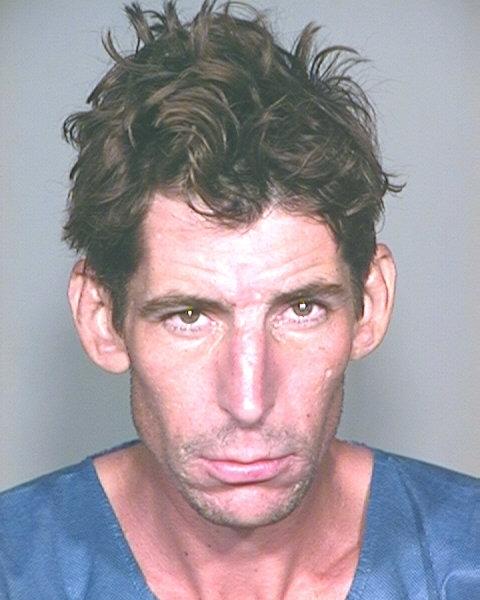
Joseph Tidwell is a California prisoner serving 45 years to life for the second-degree murders of two volunteer rescue workers, Scott Johnston and Phil Calvert, killed in a head-on drunk-driving crash in 2004. In September 2026 his name returned to public attention when Governor Gavin Newsom reversed a parole board’s decision to grant him parole under California’s Elderly Parole Program — a reversal that followed public outrage, voiced in an op-ed by his surviving victim, over the prospect of Tidwell walking free after serving less than half his sentence. Tidwell, now 57, remains incarcerated.
Background Information
On the night of 17 July 2004, Tidwell — then 35, under the influence of methamphetamine and heroin — passed out at the wheel of his truck, crossed the center line and struck a San Gorgonio Search and Rescue Team vehicle head-on. The volunteers were speeding toward Joshua Tree to search for a missing 17-year-old. The crash killed team members Scott Johnston, 29, and Phil Calvert, 58, and critically injured Bob Blanck, who was trapped in the back seat and watched paramedics work on his best friend Johnston before realizing he was gone. Calvert’s legs were smashed in the wreck and he died later of complications; Blanck spent three months hospitalized and endured five surgeries. Tidwell was unhurt and arrested at the scene; his girlfriend, riding in the truck, was severely injured.
Tidwell was convicted of two counts of second-degree murder by a San Bernardino County jury and, in January 2007, sentenced to 45 years to life. He had a prior DUI conviction and had been arrested for a second DUI that resulted in a parole violation before the fatal crash.
The Controversy or Incident That Led to Their Cancellation
Adjudicated conduct. Tidwell’s convictions for two counts of second-degree murder were returned by a jury in 2007 and are a matter of court record. The events recounted here come from court outcomes and official statements described in the fetched sources; the parole proceedings are administrative decisions, not new criminal findings.
In December 2024, Tidwell applied for parole under California’s Elderly Parole Program after serving 20 years of his 45-year sentence; the board denied the request, citing infractions during his incarceration. Just 18 months later he applied again, and on 30 June 2026 the parole board granted his request — setting up the prospect of release after only 22 years served. Under the program’s review process, the decision went to Governor Newsom.
Newsom reversed the grant on Friday, 18 September 2026. In his decision letter, shared with Blanck the following Monday, the governor acknowledged that Tidwell “has made efforts to improve himself during the 22 years he has been in prison,” completing a vocation, participating in self-help programming and enrolling in college courses — but wrote that “these factors are outweighed by negative factors that demonstrate he remains unsuitable for parole at this time.” Newsom cited Tidwell’s drug use and financial misconduct at Soledad State Prison, and concluded that “Mr. Tidwell must do additional work to address his risk factors before he can be safely released.”
The case became a flashpoint in the broader fight over elderly parole. The program — which allows inmates 50 or older who have served at least 20 continuous years to receive special consideration, expanded in 2021 from its previous 25-years-and-age-60 thresholds — has drawn statewide fury over violent offenders becoming eligible, including the February 2026 parole grant to convicted child predator David Allen Funston. Critics point to cases like Tidwell’s and murders released under the rule, such as Christine Loyd, who killed two senior citizens for money and was freed after 31 years.
Public Reaction and Consequences
The decision capped a public campaign led by Bob Blanck, Tidwell’s surviving victim. Blanck — a San Bernardino County school teacher who was himself critically injured in the crash — penned an op-ed for The California Post opposing Tidwell’s release, and welcomed the governor’s intervention “as a rare act of common sense” given that Tidwell had served only 22 years of a 45-year sentence. “It was definitely a great surprise,” Blanck told the New York Post of the decision.
Conservative commentary framed the case as emblematic of a parole system that “keeps releasing” violent offenders, with Townhall cataloguing Tidwell among murderers and predators granted or nearing release under the elderly-parole rules, and noting pending legislation (AB 2727) that would tighten eligibility — a bill watered down from an age-75 to an age-65 threshold that has yet to pass.
Current Status
Tidwell remains in custody, his parole grant reversed. Under California law he may reapply for parole in 18 months. Newsom’s letter stated that he must “do additional work” to address his risk factors before he can be safely released; the governor’s office did not indicate in the fetched sources that any future grant would be blocked. The program itself remains law, and each reapplication keeps the question alive for the families.
Impact on Their Career/Life
For Tidwell, the reversal means his 45-years-to-life sentence continues rather than ending 22 years in; his institutional record — vocation completed, college enrollment, but recent drug use and financial misconduct — is now the record a future parole panel will weigh. For the victims’ families, the decision restored, at least temporarily, the outcome their campaign sought: Johnston’s and Calvert’s killer stays imprisoned. The episode also made Tidwell’s case a named exhibit in the state’s fight over elderly parole, cited in media commentary and in the legislative push to raise eligibility thresholds that has so far stalled in Sacramento.