Aaron Rowe
Introduction
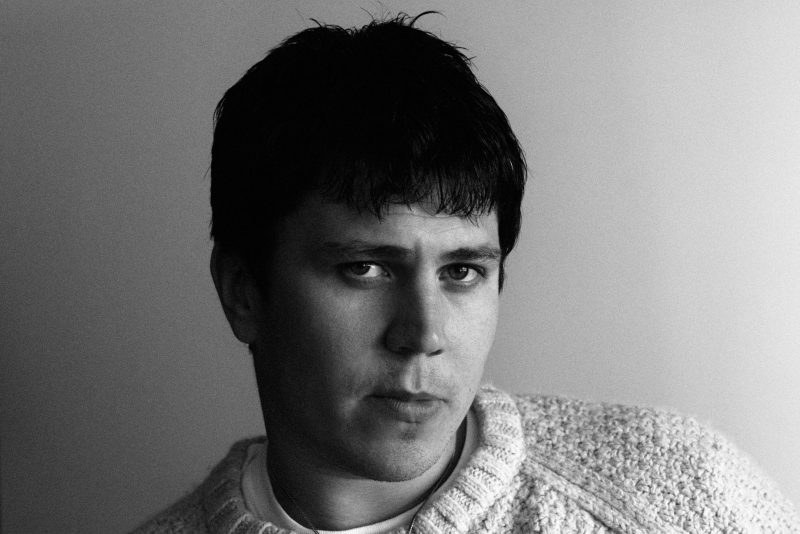
Aaron Rowe is an Irish singer-songwriter from Dublin, best known for his debut single “Hey Ma” and his debut EP, “Exodus,” released in September 2025. In September 2026 he walked away from the highest-profile slot of his career: an opening position on Ed Sheeran’s Loop stadium tour. On September 15, 2026, Rowe announced on Instagram that he was withdrawing as a support act on the tour’s North American leg in solidarity with fellow opener Macklemore, who had been dropped after his onstage “Free Palestine” comments at MetLife Stadium earlier that month. Within hours, the tour’s other supporting acts — Finneas, Beoga, and Lukas Graham — quit too, leaving the tour in what the Associated Press called “chaos.” Rowe’s case is an unusual entry in the cancellation archive: no misconduct is alleged against him. He voluntarily gave up a career-making platform to make a political point — and the public break, framed by the New York Post as “rails against ‘Israeli genocide,’” put him at the center of one of the year’s loudest entertainment firestorms.
Background Information
Rowe’s debut single “Hey Ma” made him one of Ireland’s most-tipped new artists; he followed it with the singles “Talking with You” and “Lose Lose” before releasing “Exodus” in September 2025. He had opened the Australian leg of Sheeran’s Loop tour earlier in 2026 and rejoined the bill in June for the North American dates. The firestorm he joined had been building for over a week. On September 4 and 5, 2026, Macklemore — another Loop support act — told MetLife Stadium crowds in New Jersey that “Free Palestine” was at the heart of why he joined the tour, prompting the Israeli-American Council to publish a petition demanding his removal. Days later, the tour’s promoter, Messina Touring Group, announced that venues on the remaining U.S. dates “will not allow a concert to take place with Macklemore on the lineup,” and that after discussions with stakeholders he was off the bill. Macklemore alleged that New England Patriots owner Robert Kraft had rallied fellow stadium owners to give Sheeran an ultimatum — drop Macklemore or lose their venues. Kraft, in a statement to NBC News, said the decision rested on Macklemore’s “broader history of rhetoric” that was “deeply offensive and hurtful to the Jewish community,” and denied any intent to stifle Palestinian advocacy. Into this standoff stepped Rowe and the rest of the support bill on September 15.
The Controversy or Incident That Led to Their Cancellation
The “cancellation” in Rowe’s case was one he carried out himself. On the morning of Tuesday, September 15, 2026, Sheeran posted on social media attributing Macklemore’s ouster to the tour’s promoters and saying he preferred to stay publicly neutral on political issues. Hours later, Rowe posted his withdrawal statement on Instagram, becoming the first supporting act to quit. “I have made the decision to withdraw as a support act for Ed Sheeran’s ‘The Loop’ North American Tour,” he wrote. “I don’t take the decision lightly. Ed has been a friend to me and has changed my life, I could never thank him enough for this.” Then came the part that drew the headlines. “But as Irish people, we know all too well about genocide, forced famine and violent occupation,” he wrote — his own characterization of the war in Gaza, not an established finding — “I cannot stand by and allow billionaires to use their position of power to silence the rightful voices of those who speak up against Israeli genocide and who highlight the savage murder of children. I would lose all respect for myself to carry on as normal.” He ended the note with the words “Free Palestine.” His reference to “billionaires” echoed Macklemore’s unproven allegation of a Kraft-organized venue boycott. The New York Post covered the withdrawal under a headline saying the opener “ditches tour and rails against ‘Israeli genocide’ after Macklemore fiasco.”
Public Reaction and Consequences
Rowe’s move triggered an immediate chain reaction. Within hours, Finneas — Billie Eilish’s brother, slated for the South American leg — posted that “artists must not be silenced when they speak up for the oppressed” and quit; Beoga, the Irish folk group serving as the touring band, cited their country’s history and their membership in the Irish Artists for Palestine movement; and Lukas Graham wrote that “money doesn’t give you the right to own the conversation.” The AP reported that all four supporting acts “abruptly quit in solidarity” the same day, “plunging” the tour into chaos and putting “enormous pressure” on a star who has spent his career avoiding politics. The practical consequence for Rowe was immediate: he and Lukas Graham had been billed as the support acts for the remaining U.S. stadium dates, starting with Philadelphia on September 19 — slots now filled without either of them. Reaction split along political lines: supporters read the statement as a principled sacrifice, while coverage like the New York Post’s cast the same words as inflammatory rhetoric. Sheeran acknowledged only that the Macklemore decision had not been his, saying he was “not complicit”; he made no public comment on Rowe’s departure.
Current Status
As of September 15, 2026, Rowe is off the Loop tour’s North American leg; the tour is scheduled to resume in Philadelphia on September 19. No one has accused Rowe of misconduct, and no promoter or venue has acted against him — the consequence he faces is the one he chose, the loss of the tour slot itself. He gave no follow-up interviews in the hours after the news broke. The underlying dispute remains unresolved: Macklemore’s allegation of a Kraft-organized stadium-owner ultimatum is unconfirmed, and Kraft, while defending the decision to exclude Macklemore, denied intending to stifle Palestinian advocacy.
Impact on Their Career/Life
Rowe walked away from a platform he said had “changed my life” to be offered: a stadium tour with one of the world’s biggest artists, spanning Australia and North America. When he quit, he had just been elevated to replacement headliner support — one of two acts stepping into Macklemore’s slot on the remaining U.S. dates — making the surrendered value unusually high. In exchange he gained a public political identity: his statement was carried by Variety, the AP, The Globe and Mail, and the New York Post within hours, putting his name before an audience far larger than his streaming catalog alone would command. For a young artist between EP cycles, the stand is a wager that conviction-driven visibility converts into an audience; its immediate price was his stadium summer.