Kevin McCarthy
Introduction
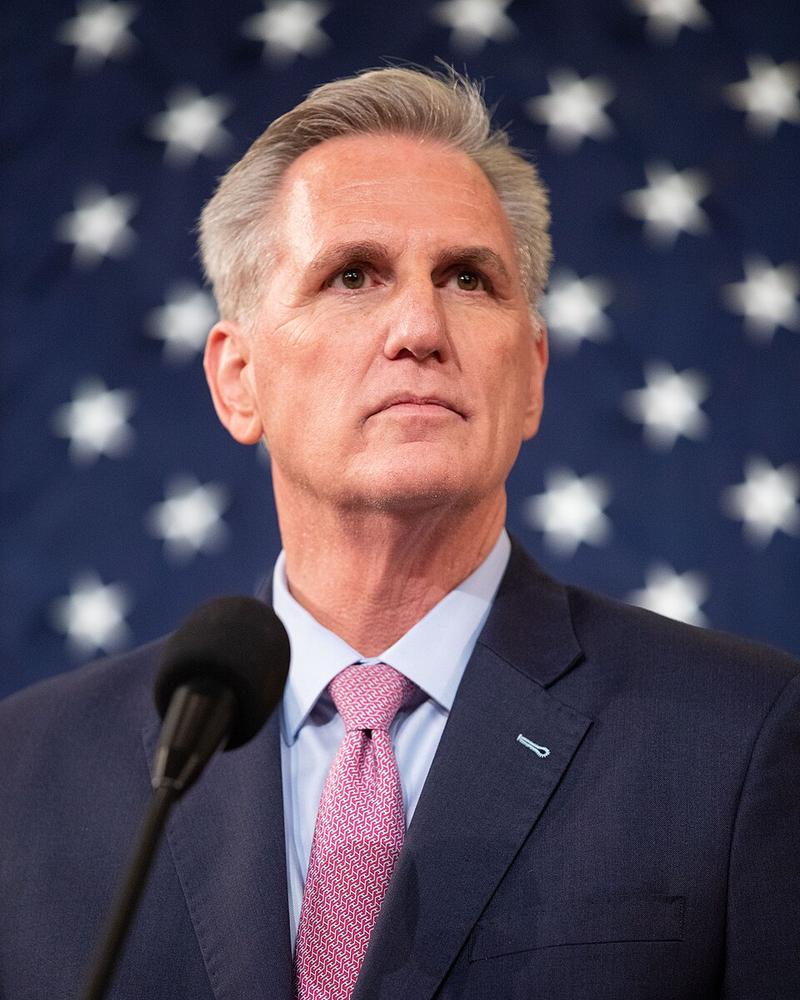
On October 3, 2023, the United States House of Representatives voted 216–210 to remove Kevin McCarthy of California from the speakership through a motion to vacate filed by Representative Matt Gaetz of Florida, a fellow Republican — the first time in American history that a speaker of the House had been removed through a motion to vacate, and the first time the chamber had voted its sitting speaker out of office. The vote threw the House and its Republican leadership into chaos; as the result was announced, a stunned chamber heard the office of speaker declared vacant, and per AP reporting someone in the chamber yelled “Now what?”
Background Information
McCarthy, a California Republican who served in the House from 2007 to 2023, was the leader of the House Republican Conference before becoming speaker. After the 2022 midterm elections, Republicans held only a narrow House majority, and within the conference the Freedom Caucus — the most conservative bloc of Republican representatives — viewed McCarthy as untrustworthy and insufficiently conservative, mounting significant opposition to his candidacy. After fifteen rounds of voting in January 2023, McCarthy was elected speaker, having conceded to his opponents by agreeing that any single representative could file a motion to vacate.
The standoff over government funding soon put that arrangement to the test. By September 2023 the federal government appeared poised to shut down, with the Freedom Caucus warning McCarthy against brokering a deal with Democrats to pass temporary appropriations legislation. On September 30, McCarthy led the House in passing H.R. 5860, a continuing resolution funding the government through November 17 and averting a shutdown; its passage relied on bipartisan support, with more Democrats than Republicans voting in favor (335–91). Gaetz, who had led intra-party opposition to McCarthy, criticized him for working with Democrats to pass a temporary spending bill without spending cuts and for introducing the bill at the last moment. On October 2, Gaetz filed the motion to vacate.
The Controversy or Incident That Led to Their Cancellation
The motion was considered the following day. Tom Cole, the Republican chairman of the Rules Committee, unsuccessfully attempted to table it; the motion to table was rejected by a vote of 218–208. After an hour of debate evenly divided between Gaetz and Cole, the House voted 216–210 to remove McCarthy, with eight Republicans joining all Democrats present in voting against him.
Democrats had decided not to save him. House Democratic Leader Hakeem Jeffries asked Democrats to vote for removal, and Representative Jamie Raskin said McCarthy had brought “this madness upon himself,” citing the January deal that allowed any single member to bring the motion to vacate: “There seems to be a major political party now addicted to insurrection, rebellion, overthrow and not to governance.” McCarthy, who insisted he would not give Democrats any concessions to save his job, declined to speak in his own defense and dispatched his closest allies instead.
Public Reaction and Consequences
Lawmakers fled the chamber after the vote, some speechless at what they had witnessed. “Shocking … just the finality of it,” said Representative Michael McCaul of Texas: “We don’t have a speaker, we don’t have a leader and that’s the message that’s sending to our adversaries.” Hours earlier, Representative Brian Fitzpatrick had warned: “If we vacate the chair, the government will shut down. Our credit rating will go down; interest rates will go up.”
Patrick McHenry of North Carolina, a close McCarthy ally, was made speaker pro tempore, and the House went without a regular speaker until October 25, when Mike Johnson of Louisiana was elected. McHenry subsequently asked former speaker Nancy Pelosi to vacate her secondary Capitol office space, a move several outlets reported McCarthy was behind as retribution for Democrats’ refusal to support him. Forty-five Republican representatives signed an open letter saying they were “ashamed and embarrassed by what happened” and praising McCarthy’s tenure as “one of the most accomplished Republican leaders in modern history.” At a news conference after the vote, McCarthy declared, “I fought for what I believe in. I believe I can continue to fight, but maybe in a different manner,” and concluded his remarks to reporters with “I’m sure I won’t miss you.”
Current Status
McCarthy announced that he would not seek reelection as speaker and subsequently announced his resignation from Congress, effective at the end of 2023. He left Congress that December but remained active in Republican politics through his fundraising network, recruiting and funding challengers to the eight representatives who had voted to remove him. After his ouster, some McCarthy supporters attempted to use the crisis following the October 7 Hamas attack on Israel to reinstall him as speaker, but those efforts failed.
Impact on Their Career/Life
McCarthy’s removal was historic: the first removal of a sitting speaker through a motion to vacate, achieved when eight members of his own party combined with every Democrat present to out-vote him. The House’s legislative activities were temporarily halted, and the lengthy leadership struggle that followed — Steve Scalise, Jim Jordan, and Tom Emmer each failed to consolidate support before Mike Johnson’s election — was cited as a main reason behind the failure to pass an aid package for Israel in the wake of the Hamas attack.
For McCarthy personally, the ouster ended a nine-month speakership and, with his resignation, a congressional career spanning nearly two decades in the House. He continued to wield influence through fundraising and political recruitment, and the precedent his removal set hung over his successor: when Representative Marjorie Taylor Greene filed a motion to vacate against Speaker Mike Johnson in May 2024, it was immediately tabled with bipartisan support — a fate McCarthy’s motion did not receive.