Yvonne “Missy” Woods
Introduction
Yvonne “Missy” Woods is a former forensic DNA analyst for the Colorado Bureau of Investigation (CBI) whose decades-long career ended in one of the largest forensic misconduct scandals in Colorado history. On September 8, 2026, a judge sentenced Woods, 66, to 10 years in prison after she pleaded guilty in June to four felonies — cybercrime, perjury, attempting to influence a public servant, and forgery — with prosecutors dropping roughly 100 remaining charges under her plea agreement. Authorities said her manipulation of DNA data raised doubts about more than 1,000 criminal cases involving homicide, sexual assault, robbery and other crimes.
Background Information
Woods spent 29 years as a DNA analyst at the CBI and resigned in 2023 instead of being fired, after what prosecutors described as a years-long pattern of manipulating data to speed up testing and boost her productivity. Her attorney, Tom Ward, told the sentencing hearing that she had an “unbroken record of exceptional evaluations” over a career in which she completed an average of 338 cases a year, with her caseload surging as the lab worked through backlogged sexual-assault kit testing. Concerns about her work surfaced long before the scandal broke: a CBI internal affairs report said a worker questioned her testing of evidence as early as 2014, and that in 2018 she was temporarily removed from DNA cases after being accused of data manipulation. The Denver Post reported that colleagues raised concerns in 2014 and again in 2018, but the CBI failed to stop the misconduct — an oversight failure a Colorado judge in August found to be “outrageous government conduct.”
The Controversy or Incident That Led to Their Cancellation
Adjudicated vs. alleged. Woods’ guilty pleas in June 2026 to cybercrime, perjury, attempting to influence a public servant, and forgery are convictions of court record, and the 10-year prison term was imposed on them. Roughly 100 other charges were dismissed under her plea agreement and are not convictions. Her defense maintains that she altered and deleted data quantities but never changed any DNA profile or any profile-to-person comparison; conduct connected to the dismissed counts should not be treated as adjudicated wrongdoing.
The investigation that ended her career began in fall 2023. The CBI has said an intern discovered missing information in a 2018 case Woods had handled, and the Denver Post reported the criminal probe launched in November 2023 after a coworker reported anomalies in her test data. According to an arrest affidavit, Woods allegedly told investigators at one point that she had changed data to complete cases more quickly. Authorities accused her of altering data to conceal tampering, deleting data that showed she had failed to troubleshoot issues in the testing process, and not thoroughly documenting tests in case records. At the sentencing hearing, senior deputy district attorney Darren Kafka said Woods repeatedly told investigators that testing had found no male DNA when her own tests had detected it, and described batch-note edits — adding zeroes or increasing values — that distorted the ratio of male to total human DNA. Kafka also said investigators found 52 lab reports in which Woods said something “categorically untrue,” and prosecutors recounted cases — including the alleged assault of a 4-year-old Pueblo girl — in which they said she found male DNA but reported she had not.
Public Reaction and Consequences
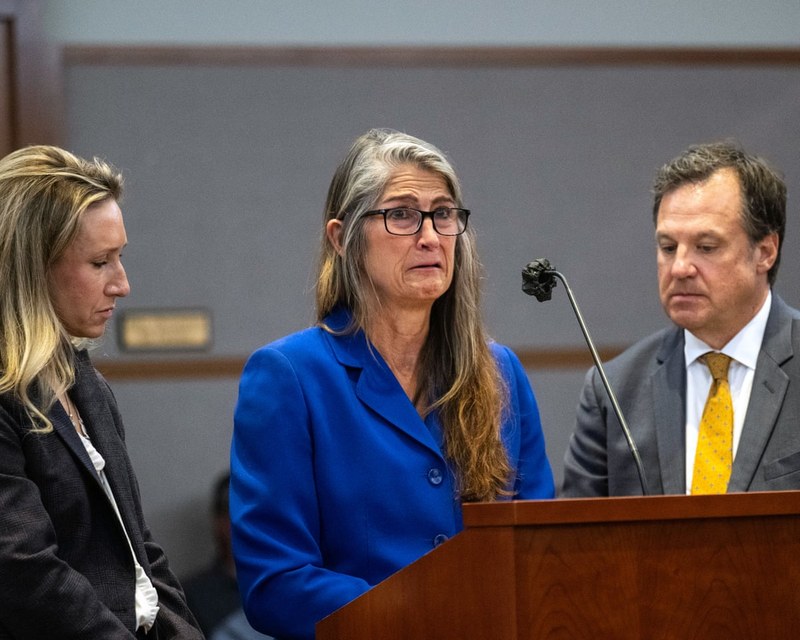
At a roughly three-hour hearing in Golden, District Judge Andrew Poland said the case was “about trust — the extraordinary trust placed in Ms. Woods, and her breach of that trust,” and called her crimes “intentional misconduct by a highly trained professional occupying a position of extraordinary trust.” Woods, 66, faced between eight and 16 years under her plea agreement, and Poland imposed 10 years before she was taken into custody. In a tearful statement, Woods apologized: “For many years I was entrusted with evidence that could have profound consequences for defendants, victims, families and the courts. I failed that responsibility. I am deeply sorry for that failure.” District Attorney Alexis King told reporters that Woods “played God” and “substituted her own judgment for the evidence.” The fallout reached deep into Colorado’s courts: prosecutors reviewed hundreds of cases, and at least one murder conviction was vacated — Michael Clark was released from prison in 2025 after his lawyers argued Woods mishandled DNA evidence in the 1994 killing of Marty Grisham, and prosecutors said they would seek to retry him. In two homicide cases, defendants received lesser sentences under plea deals because prosecutors feared Woods’ involvement could lead to acquittals, and the lawyer for Ryan Hicks, serving life for a 2014 murder, is seeking to overturn his conviction on arguments that her false testimony contributed — the perjury charge against Woods was tied to his case. State officials said the response to her actions could cost more than $11 million, and Poland said the “institutional harm” was even greater.
Current Status
Woods is serving a 10-year prison sentence, and a hearing on whether she owes restitution was set for November 12. Convictions in other cases continue to be challenged in courts across Colorado. The CBI said it has taken “aggressive action” to reform its laboratories, and director Armando Saldate said in a statement that “the actions of one individual never define this organization.” A spokesman for the Colorado State Public Defender countered that the agency still has “not sufficiently addressed the pervasive systemic and structural issues” the scandal exposed and called for independent oversight. Colorado lawmakers passed a law in 2025 adding guardrails on forensic testing and creating a specific legal path for people affected by flawed testing to seek post-conviction relief.
Impact on Their Career/Life
The sentence closed a 29-year career that ended not in retirement but in handcuffs, with Woods — once the analyst jurors and detectives trusted with the state’s most sensitive DNA evidence — becoming the centerpiece of a scandal that shook confidence in Colorado’s criminal justice system. Kafka told the court that “sowing this doubt will be Ms. Woods’ legacy.” Woods herself told the court, “Every person who reads about this case has a reason to wonder whether or not the evidence can be believed — and I was one of the people whose job it was to ensure that you never had to wonder.” The scandal also forced accountability onto the agency itself, after a judge found the CBI’s years-long failure to stop her amounted to “outrageous government conduct” and lawmakers moved to tighten forensic standards statewide.