Michelle Bisnoff
Introduction
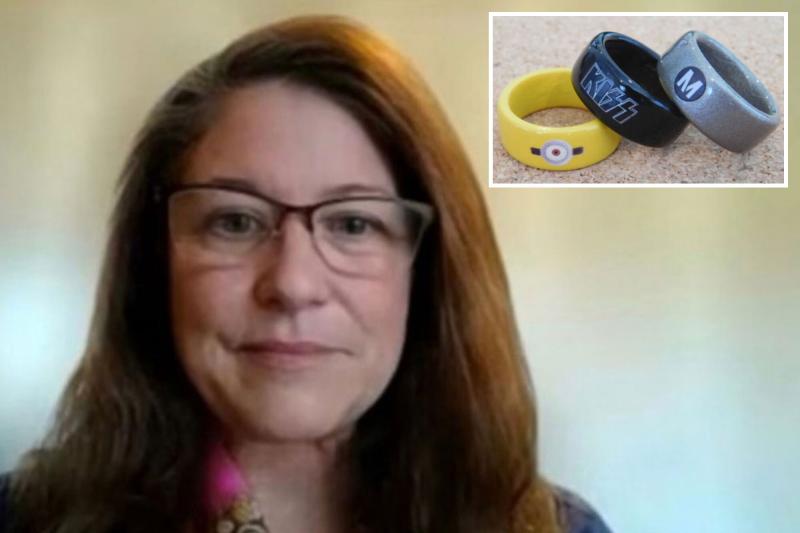
Michelle Bisnoff is the former chief executive of Esos Rings Inc., a California wearable-technology company that marketed near-field-communication “smart rings” for contactless payments. In September 2026 a federal jury in Los Angeles convicted her on sixteen criminal counts arising from a Ponzi scheme that took in nearly $2 million from investors on the strength of a patent she did not own, plus a fraudulently obtained $150,000 pandemic-era federal business loan. The 59-year-old, who has also used the names Michelle Angeline Silverstein and Shelly Silverstein and who formerly lived in Pacific Palisades and Santa Barbara before moving to Boca Raton, now faces a sentencing hearing at which each fraud count carries a statutory maximum of twenty years in federal prison.
Background Information
Bisnoff’s route into the fraud began with a legitimate job. McLear Ltd., a United Kingdom company, held the patent on NFC payment rings — wearables that embed credit-card credentials inside a finger ring — and hired Bisnoff to develop an American market for the product. By early 2017 she was claiming she owned the key patent herself, supporting the claim with a falsified patent assignment, and had formed Esos Rings Inc. to market “smart rings” built on technology that still belonged to McLear. The scheme ran for years before regulators caught up with it: in 2023 the Securities and Exchange Commission sued Bisnoff and Esos for fraudulently raising $1.95 million from investors, and a September 2023 judgment ordered her and the company to pay $836,548 — disgorgement of $566,483 in net fraud profits, $46,836 in prejudgment interest and a $223,229 civil penalty — within thirty days. Court records cited by prosecutors show that neither Bisnoff nor Esos ever paid any of it.
The Controversy or Incident That Led to Their Cancellation
Adjudicated vs. alleged. Bisnoff was convicted by a federal jury after a seven-day trial. The counts below are jury verdicts, not allegations; sentencing remains pending as of this page’s last update.
The trial evidence, as summarized by the Justice Department, laid out a pattern of fabricated upside. Bisnoff told investors Esos was profitable, that investor money was scaling manufacturing and inventory to meet demand from major retailers, and that Apple and Roc Nation were investing in the company. None of it was true: Esos had little revenue, no agreement with Target, and had sold exactly six rings on Walmart.com — three of which were returned. She also claimed to be on the verge of a licensing deal with Middle Earth Enterprises, holder of The Lord of the Rings brand, which never materialized, and promised investors above-market share buybacks that never came. When returns failed to appear, a victim who testified at trial described her explanations as “dog-ate-my-homework” excuses. Prosecutors said she then attempted to embezzle roughly $550,000 from an employer to pay investors, sending checks that bounced. Most of the investors’ money went to her personal expenses and to Ponzi-style payments to earlier investors. In total the scheme took in nearly $2 million and cost victims about $1.4 million.
The second strand of the case was pandemic-relief fraud. In March 2020, using the name “Michelle Silverstein” and identifying herself as Esos’s chief operating officer, Bisnoff applied for a federal Economic Injury Disaster Loan, lying about the company’s gross revenue and cost of goods sold. She received $150,000, certified it would be spent only on business expenses, and instead put part of it toward her personal lifestyle — including roughly $15,600 in monthly rent on a large leased house in Pacific Palisades. The jury convicted her of six counts of securities fraud, six counts of wire fraud, two counts of money laundering, one count of wire fraud in connection with a COVID-relief loan, and one count of aggravated identity theft, which carries a mandatory two-year prison term that must run consecutively to any other sentence.
Public Reaction and Consequences
The conviction drew coverage from Los Angeles-area and national outlets, with the New York Post framing it as a tech CEO “busted in bizarre $2M smart ring scam after ripping off British business owner” — a reference to McLear, the UK patent holder whose technology she had claimed as her own. The SEC’s earlier civil judgment, still unpaid at the time of the criminal verdict, featured prominently in the reporting. The FBI and the Small Business Administration’s Office of Inspector General investigated the case, with assistance from the SEC and the US Attorney’s Office for the Southern District of Florida.
The concrete consequences are the sixteen felony convictions themselves and the exposure that comes with them: sentencing before United States District Judge Mónica Ramírez Almadani. The published record contains no public statement from Bisnoff following the verdict, and no statement from Esos Rings.
Current Status
Bisnoff is awaiting a sentencing hearing scheduled for January 21, 2027, in the Central District of California. She faces a statutory maximum of twenty years in federal prison for each securities-fraud and wire-fraud count, ten years for each money-laundering count, and a mandatory consecutive two-year term on the aggravated identity theft count. The SEC’s $836,548 judgment from 2023 also remains unpaid according to court documents cited at the time of the verdict.
Impact on Their Career/Life
The verdict ends Bisnoff’s run as a wearable-tech founder: Esos Rings is a convicted fraud vehicle, its product built on a patent that belonged to McLear all along, and her name — including the Silverstein aliases — is now attached to a jury’s fraud findings rather than a payment-innovation story. With sentencing months away and each fraud count carrying a twenty-year statutory maximum, the practical question reported by prosecutors is how many decades the guidelines will produce. Beyond prison exposure, she remains on the hook for the unpaid SEC judgment. The published record contains no information about her circumstances since the verdict, and nothing on this page should be read as going beyond it.
Sources
- *U.S. Small Business Administration OIG, “‘Smart Rings’ CEO Found Guilty of Running $2 Million Ponzi Scheme”, 25 September 2026 — source
- *KEYT News Channel 3-12, “Esos Rings CEO Michelle Bisnoff Convicted of Nearly $2 Million Ponzi Scheme”, 25 September 2026 — source
- *New York Post, “California tech CEO busted in international $2M smart ring Ponzi scheme”, 28 September 2026 — source