Børge Brende
Introduction
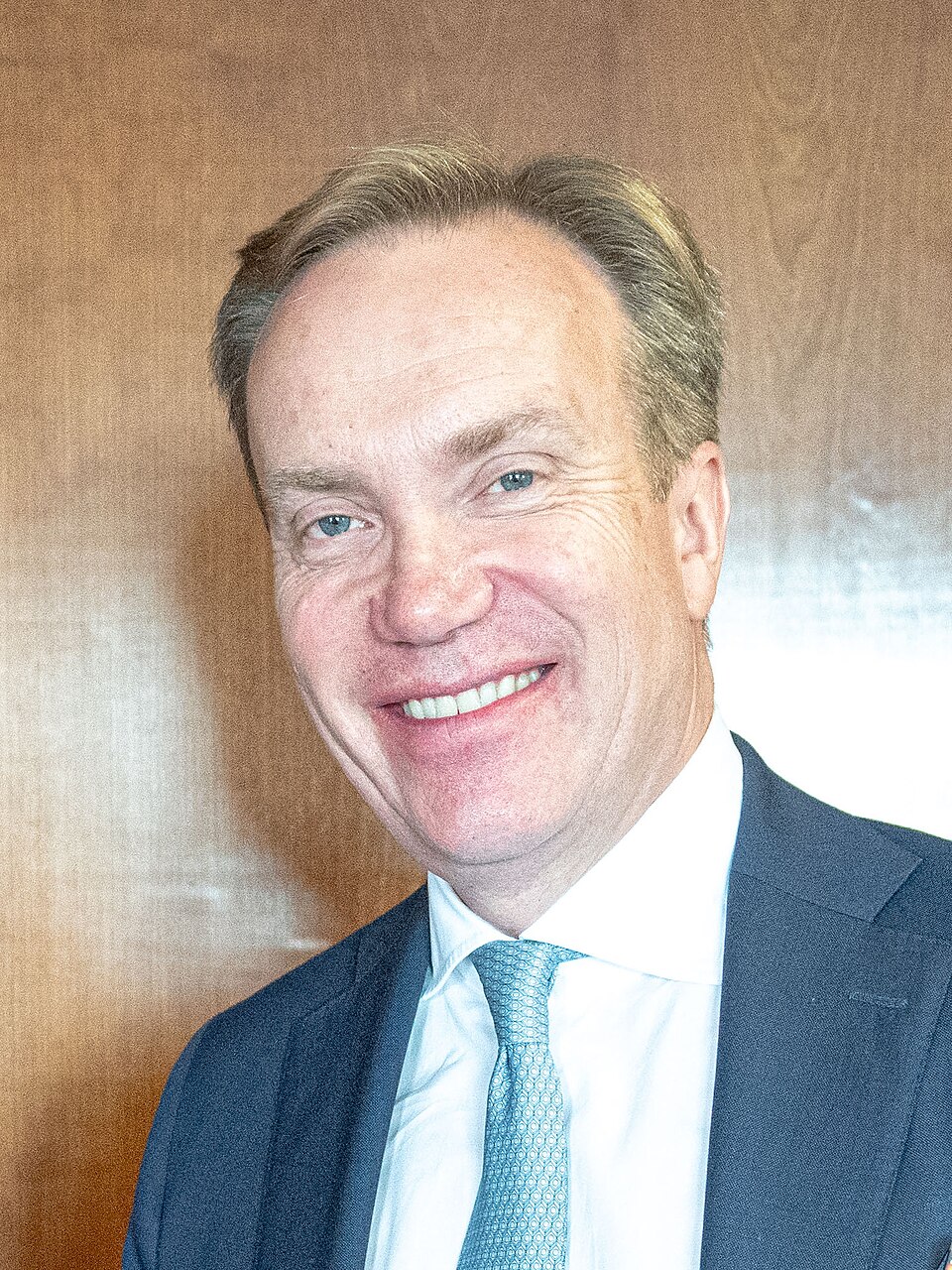
Børge Brende, the Norwegian politician and diplomat who served as president and chief executive of the World Economic Forum (WEF), announced on Thursday, February 26, 2026, that he would step down after more than eight years leading the organization. His resignation followed an independent review ordered by the forum into his links to the late convicted sex offender Jeffrey Epstein, after Brende admitted dining with Epstein on three occasions between 2018 and 2019.
Background Information
Brende was born on 25 September 1965 in Odda, Norway, and studied economics, law and history at the Norwegian University of Science and Technology in Trondheim. He entered politics through the Conservative Party, serving as a member of the Norwegian parliament from Sør-Trøndelag from 1997 to 2009 and holding two cabinet posts in the government of Prime Minister Kjell Magne Bondevik: Minister of the Environment from 2001 to 2004 and Minister of Trade and Industry from 2004 to 2005.
In May 2009, Brende was appointed secretary general of the Norwegian Red Cross, overseeing its domestic operations and international disaster response programs; he resigned in March 2011 to return to the World Economic Forum as a managing director. He then served as Norway’s Minister of Foreign Affairs from 2013 to 2017, a period that included his negotiation of the 2015 interim agreement prohibiting commercial fishing in international Arctic waters and Norway’s facilitation of the Colombian peace process.
In September 2017, it was announced that Brende would become president and CEO of the WEF, and he took office on 23 October 2017. The Geneva-based forum is best known for its annual January meeting in the Swiss Alpine resort of Davos, which attracts political and business leaders from around the world.
The Controversy or Incident That Led to Their Cancellation
-
Epstein files released (January 30, 2026) — Brende’s exchanges with Epstein were published on 30 January 2026 per the Epstein Files Transparency Act, part of a tranche of documents released by the US Department of Justice. Before the release, in November, Brende had denied having any contact with Epstein; once their relationship came to light in the documents, he admitted to knowing him.
-
Admission and independent review (February 2026) — The WEF announced earlier in February that it was opening an internal review into Brende to determine his relationship with Epstein, after the files indicated the two had dined together several times and exchanged messages. Brende acknowledged dining with Epstein on three occasions between 2018 and 2019 and communicating with him by email and text, while insisting he was “completely unaware” of Epstein’s past criminal activity. He told Norwegian broadcaster NRK that he was cooperating with the investigation, that he had met Epstein only in business settings, and that he had been unaware of his criminal background; he also said he regretted not having investigated Epstein more thoroughly.
-
Resignation (February 26, 2026) — On Thursday, Brende announced he would step down as president and chief executive after “careful consideration,” adding: “I believe now is the right moment for the Forum to continue its important work without distractions.”
Epstein, who died in 2019 while awaiting trial on sex trafficking charges, had been convicted in 2008 for soliciting prostitution from a minor and was registered as a sex offender. Being named in the Epstein files does not indicate criminality, and Brende has not been accused of wrongdoing.
Public Reaction and Consequences
The independent review, conducted by outside counsel, concluded with findings that “there were no additional concerns beyond what has been previously disclosed,” according to a statement from WEF co-chairs André Hoffmann and Larry Fink. The co-chairs also expressed “sincere appreciation” for Brende’s “significant contributions,” describing his “dedication and leadership” as “instrumental during a pivotal period of reforms for the organisation,” and said they respected his decision to step down.
Brende’s resignation added to a growing list of prominent figures to stand down over their links to Epstein following the files’ release. Earlier that week, Larry Summers, the former US treasury secretary and former Harvard University president, announced he would resign from teaching at the end of the academic year in connection with Harvard’s review of government-released Epstein documents; the previous week, billionaire Thomas Pritzker stepped down as executive chair of Hyatt after admitting exercising “terrible judgment” in maintaining contact with Epstein and Ghislaine Maxwell.
The controversy also reached Brende’s home country, where several Norwegian public figures — including Crown Princess Mette-Marit and diplomats Mona Juul and Terje Rød-Larsen — were drawn into scrutiny over Epstein links; earlier in February, former Norwegian prime minister Thorbjørn Jagland was charged with “gross corruption” over his ties with Epstein, police said. Brende was also criticized by former prime minister Erna Solberg, while the leader of Norway’s Liberal Party, Guri Melby, called his communications with Epstein “grotesque.”
Current Status
As of late February 2026, Brende has left the WEF presidency, with Wikipedia dating his tenure from 23 October 2017 to 26 February 2026 and recording that he resigned in light of the Epstein files controversy. The forum said Alois Zwinggi, previously a managing director on its executive body, will serve as interim president and CEO while the board of trustees oversees the process to identify a permanent successor.
Impact on Their Career/Life
The resignation ended Brende’s more than eight-year run at the helm of one of the world’s most prominent international institutions, capping a career that had spanned Norwegian cabinet posts, the Red Cross, and the leadership of the Davos forum. The episode illustrates how decisively association with Epstein has become disqualifying for institutional leaders in the wake of the files’ release: even with a completed review finding no additional concerns and no accusation of wrongdoing against him, Brende concluded that continuing in his role would leave the forum unable to work “without distractions.”
For Brende, the controversy has permanently attached Epstein’s name to his public record. Whether he will resurface in Norwegian politics or in another international role remains to be seen, but his departure — once the documents were published and his contacts became known — followed a pattern repeated across institutions during the same period, leaving his legacy as a diplomat and statesman altered by the association.