Chris Licht
Introduction
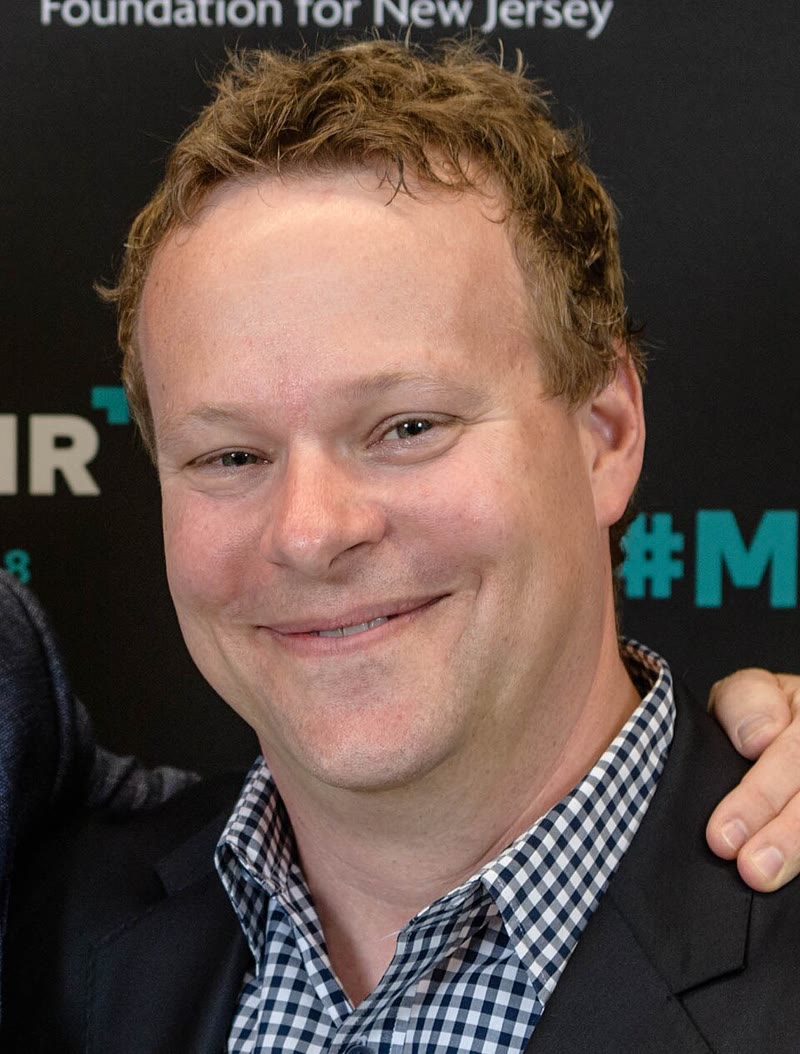
Chris Licht is an American television news producer and executive whose thirteen-month tenure as chairman and chief executive of CNN ended with his ouster in June 2023, days after The Atlantic published a devastating 15,000-word profile of his leadership. Before the debacle he was one of American television’s most accomplished producers: founding executive producer of MSNBC’s Morning Joe, launch showrunner of CBS This Morning, and executive producer of The Late Show with Stephen Colbert. At CNN that reputation collapsed within a single week — and the fatal blow was self-inflicted, since the profile that ended his tenure was a project Licht himself had pushed forward despite skepticism inside his own communications team.
Background Information
Christopher Andrew Licht was born on October 22, 1971, and graduated from Syracuse University’s S. I. Newhouse School of Public Communications in 1993 with a degree in broadcast journalism and political science. In 2005 he joined MSNBC, executive-producing Scarborough Country and becoming founding executive producer of Morning Joe ahead of its 2007 launch. He moved to CBS in 2011 and relaunched CBS This Morning in 2012, a revival credited with giving CBS its most competitive morning-show position in nearly thirty years and honored with a Peabody Award and multiple Emmys. In 2016 he became executive producer and showrunner of The Late Show with Stephen Colbert.
He arrived after president Jeff Zucker was forced to resign in February 2022 for failing to disclose a consensual relationship with a colleague. Named his successor, Licht took office as chairman and CEO in May 2022 with a mandate from parent company Warner Bros Discovery to move the network toward the political center and win back viewers alienated by CNN’s hostility to Donald Trump. On his first day he told employees CNN could “be a beacon in regaining” the public’s lost trust in the news media.
The Controversy or Incident That Led to Their Cancellation
Licht’s first year was turbulent. In late 2022, CNN terminated the contracts of several longtime on-air figures — media reporter Brian Stelter, chief media correspondent John Harwood, and commentator Jeffrey Toobin — moves widely read as evidence of his push to strip the network of a politically charged tone. The high-profile firing of morning anchor Don Lemon followed in 2023. Ratings languished — at times below the far smaller pro-Trump outlet Newsmax — and staff morale sank amid widespread reports of unrest.
The defining flashpoint came on May 10, 2023, when CNN’s town hall with Donald Trump in Manchester, New Hampshire, drew 3.3 million viewers and a firestorm of criticism. Trump repeated lies about election fraud, abused the writer E. Jean Carroll, whom a jury had just found liable for sexual assault and defamation, and attacked moderator Kaitlan Collins while the crowd cheered and booed. Critics accused CNN of platforming Trump; two days later, CNN’s prime-time viewership fell below Newsmax’s. The Atlantic subsequently revealed that Licht had known in advance that the audience would prove “extra Trumpy.”
On June 2, 2023, The Atlantic published Tim Alberta’s profile — more than 15,000 words chronicling Licht’s missteps and the unhappiness of his own staff, and noting his criticism of CNN under Zucker, which he told employees had alienated viewers through hostility to Trump. The story landed with unusual force because it was Licht’s own passion project: per Business Insider, he pushed the all-access piece forward over the summer of 2022, and five sources with first-hand knowledge said no one but Licht was dying to do it — communications chief Kris Coratti Kelly was skeptical before relenting, while her lieutenant Matt Dornic, friendly with Alberta, went along.
Public Reaction and Consequences
The profile triggered a barrage of criticism from CNN staff privately and media observers publicly. On Monday, June 5, Licht apologized to employees and vowed to fight to regain their trust; the call failed to win over staffers still loyal to Zucker. The ridicule extended beyond the building: Columbia Journalism School professor Bill Grueskin wrote that it “wouldn’t be fair to say a trained seal could do a better job running CNN than Chris Licht… it feels like we should give the trained seal a shot.”
Two days later, on the morning of June 7, Puck’s Dylan Byers broke the news of Licht’s departure. Warner Bros Discovery chief David Zaslav told employees on the daily editorial call, “I met with Chris and he will be leaving CNN,” and pledged a wide search for a successor. “Unfortunately, things did not work out the way we had hoped — and ultimately that’s on me,” Zaslav wrote to staff. Byers reported that Licht learned his fate only that morning; Brian Stelter, himself fired by Licht, reported the staff call.
Byers framed the fall bluntly: after “a year of leadership missteps, programming misfires, a disastrous Trump town hall and the near-total decimation of staff morale in the wake of a chilling all-access Atlantic story,” Licht was out, closing one of “the most turbulent periods in the network’s 43-year history.” He did not fall alone: the same day, CNN’s top two communications executives, Kris Coratti Kelly and Matt Dornic, were shown the door alongside other executives close to him. Amy Entelis took over on an interim basis, backed by an acting leadership team of Virginia Moseley, Eric Sherling, and David Leavy.
Current Status
Licht has kept a low profile since leaving CNN, doing some consulting and teaching a class at Syracuse University on the future of media; he has not ruled out a return to the business. Zaslav promised a “thoughtful and thorough search” for a permanent leader. Media Matters senior fellow Matthew Gertz argued Licht had been shaping CNN toward “the ideological vision preferred by David Zaslav and John Malone,” leaving “little reason to expect a course correction following his defenestration.”
Impact on Their Career/Life
The immediate impact was the loss of the most prominent job of his career barely thirteen months in, along with his top communications aides. A production résumé that reshaped morning news and late-night comedy is now inseparable from the CNN debacle, and his name has become media-industry shorthand for executive hubris: a leader undone by the very all-access profile he personally commissioned. Zaslav publicly shouldered the blame — “ultimately that’s on me” — but the career cost fell entirely on Licht. The episode is now a standard citation in cancellation debates because it inverted the usual script: no scandal, just a self-authored portrait of unpopularity that rendered a besieged CEO untenable within days.