Paul Richard Randall
Introduction
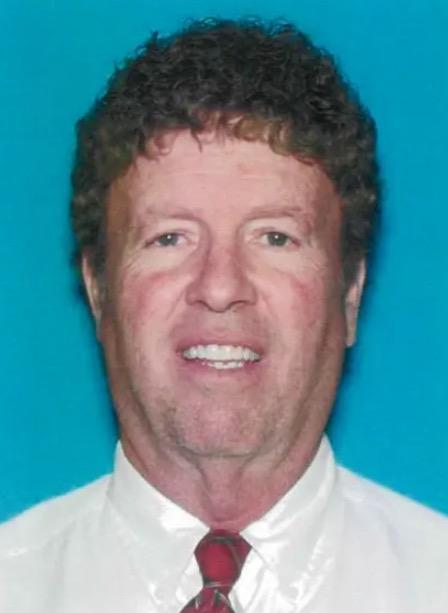
Paul Richard Randall is a 67-year-old Orange, California, pharmacy operator who became the face of one of the largest Medi-Cal fraud cases in California history — and, on September 9, 2026, the recipient of one of the harshest health-care-fraud sentences ever handed down in the Central District of California. Randall, who ran a business called Monte Vista Pharmacy, was sentenced to 30 years in federal prison — the statutory maximum — and ordered to pay roughly $178.7 million in restitution after admitting that his operation submitted about $269 million in fraudulent claims to Medi-Cal, the state’s Medicaid program, in less than a year. Federal prosecutors say the 11-month scheme, which ran from May 2022 to April 2023, exploited a temporary change in Medi-Cal’s reimbursement rules and was fueled by kickbacks, pre-signed prescriptions and medications that were frequently never dispensed at all.
Background Information
The scheme’s opening came from the system itself: Medi-Cal had suspended its requirement that health care providers obtain prior authorization before providing certain high-reimbursement medications as a condition of reimbursement, a temporary measure tied to the program’s transition to a new payment system. Through Monte Vista Pharmacy, Randall and his co-conspirators took advantage of that suspension, billing tens of millions of dollars per month for high-reimbursing, non-contracted generic drugs. Court documents identify two alleged participants alongside Randall: pharmacist and pharmacy owner Kyrollos Mekail, 38, of Moreno Valley, and nurse practitioner Patricia Anderson, 59, of West Hills, who was allegedly paid to sign pre-filled prescriptions. Adding to the government’s outrage, Randall was not a free man when he built the scheme — he committed the fraud while already on release in another federal criminal tax case in the same district.
The Controversy or Incident That Led to Their Cancellation
Adjudicated vs. alleged. Randall’s conviction — a guilty plea to one count of wire fraud, entered in April 2026 and followed by a 30-year sentence and a restitution judgment — is a matter of court record. Claims about the scheme that were not part of his admitted conduct, and the responsibility of his charged co-defendants, remain allegations unless and until proven in court.
According to the Department of Justice, the fraud was industrial in its proportions: from May 2022 through April 2023, Randall caused at least $269,120,829 in false and fraudulent claims to be submitted to Medi-Cal, of which Medi-Cal paid approximately $178,746,556. The billing pattern was audacious — one prescription for generic meloxicam 5 mg was billed at approximately $13,424, though the drug typically costs between $5 and $25 for a 30-day supply in larger dosages, and the claim mix included pain creams and Folite tablets, an over-the-counter vitamin. Court documents say the medications were medically unnecessary, frequently never dispensed to patients, and obtained through illegal kickbacks. Prosecutors say the operation ran on a network of payoffs: patient marketers received kickbacks in exchange for Medi-Cal beneficiary information, and Anderson was paid to sign pre-filled prescriptions despite never meeting the patients, reviewing their medical records, or determining whether the drugs were medically necessary. The illicit proceeds were then laundered through a third party that paid hundreds of thousands of dollars in kickbacks to Anderson for signing the fraudulent prescriptions, per the department.
Public Reaction and Consequences
Randall pleaded guilty in April 2026 to one count of wire fraud, and in his plea agreement he agreed to forfeit property obtained from the fraud, including bank account balances exceeding $17 million, three vehicles, seven real properties, and sports memorabilia. On September 9, 2026, he was sentenced to 30 years in federal prison — the statutory maximum — and ordered to pay $178,746,556.22 in restitution, a punishment the Justice Department described as among the highest health-care-fraud sentences in the Central District of California’s history. The government has seized approximately $126.5 million in assets accumulated from the scheme, including $111 million in bank funds and securities, nine luxury vehicles worth about $1 million, nine luxury properties worth about $13.5 million, and more than $1 million in sports memorabilia — a haul that, per the California Post, included game-worn Kobe Bryant sneakers. Officials framed the sentence as a warning: Assistant Attorney General Colin M. McDonald of the National Fraud Enforcement Division said the case shows the Fraud Division “will aggressively prosecute you and seek to hold you accountable to the fullest extent under the law,” while First Assistant U.S. Attorney Bill Essayli charged that Randall “took advantage of California’s weak systems” and urged the state to stop “leaving the vault door open.”
Current Status
Randall, 67, is now serving his 30-year federal prison term, with the $178.7 million restitution judgment hanging over whatever assets remain to be recovered; the government’s asset-forfeiture work in the case is ongoing, with AUSA James E. Dochterman of the Central District of California’s Asset Forfeiture and Recovery Section handling those matters. The case was investigated by the FBI, HHS-OIG and the California Department of Justice, and prosecuted by Trial Attorney Siobhan M. Namazi of the Fraud Division’s Health Care Fraud Section and Assistant U.S. Attorney Roger A. Hsieh. What became of Mekail and Anderson — identified in court documents as participants in the scheme — is not detailed in the available reporting on the sentencing.
Impact on Their Career/Life
The sentence ended, in one stroke, the fortune Randall allegedly assembled: the seizure ledger — bank funds, nine luxury vehicles, nine properties, more than $1 million in sports memorabilia — reads like the inventory of a life-style built on fraudulent claims, and it is now government property by forfeiture. At his age, a 30-year term is effectively a life sentence, and the case now stands among the highest health-care-fraud sentences in the history of the Central District of California. The Justice Department has also made the prosecution a showcase: it was announced the same day the department unveiled its National Fraud Enforcement Division, part of what officials describe as a whole-of-government push against fraud in public benefit programs, and Essayli seized on the case to argue that California must prevent the looting of taxpayer coffers “before it happens, not scramble to recoup money after it’s been stolen.”