Prince Andrew
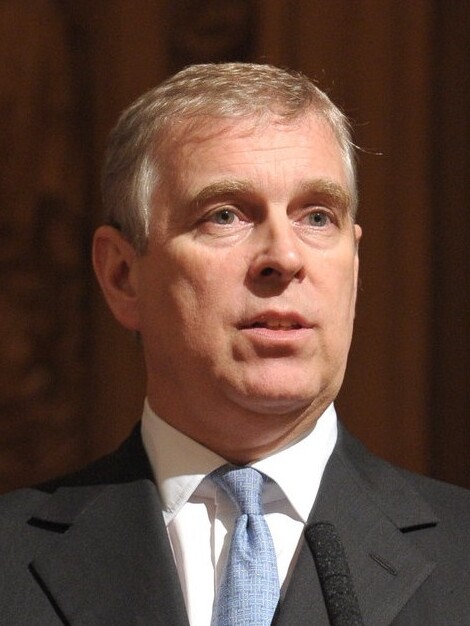
Introduction
Prince Andrew, Duke of York (born 19 February 1960), is the third child and second son of Queen Elizabeth II and Prince Philip, a Royal Navy veteran of the Falklands War who served as the UK’s Special Representative for International Trade and Investment from 2001 to 2011. His friendship with the convicted child sex offender Jeffrey Epstein ended his public life: he quit royal duties in 2019 over a disastrous BBC interview about the friendship, was stripped of his working roles in January 2022 as Virginia Giuffre’s lawsuit proceeded, settled that suit for a reported £12 million with no admission of liability, was stripped of his remaining titles and home by King Charles in October 2025, and was arrested in February 2026 on suspicion of misconduct in public office over Epstein-related documents. In October 2026 he launched a judicial review against Thames Valley Police over the arrest and the search warrants behind it.
Background Information
Born at Buckingham Palace in 1960, Andrew served in the Royal Navy from 1979 to 2001, flying helicopters on active duty in the Falklands War, and married Sarah Ferguson in 1986, with whom he had two daughters, Princess Beatrice and Princess Eugenie, before their 1996 divorce. From 2001 to 2011 he served as the UK’s special representative for international trade — the trade-envoy role at the center of the current criminal investigation — visiting, among other places, Hong Kong, Singapore, Vietnam and China. His friendship with Epstein went back years: the pair were photographed walking in Central Park in December 2010, and in 2014 Virginia Giuffre alleged she had been sex-trafficked to Andrew by Epstein and Ghislaine Maxwell, including sex with him in London in 2001 when she was 17. Andrew has repeatedly and consistently denied all of Giuffre’s allegations.
The Controversy or Incident That Led to Their Cancellation
Adjudicated vs. alleged. Nothing against Andrew has been tested at trial: the Giuffre suit settled in 2022 with no admission of liability, the 2026 misconduct-in-public-office investigation is ongoing and uncharged, and his judicial review challenges the police’s actions, not any verdict. Statements about his guilt or innocence in either matter remain allegations and denials.
The collapse came in stages. In November 2019 Andrew gave a BBC Newsnight interview denying Giuffre’s allegations — including his claim that he could not have been dancing with her in London because he was at a PizzaExpress in Woking — which was widely described as a car-crash performance, and within days he suspended his public duties. In August 2021 Giuffre sued him in New York; in January 2022 the palace stripped his military affiliations and patronages, and in February 2022 he settled for a reported £12 million with no admission of liability, saying he regretted his association with Epstein and commending the bravery of Epstein’s survivors.
The reinvestigation that led to his arrest built through 2025. In October 2025 The Guardian published extracts from Giuffre’s posthumous memoir — she died by suicide that April — in which she claimed the prince “believed that having sex with me was his birthright.” Days later, on October 30, 2025, Buckingham Palace announced that King Charles had begun a “formal process to remove the style, titles and honours of Prince Andrew,” that Andrew would henceforth be known as Andrew Mountbatten Windsor, and that formal notice had been served to surrender his lease on Royal Lodge, with the king privately funding a move to accommodation on the Sandringham estate. The palace said the censures were “deemed necessary, notwithstanding the fact that he continues to deny the allegations against him”; Giuffre’s family called the announcement a victory, saying she had “brought down a British prince with her truth and extraordinary courage.” The government said it had no plans to legislate him out of the line of succession, where he remained eighth.
On his 66th birthday in February 2026, Andrew was arrested at Marsh Farm on the Sandringham estate by Thames Valley Police on suspicion of misconduct in public office — a common-law offence covering public officials who abuse their power — over allegations that he passed sensitive government documents to Epstein during his trade-envoy years, based on material released by the US Justice Department from the Epstein files. He was driven to Aylsham Police Station, where he was questioned for almost 12 hours, then released under investigation; detectives searched Marsh Farm and Royal Lodge for days under warrants granted by an Old Bailey judge. In May 2026 Thames Valley Police said its investigation would also look at allegations of sexual misconduct, and detectives encouraged a woman who accuses Epstein of bringing her to the UK to have sex with Andrew to come forward. Reuters could not immediately verify aspects of the reporting, and neither Thames Valley Police nor Buckingham Palace responded to requests for comment made outside business hours.
In October 2026 Andrew escalated against the investigation itself: The Telegraph reported that he had lodged a judicial review — approved by a High Court judge after an application made earlier in the year — challenging the legality of the search warrants behind the raids, asking a judge to determine whether the force’s action toward him was lawful. A private High Court hearing was set for the following Thursday to decide whether to release certain court documents relating to the review. LBC noted the proceedings as a 400-year first: the last member of the royal family to challenge the lawfulness of criminal proceedings against them was Charles I, at his 1649 trial. The New York Post’s main X account carried the story to its followers on October 5, 2026.
The challenge succeeded within days — and against the police. At a High Court hearing on October 8, 2026, Justice Nicholas Hilliard said Thames Valley Police had made “a significant error” in applying for the warrants, that the parties had agreed the warrants must be invalidated before the hearing, and that the force accepted they must be quashed because the initial court’s decision to issue them was incorrect. The force said “legal proceedings are currently ongoing to decide how material seized during the searches will be managed and whether we can lawfully retain it in support of our ongoing investigation” — meaning the investigation itself survives even as its search evidence is tainted. Mark Stephens of Howard Kennedy called the hearing a preliminary skirmish: “It’s the first step of Prince Andrew and his lawyers saying, ‘Actually, this is tainted evidence. It was obtained inappropriately.’ Therefore it should be excluded from any criminal trial.” Buckingham Palace has made clear the King’s private stipend to Mountbatten-Windsor may not fund his challenge to the warrants, and Mountbatten-Windsor did not attend the hearing.
Public Reaction and Consequences
Each escalation has cost Andrew more of his standing. The 2019 interview and 2022 title-stripping ended his life as a working royal; charities and universities cut ties en masse after the interview, and his social-media accounts and palace biography were erased. The October 2025 stripping of even the style “Prince” — an action his brother initiated with the support of the Prince of Wales, and to which Andrew did not object — was described by commentators as the final formal severance of a royal identity, and it came with the loss of his home of more than twenty years, Royal Lodge.
His February 2026 arrest was itself a spectacle: News24 described him being driven away from a police station after the detention, photographed in public for the first time as a criminal suspect rather than a prince. The judicial review drew fresh attention in October 2026, with coverage focusing both on the unprecedented legal posture — a former prince suing the police force investigating him — and on reports that the underlying investigation has struggled after the US Department of Justice did not hand over an unredacted version of the Epstein files. Andrew has largely kept a low profile during the investigation and is not required to surrender his passport while under investigation, though royal officials reportedly consider foreign travel inadvisable.
Current Status
Andrew Mountbatten Windsor remains released under investigation for misconduct in public office, with no charges brought; Thames Valley Police’s inquiry now also covers sexual-misconduct allegations, and prosecutors have brought no case against him in connection with the Epstein files. His judicial review of the search warrants succeeded on October 8, 2026 — the warrants were conceded unlawful and quashed — but the underlying investigation continues while the court decides how the seized material is managed and whether any of it can be lawfully retained; the review challenged the police procedure, not the underlying allegations, and he continues to deny all of them, saying he regrets his friendship with Epstein. He remains eighth in the line of succession, lives on the Sandringham estate on private provision from the King — which the palace has barred from funding his warrant challenge — and has not been in direct contact with his brother for an extended period, though he remains in touch with the Duke of Edinburgh and the Princess Royal.
Impact on Their Career/Life
In seven years Andrew went from a Falklands-veteran prince and trade envoy to a man with no title, no royal home, no public role, an open criminal investigation into his conduct in office, and a lawsuit of his own against the police who arrested him. The Giuffre settlement, reported at up to £12 million, was followed by the loss of his military appointments, his remaining patronages, his dukedom, his style as prince, and his 30-room Windsor residence — with the palace’s October 2025 statement pointedly noting that his lease had until then “provided him with legal protection to continue in residence.” The judicial review, whatever its outcome, guarantees the Epstein affair stays in court through 2026 and ties his name to the documents released by the US Justice Department that triggered the case.
Sources
- New York Post, “Judge says search warrants used to seize property from former Prince Andrew were unlawful,” Oct. 8, 2026 — source
- New York Post, “Ex Prince Andrew takes cops to court over Epstein files arrest: report,” Oct. 5, 2026 — source
- The Guardian, “Andrew Mountbatten-Windsor launches legal action against Thames Valley police over Epstein raids,” Oct. 5, 2026 — source
- LBC, “Andrew Mountbatten-Windsor takes police to court after Epstein files arrest,” Oct. 2026 — source
- News24/Reuters, “Former prince Andrew takes police to court over Epstein files arrest,” Oct. 5, 2026 — source
- The Guardian, “Prince Andrew to be stripped of titles and forced to leave Windsor home,” Oct. 30, 2025 — source
- BBC News, “No plans to remove Andrew from line of succession after losing royal titles,” Oct. 30, 2025 — source
- @nypost on X, trigger post, Oct. 5, 2026 — source