Harold Vanderford
Introduction
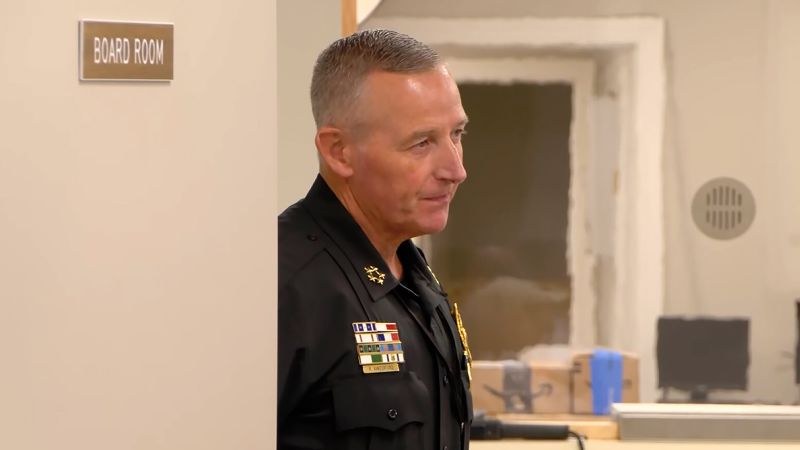
Harold Vanderford is the former police chief of Senatobia, Mississippi, a city of roughly 8,000 people about 40 miles south of Memphis, who was fired from the job in September 2026 after published reports alleged he had used racist slurs in private text messages with a colleague. His removal came at one of the most volatile moments in the city’s recent history: Senatobia had spent the summer reeling from the police shooting death of Kohen Wiley, a one-year-old Black boy killed when an officer fired into a vehicle during a shoplifting call, and the texts allegation landed on a department already under fire for its relationship with the Black residents it polices. In an unusual twist, Vanderford submitted his resignation the same day the city moved against him — but the board of aldermen declined to accept it and voted unanimously to fire him instead, an outcome that left the official record showing a termination rather than a voluntary exit.
Background Information
Vanderford led the Senatobia Police Department as its chief and was a familiar presence at city government, attending board of aldermen meetings in person during the controversies that ultimately consumed his tenure. He had served long enough under City Hall’s leadership that when the texts reports first surfaced in late August 2026, the city publicly stood behind him: in an August 25 statement, the city said Vanderford had appeared before the mayor and board to answer questions about the reporting and that he would continue to serve as police chief. That position held for only about a week. The department he ran was simultaneously managing the fallout from the June 14, 2026 shooting in which an officer, responding to a Walmart shoplifting call, fired into a vehicle and killed baby Kohen Wiley and wounded another woman; the officer involved was placed on administrative leave while the Mississippi Bureau of Investigation examined the shooting, and the child’s mother denied any theft.
The Controversy or Incident That Led to Their Cancellation
Allegations. The claims in this section are allegations from news reporting — accounts of private text messages that Vanderford has not publicly confirmed or been charged over. They were never admitted by Vanderford, never criminally charged, and never adjudicated in court.
The controversy that ended Vanderford’s career as chief began with reporting published the previous month. According to CNN, citing the earlier work of The New York Times, Mississippi Today and Verite News, reports in August 2026 alleged that Vanderford used racist slurs in private text conversations with a colleague. The reports landed in a city where tensions between Black residents and the police had already boiled over following Kohen Wiley’s death, and they transformed a leadership question into a public reckoning over who was leading the department. The city’s initial answer — that Vanderford had answered the board’s questions and would stay on — collapsed within days as the criticism mounted. On September 1, 2026, the board of aldermen convened and moved to remove him. Vanderford submitted his resignation that same day, but the aldermen declined to acknowledge it and instead voted unanimously to fire him, according to the city clerk, who did not elaborate on the board’s reasons.
Public Reaction and Consequences
The firing was the sharpest consequence to emerge from the texts reports, and it drew coverage well beyond north Mississippi, with national outlets documenting the board’s decision to convert what might have been a quiet resignation into an explicit termination. Within the city government, aldermen framed the moment as one that demanded accountability rather than unity for its own sake. Alderman Demetrius Garrett wrote in a Facebook post that he believed the board had “a responsibility to protect the integrity and trust of the Senatobia Police Department,” adding, “I still believe in unity. But unity does not mean ignoring serious issues it means standing together for what is right.” Another alderman, Chris McConnell, went further and called for an independent investigation of the police department, arguing the city needed answers about departmental leadership. The termination also capped a run of crises for the department: the Wiley shooting remained under state investigation, the mother of the killed child faced no charges, and city officials were contending with public anger over both the shooting and the leadership that oversaw the force.
Current Status
Vanderford is out of the job he held for years and holds no post with the city; his same-day resignation offer was rejected so that the separation would stand as a firing, and no successor had been announced in the immediate coverage of his removal. No criminal charge or lawsuit arising from the texts reports had been reported as of the days following his dismissal, and the underlying allegation remains an unproven account of private messages rather than an adjudicated finding. The officer who fired the shots that killed Kohen Wiley remains on administrative leave pending the Mississippi Bureau of Investigation’s review, meaning the department’s reckoning extends beyond the chief who led it.
Impact on Their Career/Life
A decades-long law-enforcement career ended not with the resignation letter Vanderford submitted but with the unanimous vote the board used to refuse it — a distinction that matters for any future policing role, since a firing for-cause record follows an officer in a way a voluntary departure does not. For Senatobia, the episode removed the man at the top of a department whose conduct toward Black residents was already the subject of grief and fury, and it left the city searching for both a new chief and, in McConnell’s words, independent answers about how the department is run. The case also became part of a broader 2026 pattern in which text-message reporting — private words, not public posts — ended policing careers, and it demonstrated that a board willing to vote can convert even an attempted resignation into a public termination on the official record.