Yinmi Molina-Zepeda
Introduction
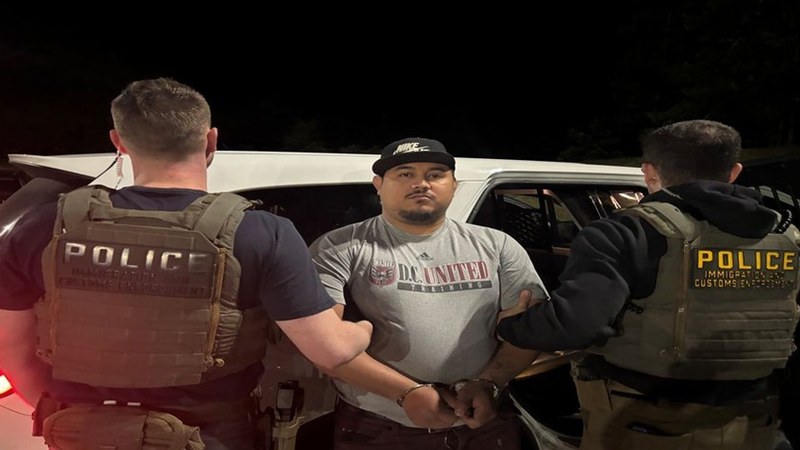
Yinmi Molina-Zepeda is a Salvadoran national who was arrested by U.S. Immigration and Customs Enforcement (ICE) in Woodbridge, Virginia, after it emerged that he is wanted in his home country for aggravated homicide and other crimes. ICE announced the arrest on September 15, 2026, the same day it lodged a high-profile detainer in the Freddi Chigo Mil murder case in Staunton, and the arrest quickly became part of a national political fight over Virginia’s sanctuary policies. Molina-Zepeda, who had been living in the Woodbridge area, is now in ICE custody pending proceedings that could return him to El Salvador, where authorities hold a murder warrant against him. He has not been convicted of the homicide he is wanted for, and the warrant remains an untested allegation from Salvadoran authorities.
Background Information
According to ICE and 7News reporting, Molina-Zepeda is from El Salvador, where he is wanted for murder. ICE said his criminal history also includes public order crimes and carrying a firearm. How long he had been living illegally in Woodbridge — a Prince William County suburb about 25 miles south of Washington, D.C. — is unclear; 7News reported that it could not determine his length of residence, and ICE declined further detail when reached for comment.
His arrest landed in a politically charged moment. In her first days in office in January 2026, Governor Abigail Spanberger signed executive orders restricting state cooperation with ICE and terminating 287(g) agreements — policies the Trump administration cites whenever an immigrant facing violent charges or foreign warrants surfaces in the Commonwealth. The DHS release that made Molina-Zepeda’s arrest public framed both cases as what the state has become “under the sanctuary policies of Governor Spanberger and her fellow sanctuary politicians.”
The Controversy or Incident That Led to Their Cancellation
Allegations. The claims in this section are allegations from Salvadoran authorities, as relayed by ICE and U.S. media. The aggravated-homicide warrant has never been tested in a U.S. proceeding; Molina-Zepeda has not been charged with any homicide in Virginia and is presumed innocent of the conduct the warrant describes.
The event that ended Molina-Zepeda’s life in Woodbridge was not a local crime but an old warrant catching up with him. ICE arrested him in Woodbridge after it was discovered that El Salvador wanted him for aggravated homicide and other crimes; the agency’s Washington, D.C. field office took him into custody and placed him in immigration detention. No details of the alleged homicide — victim, date, or circumstances — have been made public in U.S. coverage, which has relied on ICE’s summary of the Salvadoran warrant.
What turned one fugitive arrest into a public story was its timing and company. The same day, ICE lodged a detainer asking Virginia’s governor not to release Freddi Chigo Mil, a Mexican national charged with second-degree murder in a Staunton stabbing that killed one woman and injured another, and DHS’s announcement of that detainer mentioned Molina-Zepeda’s arrest alongside it as evidence of a pattern. The New York Post’s story on the detainer carried his arrest as its second data point, and from there the two men became a paired shorthand in coverage of Virginia’s immigration politics.
Public Reaction and Consequences
The reaction was immediate and political. DHS Secretary Markwayne Mullin said, “This is what the Commonwealth of Virginia has become under the sanctuary policies of Governor Abigail Spanberger and her fellow sanctuary politicians,” and ICE framed its detainer request around the argument that violent offenders should not be released back into communities. Conservative outlets paired the two men’s cases as proof of the cost of Virginia’s 287(g) terminations; law-enforcement-adjacent commentary sites argued the policies had let fugitives “live openly in the Commonwealth” until federal arrest.
A spokesperson for Governor Spanberger responded that she “strongly believes violent criminals who are in the United States illegally should be prosecuted to the fullest extent of the law and deported,” noting that the Virginia Department of Corrections continues its long-standing practice of notifying ICE when foreign-born individuals enter state custody and that state agencies still cooperate with federal task forces. For Molina-Zepeda personally, the consequence was already total: detention, and a removal pipeline toward the country that wants him. There is no record of public sympathy campaigns or legal-defense efforts on his behalf — unlike some high-profile detention cases, his arrest drew attention only as a political data point.
Current Status
Molina-Zepeda remains in ICE custody. As an immigration detainee, he is in the civil removal system rather than the criminal courts; El Salvador’s aggravated-homicide warrant makes him a candidate for expedited removal or deportation with a criminal record bar to reentry. No extradition hearing has been reported — Salvadoran fugitives are more typically removed than formally extradited — and no immigration court date had surfaced in coverage as of mid-September 2026. 7News reported that ICE did not respond with further details when reached.
Impact on Their Career/Life
Whatever employment and life Molina-Zepeda had built in Woodbridge ended with the arrest: detention is indefinite in practical terms, and every likely outcome — removal to El Salvador, surrender to Salvadoran authorities, or a deport-with-warrant-standing resolution — involves leaving the United States. The aggravated-homicide warrant means that the life waiting for him in El Salvador is a prosecution, not a homecoming. His case now exists publicly only as a fragment of a larger argument: the face of a DHS release, a paragraph in a New York Post story, and a line in the running tally of immigrants arrested in Virginia that both sides of the sanctuary debate cite for opposite conclusions.