Hashim Thaci
Introduction
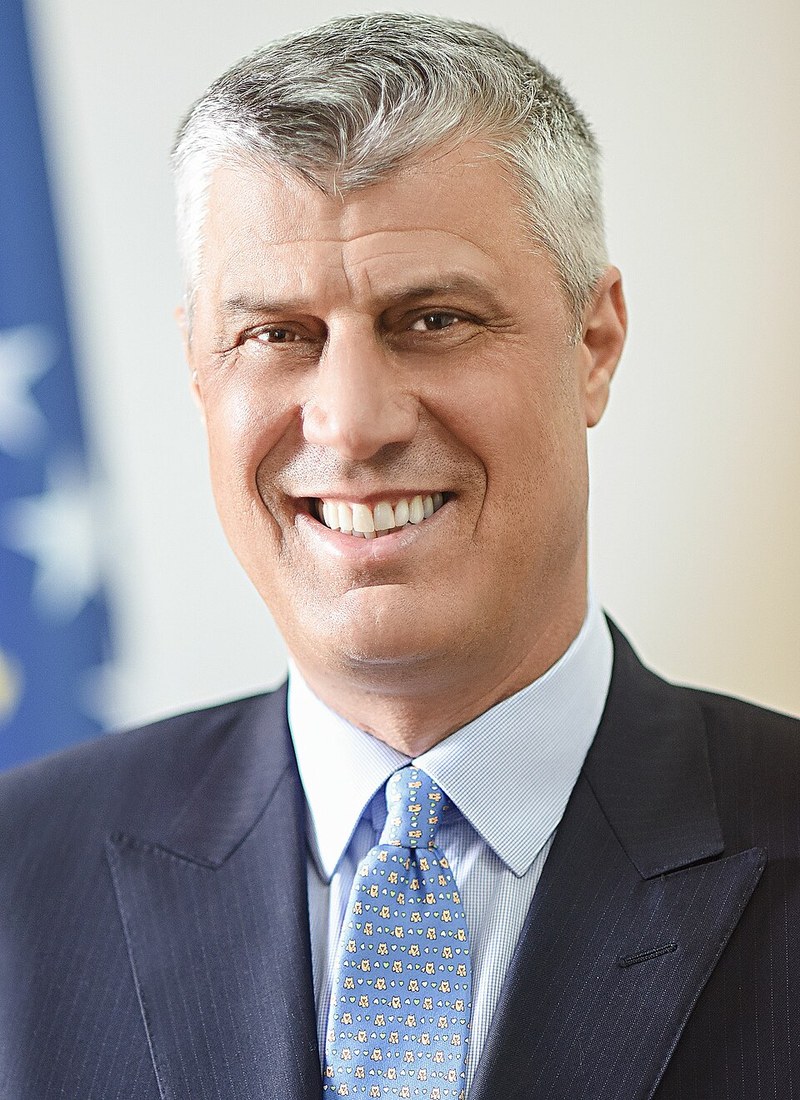
Hashim Thaci, 58, the former guerrilla commander who became Kosovo’s first post-independence power broker and served as its president from 2016 until his resignation in November 2020, was sentenced on 16 September 2026 to 25 years in prison by the Kosovo Specialist Chambers in The Hague after a panel of judges convicted him of four counts of war crimes — murder, torture, cruel treatment and arbitrary detention — committed as top commander of the Kosovo Liberation Army (KLA) during the territory’s violent break from Serbia in the 1990s. Thaci stood in silence, wearing a suit and tie, as Presiding Judge Charles Smith read out the conviction and sentence. He denied all the charges and retains the right to appeal, as do prosecutors.
Background Information
Thaci rose to prominence as a leader of the KLA, the ethnic Albanian guerrilla force whose armed operations intensified in 1997 and 1998 against Serbian rule; during the war he headed the KLA’s political and information directorate, and Western leaders embraced him as a moderate, inviting him to the 1999 Rambouillet peace talks in France. After the 1998-99 war — which killed an estimated 13,000 people and displaced hundreds of thousands — he moved into politics, serving as prime minister, then foreign minister, and then president from 2016 to 2020. He resigned the presidency in November 2020 after the tribunal indicted him, and was transferred to detention in The Hague the same month.
The Controversy or Incident That Led to Their Cancellation
Adjudicated vs. alleged. Thaci’s convictions on four counts of war crimes — the murder of 96 victims, arbitrary detention of 385, torture of 303 and cruel treatment of 49 — were handed down by a three-judge panel at the EU-backed Kosovo Specialist Chambers and are a matter of court record; they can still be appealed. Thaci was acquitted on six counts of crimes against humanity after the judges found prosecutors failed to prove the crimes were part of a widespread and systematic attack on civilians, and any conduct connected to those counts remains unproven.
The tribunal found that Thaci “actively participated in and encouraged crimes” as part of a joint criminal enterprise whose common plan, in the court’s words, “was as simple as it was harmful”: setting up detention facilities in areas controlled by the KLA, identifying individuals perceived as opposing the KLA, and arresting, detaining and, if necessary, killing them. Judge Smith said “the so-called intelligence on which many of these victims were arrested, detained and killed was little more than unverified rumours,” and that “in reality, there is no indication that the victims in this case were spies or collaborators” — having Serbian friends or jobs in Serbian companies was enough to get them treated as collaborators. Victims were held in inhumane conditions, beaten, kept in tiny cells and denied sufficient food and medical care. None of the victims were active participants in hostilities at the time the crimes were committed, the court added. The tribunal specifically found him guilty of the murder of 96 political opponents and perceived collaborators with Serbian security forces.
Prosecutors had sought the maximum 45-year sentence against Thaci and his three co-defendants — former KLA leaders Kadri Veseli, Rexhep Selimi and Jakup Krasniqi, tried alongside him for crimes committed in the 1998-99 war. Krasniqi received 25 years, Veseli 18, and Selimi 13. All four were acquitted of the crimes-against-humanity charges; Smith stressed that the trial was “not about the legitimacy of the Kosovo Liberation Army” or its goal of independence.
Public Reaction and Consequences
The verdict stunned a country that widely regards Thaci and his co-defendants as national heroes: in Pristina, thousands watching the verdict live on a big screen booed and chanted “Thaci, Thaci” as some burst into tears, and hundreds marched while dozens of riot police were stationed across the city. In The Hague, brief scuffles broke out between several hundred supporters and police. Kosovo’s foreign minister Glauk Konjufca condemned the verdict as “terrible and harmful to Kosovo,” and Albania’s Prime Minister Edi Rama posted an illustration of barbed wire across a map of Europe with one word: “Unbelievable.” Serbia’s deputy PM Ivica Dacic called it confirmation that “the so-called KLA was a criminal and terrorist organisation.” A former KLA fighter, Raif Pllana, declared “this verdict is shameful. From today, there will be no peace in Kosovo,” and one supporter, Bekim Fetahu, called the verdict “a catastrophic decision,” saying the judges had “put the victims together with the aggressors.” The United States advised citizens to avoid crowds.
Current Status
Thaci, 58, is beginning a 25-year prison sentence in The Hague, where he has been in detention since November 2020. His conviction and sentence can be appealed, as can the prosecution’s case on dismissed counts. The Kosovo Specialist Chambers, established in 2015 under international pressure to try former KLA fighters for wartime and post-war crimes, remains deeply unpopular in Kosovo, where Thaci remains a revered figure for many. His three co-defendants — Kadri Veseli, Rexhep Selimi and Jakup Krasniqi — were sentenced to 18, 13 and 25 years respectively, also with appeal rights.
Impact on Their Career/Life
The sentence closes the arc of one of the Balkans’ most dramatic falls: a man once embraced by Western leaders as a leader who could guide Kosovo to independence — invited to the 1999 peace talks in France — resigned the presidency nearly six years ago to face the charges, forfeited his freedom in The Hague detention since November 2020, and now stands convicted of war crimes including the murder of 96 people. As his trial ended in February, Thaci told the judges: “Throughout my life, I stood with the people of Kosovo, defending freedom, life and dignity. I was always guided by the Western ideals of democracy, equality and justice.” The verdict has already strained Kosovo’s fraught politics, arriving amid repeated failures to form a stable government and complicating its path toward closer European Union ties.