Abdoulaye Dia
Introduction
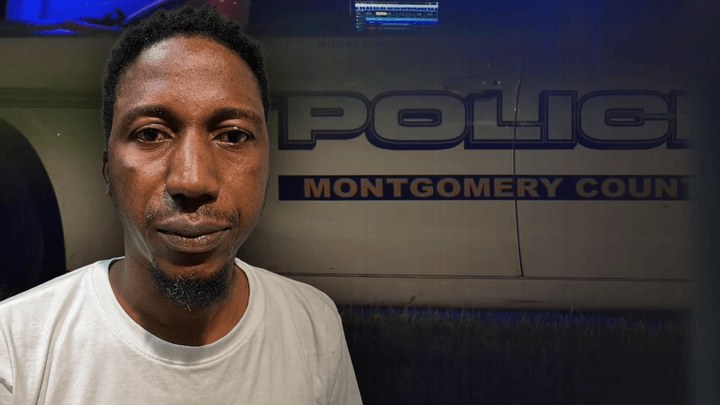
Abdoulaye Dia is a Lanham, Maryland, man who drove for Empower, a rideshare company, and became the subject of national attention in September 2026 after Montgomery County, Maryland, police charged him with raping a teenage passenger. The case drew national coverage because the Department of Homeland Security announced it as part of the immigration debate: federal authorities say Dia entered the United States illegally through Arizona in December 2023 and was released by the Biden administration. The charges themselves, however, are Maryland state charges, and they are just that — charges. Dia has not been tried, and every allegation described on this page is exactly that: an allegation from police, prosecutors and federal authorities, to which he has not yet had the opportunity to respond in court.
Background Information
Public information about Dia’s life before his September 2026 arrest is limited, and what is known comes almost entirely from law-enforcement statements and the reporting that followed them. He lived in Lanham, Maryland, in Prince George’s County outside Washington, D.C., and he is a citizen of Guinea, a West African nation. According to the Department of Homeland Security, he entered the United States illegally through the Arizona border in December 2023 and was released into the interior by the Biden administration’s border apparatus — a detail that turned his arrest into a talking point in the national immigration fight. By 2026 he was driving for Empower, a “decentralized” rideshare platform whose drivers set their own fares and operate as independent businesses rather than earning wages from the company.
According to the Department of Homeland Security, Dia had already been arrested once before the Maryland case: on June 10 in New York City, on charges including sexual abuse by forcible compulsion, forcible touching, acting injuriously against a child under 17, and sexual abuse without consent. What became of those New York charges after his arrest — whether they were resolved, reduced, dropped, or still pending — was not addressed in the reporting retrieved for this page, and no outcome should be assumed from the fact of the arrest alone. An arrest is not a conviction, and the New York accusations too remain allegations unless and until a court says otherwise.
The Controversy or Incident That Led to Their Cancellation
Allegations. The claims in this section are allegations from Montgomery County police, the Maryland court system’s charging documents, and Department of Homeland Security statements as relayed by Fox News, WJLA and other outlets. Dia has been charged but not tried; he has not been convicted of anything described here, and he is presumed innocent unless and until proven guilty. No defense statement from Dia or an attorney representing him had been reported as of this writing.
According to Montgomery County police, the events began on Tuesday, September 15, 2026, when officers were called to a hospital, where a girl younger than 18 reported that she had been raped. She told officers she had been raped by her Empower rideshare driver. Police allege that Dia drove the girl to a parking lot in Silver Spring, Maryland, where the assault occurred.
Detectives with the department’s Special Victims Investigations Division say they identified Dia using information obtained through the rideshare app itself, and the department’s Repeat Offenders Unit arrested him on Wednesday, September 16, in Lanham. He was charged with first-degree rape, kidnapping, second-degree assault and third-degree sex offense, and a court ordered him held without bond at the Montgomery County Central Processing Unit. The Department of Homeland Security publicized the arrest days later, emphasizing both his immigration history and the June New York arrest, and the story was picked up nationally — including by the New York Post, which relayed the Fox News reporting.
Public Reaction and Consequences
The most immediate consequence for Dia is custody itself: he is being held without bond while the charges pend, a detention status for cases where a court finds no conditions of release can reasonably protect the public. Montgomery County police also made an unusual public appeal, asking anyone who believes they may have been a victim of Dia to contact the Special Victims Investigations Division — language that signals investigators believe the alleged assault may not have been an isolated incident.
For Empower, the case became an unwanted referendum on its contractor model. The company told Fox News Digital that its drivers undergo background, sex-offender, motor-vehicle and Social Security checks and vetting against the same global watchlist used by Uber and Lyft, and that the checks on Dia — conducted July 16, 2026 — “did not reveal any incidents.” The remark underscored the gap critics were quick to point out: a July background check could not reflect a June arrest, and could say nothing about conduct alleged to have occurred months later. Nationally, DHS’s framing of the arrest put Dia at the center of the immigration debate, with federal officials using the case to argue that sanctuary policies release dangerous people onto American streets — a framing built entirely on allegations a Maryland court has not yet tested.
Current Status
Dia is in custody at the Montgomery County Central Processing Unit, held without bond on the four Maryland charges. As of the reporting retrieved for this page, he had not yet been arraigned, no trial date had been set, and no plea had been entered or reported. The investigation remains active: detectives continue to ask potential additional victims to come forward. The disposition of the June New York charges remains publicly unknown, as does any immigration-detainer status DHS may have placed on him; those questions were not resolved in the coverage retrieved here.
Impact on Their Career/Life
There is no realistic version of Dia’s future in which the September 2026 arrest does not define it. Whatever the outcome, he faces the practical end of his work as a rideshare driver — no platform can carry a driver held without bond on first-degree rape charges — and, if convicted, a prison term that could reach into the decades given the stacking of rape and kidnapping counts. The case has also made him a national symbol in a fight far larger than himself: DHS’s decision to publicize his arrest meant his name, face and immigration history traveled from a suburban Maryland bond review to cable-news segments and congressional talking points within a day. That dynamic — a local case becoming a national immigration flashpoint — is now a permanent part of the record around his name, whatever the courts decide.