Steve Belichick
Introduction
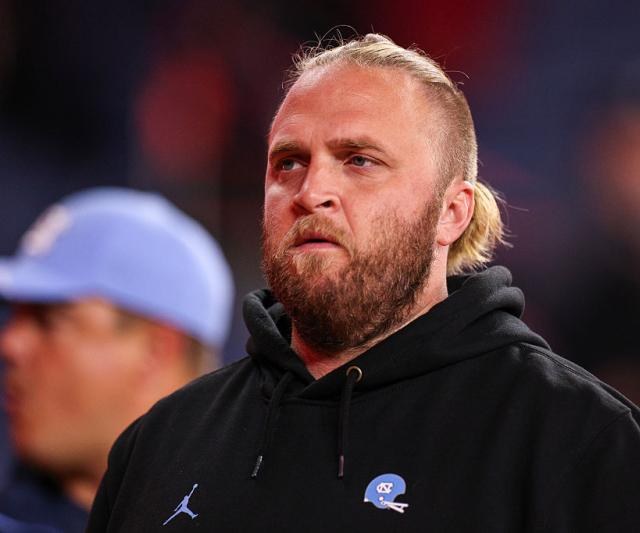
Steve Belichick — full name Stephen C. Belichick — is a 39-year-old American football coach and the son of six-time Super Bowl-winning head coach Bill Belichick, and until September 2026 he was the defensive coordinator for the North Carolina Tar Heels. He spent more than a decade as an assistant on his father’s New England Patriots staff — defensive assistant (2012-15), safeties coach (2016-18), defensive backs coach (2019) and outside linebackers coach (2020-23) — followed by one season as the University of Washington’s defensive coordinator before joining his father in Chapel Hill in 2025. On September 17, 2026, the university announced that he would resign his position effective October 27, when his medical leave ends — a departure that came as UNC concluded an independent investigation into the culture and climate of its football program, one in which outside lawyers reportedly questioned people about whether he had used drugs at work or provided drugs to at least one player.
Background Information
Belichick grew up around professional football as the eldest son of Bill Belichick, and chose his own coaching path rather than playing; he began as a long-snapping defensive assistant at Rutgers before following his father to the Patriots in 2012, where he rose from defensive assistant to position coach over 12 seasons. In February 2024 he left the family business for his first play-calling job as Washington Huskies defensive coordinator, and after one season there he rejoined his father as UNC’s defensive coordinator when Bill Belichick took the Chapel Hill job in December 2024. His younger brother Brian Belichick also coaches the Tar Heels’ secondary, making the program a full family enterprise; the family connection deepened when general manager Michael Lombardi — a longtime Bill Belichick confidant — joined the program as part of the NFL-style staff structure the new head coach installed. Bill Belichick announced on August 6, 2026 that his son was going on medical leave, offering no details about his condition or a timetable, saying only: “Steve is on medical leave,” and, “Look forward to getting him back as soon as possible.”
The Controversy or Incident That Led to Their Cancellation
Allegations. The matters described in this section are allegations and unattributed findings as reported by WRAL and other outlets. The university has not disclosed what its investigation found or whether its conclusions concerned Steve Belichick personally, and no criminal charges have been filed against him.
The trouble surfaced through a widening internal probe into the UNC football program. On the day general manager Michael Lombardi resigned on September 3, 2026, WRAL reported the investigation had broadened to include Steve Belichick: outside lawyers hired by the university had been questioning people close to the program about whether he had used drugs on the job or provided drugs to at least one player, people familiar with the investigation told WRAL. Lombardi, placed on paid administrative leave before the season, had himself been the subject of the probe after a complaint from a former front-office employee. Throughout his month-plus medical leave the school disclosed nothing about his condition, and in his absence defensive play-calling duties were divided among the staff, with his brother Brian serving as defensive playcaller and Bill Belichick believed to be calling defensive plays himself. On September 17, 2026, the same Thursday the university announced the investigation’s conclusion, it announced Belichick’s resignation, effective October 27, 2026 — the date his medical leave ends.
Public Reaction and Consequences
UNC’s statement said the independent investigation into “allegations related to culture and climate” within the football program found that “certain actions demonstrated a disregard for Carolina’s values and standards of conduct,” while characterizing those actions as “isolated in scope and not a systemic failure.” The school did not specify what it found, did not say whether Belichick’s departure was voluntary or directly connected to the investigation, and — citing its policy on personnel matters — said there would be “no further comment on individuals,” adding that it would evaluate any credible new information if it arose. The resignation is the second senior departure the probe has produced in two weeks, following Lombardi’s September 3 exit, and came alongside the indefinite suspension of freshman wide receiver Keeyun Chapman, who was cited for carrying a concealed weapon during a traffic stop. The news broke while the Tar Heels are 2-0 under Bill Belichick — strong early results produced, notably, without the man whose resignation now closes out the investigation. Sports coverage framed the move as the latest crack in the program’s turbulent first year: “Upheaval continues to mount for Bill Belichick at North Carolina,” the New York Post wrote.
Current Status
As of September 17, 2026, Steve Belichick remains a UNC employee until his resignation takes effect on October 27, 2026, at the end of his medical leave; the university has given no indication of any post-resignation role and his specific medical condition has never been publicly disclosed. His brother Brian Belichick is expected to take over defensive play-calling on a permanent basis, per CBS Sports’ Matt Zenitz. The university says it considers the investigation resolved, with corrective actions overseen by Carolina Athletics and the Office of University Counsel — but because it never detailed its findings, the central question of whether the drug allegations factored into his departure remains officially unanswered. No criminal charges, sanctions or coaching bans beyond the resignation itself have been reported, and Belichick has made no public statement on the matter.
Impact on Their Career/Life
For a coach whose entire ascent happened inside his father’s buildings, the resignation marks his first public severance from one — and it ends, at least for now, the three-Belichick staff experiment in Chapel Hill. At 39, he exits a coordinator chair he had held for barely a season and a half, with the drug-use allegations — unproven, unaddressed by the school, and attributed only to unnamed people familiar with the investigation — now permanently attached to the record of whatever job he pursues next. The contrast with his 2024 departure from Washington, a routine career step celebrated as his solo breakthrough, underlines how sharply the UNC chapter ended: no farewell statement, no next destination reported, and a father-head coach now answering for a program whose culture probe claimed his general manager, his defensive coordinator and a freshman receiver within a month.