Zach Vorhies
Introduction
Zach Vorhies is a former Google and YouTube senior software engineer who in 2019 leaked more than 950 pages of internal company documents to the Department of Justice and to Project Veritas, becoming one of the best-known whistleblowers on tech censorship; his X profile describes him as the “Google Whistleblower via James O’Keefe.” In October 2026 he said that OBS, the open-source screen-recording and streaming software used by podcasters and streamers everywhere, had banned him from contributing after he submitted a bug fix written by an AI — a claim the project’s own maintainer rejected in public, saying he was banned “for throwing a tantrum and calling us jihadists.” Vorhies responded by forking OBS Studio and announcing he would rewrite it in Rust.
Background Information
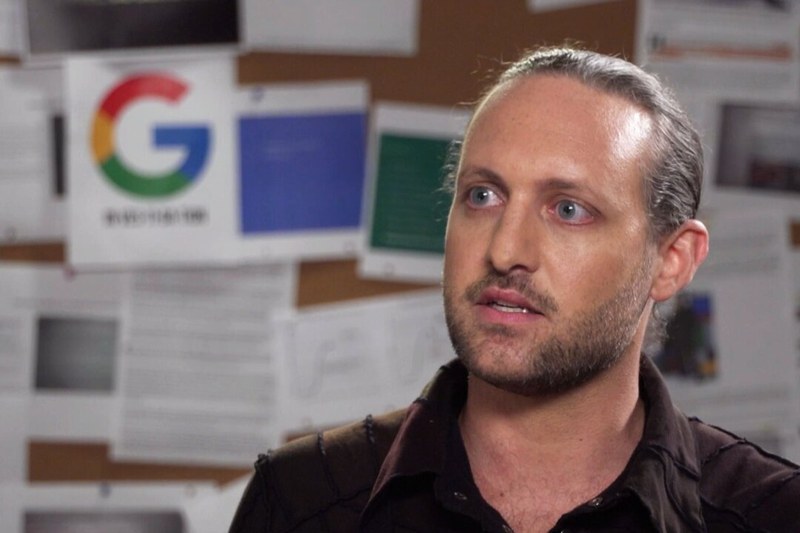
Vorhies worked at Google and YouTube for eight and a half years as a senior software engineer before resigning in June 2019. He told Project Veritas that he had spent more than a year collecting internal documents after concluding that the company was building a system to police what its users could find: “I saw something dark and nefarious going on with the company and I realized that there were going to not only tamper with the elections, but use that tampering with the elections to essentially overthrow the United States.” He said the material was available to any full-time employee through ordinary internal search.
The documents centered on a Google program he called “Machine Learning Fairness,” which he said re-ranked the internet according to the company’s corporate values, along with a “news black list site for google now” that restricted sites from appearing in an Android news feed and classifiers that rated outlets including CNN and Fox News. The Project Veritas writeup says the blacklist included conservative and progressive outlets such as newsbusters.org and mediamatters.org. CBN News, reporting on the same release, said the documents listed Glenn Beck, Rush Limbaugh, Michelle Malkin, The Daily Caller, RedState and Christian sites including The Christian Post, Patheos and Christian Today among the blacklisted.
Vorhies went public in August 2019 after, he said, Google sent him a letter containing several “demands” — including turning over his badge and work laptop and ceasing to disclose non-public files, which he complied with — and after Google allegedly called San Francisco police for a “wellness check” at his home that he says escalated to a SWAT team and a bomb squad; San Francisco police confirmed to Project Veritas that they received a mental health call and responded to his address. He said he was earning $260,000 a year including stock and had “every incentive in the world to stay at the company and just collect the paycheck.” Reporting on the release noted he had set up a “dead man’s switch” to publish everything if something happened to him, and that he sent the material to the DOJ’s antitrust division.
He maintains a website that republishes the leaked files, describing them as delivered to the DOJ antitrust division in August 2019 and to the public through Project Veritas, and crediting his Texas Senate testimony with a unanimous decision to investigate Google; in June 2024 he posted that his testimony “resulted in a UNANIMOUS decision by Democrats and Republicans to empower the Texas State Attorney to start issuing subpoenas against Google and other Big Tech companies.”
The Controversy or Incident That Led to Their Cancellation
Allegations. The claims in this section are contested between two parties and neither has been adjudicated anywhere: Vorhies says OBS banned him because a submitted fix was AI-authored, while an OBS maintainer says he was banned for his conduct toward the project. Neither account has been tested in any court or formal proceeding, and no charges exist on either side. The quotations below are the parties’ own public words and are not in dispute as quotations.
On October 8, 2026, Vorhies posted that OBS had banned his GitHub account: “OBS is the stream capture software used by podcasters everywhere. My sin? sending them a bug fix for a crash… authored by an AI. So I’ve forked obs and have begun converting it into rust.” He attached the argument, from The Lunduke Journal, that open-source organizations banning AI outright “will become irrelevant.”
OBS Studio’s contribution guidelines carry an explicit AI policy. They warn that “AI/machine learning systems such as Copilot, ChatGPT, and Claude, are prone to generating plausible-sounding, but wrong code that makes incorrect assumptions about OBS internals or APIs it interfaces with,” and that such systems “have been demonstrated to reproduce code contained in the training data, which may have been originally published under a license that would prohibit its inclusion in OBS.” The policy states that “all text and content submitted to our project, which includes code, descriptions, issues, and comments, must be human written,” and that “low-effort or incorrect submissions that are determined to have been generated by, or created with aid of such systems may lead to a ban from contributing to the repository or project as a whole.”
Hours later, Warchamp7 — listed among the members of the OBS Project’s GitHub organization — replied directly: “Hi Zach you were not banned for submitting an AI authored bug fix. You were banned for throwing a tantrum and calling us jihadists. Take care!”
Vorhies answered with an open letter to the project: “Dear OBS: you want to hold your users hostage over your Anti Ai jihad. you cannot stop the technology tsunami that’s coming. you’ve chosen the dumbest Hill to die on and and it’s guaranteed that you’re gonna lose. I choose to grab my surfboard, ride the wave, and make an example out of you.” The same day he stood up a fork at github.com/obs-rust/obs-studio and began what he calls the port to Rust, reporting on “Day 1” that a 51-line bit reader in libobs uses a uint8_t position counter that “silently wraps and re-reads byte 0” past byte 255 — code he said has “shipped in libobs since 2019. Nobody noticed.” He also pointed users at the fork’s issue tracker, writing that “OBS-Studio doesn’t care about your streaming issues. But I do. Please file a bug here and our clanker staff will take care of the rest.”
Public Reaction and Consequences
The exchange turned on audience reaction as much as on the ban itself. Warchamp7’s one-line reply collected roughly 440 likes against about 73 on Vorhies’ original post, and the fork Vorhies created on October 8, 2026 showed no stars when checked the same day — a long way from the 76,000-star upstream project it copies.
The dispute lands in the middle of a broader revolt in open-source development against AI-written contributions. GCC adopted a policy in July 2026 rejecting AI-generated code contributions over 15 lines, citing GPL copyright integrity, while still permitting AI for research and test cases; Codeberg, a community-run hosting service, announced that projects whose code is largely or fully machine-generated will no longer be hosted. Vorhies had staked out the opposite position days before his ban, writing: “It’s trendy right now to have a contributing.md file that bans AI contributions. As far as I’m concerned, this is a death sentence for a repo. It will be changed or the code repo will become irrelevant and forgotten.”
Current Status
As of October 8, 2026, Vorhies says he remains barred from contributing to OBS and is proceeding with the Rust rewrite, having published a second day of work on it; the fork exists under his organization with no visible adoption, and OBS has not reversed its position publicly. He continues to post about the dispute from an X account with roughly 166,000 followers, mixing the OBS campaign with posts about running local AI models on repurposed hardware.
Impact on Their Career/Life
Vorhies’ public life has been a sequence of fights with institutions he was once inside. He left a $260,000 job at Google with nearly a thousand pages of internal documents, delivered them to federal antitrust investigators, and spent the years since as a professional witness against the company’s algorithms. The OBS episode is a smaller stage but the same shape: a contributor who says he fixed a crash, a project that says he abused its maintainers, and a fork announced within hours. Whichever account holds, the practical outcome is that a 76,000-star project has lost a contributor and gained a rival rewrite, and the man who once leaked Google’s censorship systems is now arguing that the open-source world’s refusal to accept machine-written code is the thing that will make it irrelevant.
Sources
- Project Veritas, “Google ‘Machine Learning Fairness’ Whistleblower Goes Public, says: ‘burden lifted off of my soul’,” Aug. 14, 2019 — source
- Project Veritas, “Zach Vorhies - Google” — source
- The Epoch Times, “Google Engineer Leaks Nearly 1,000 Pages of Internal Documents, Alleging Bias, Censorship,” Aug. 14, 2019 — source
- CBN News, “Ex-Google Employee Alleges Hundreds of Conservative Sites Blacklisted, Delivers Evidence to DOJ,” Aug. 15, 2019 — source
- Zach Vorhies, personal site and “Google Leaks” archive — source and source
- OBS Studio, CONTRIBUTING.md (AI/Machine Learning Policy) — source
- GitHub, OBS Project organization page — source
- GitHub, obs-rust/obs-studio fork — source
- X, Zach Vorhies profile and posts (Oct. 2, Oct. 8, 2026; June 6, 2024) — source, source, source, source, source, source, source
- X, Warchamp7 reply, Oct. 8, 2026 — source
- Northeast Times, “GCC bans AI-generated code over GPL copyright fears,” July 31, 2026 — source
- Hackaday, “Codeberg Bans Cryptocurrency And LLM-Generated Code Projects,” July 24, 2026 — source