Santiago Peña
Introduction
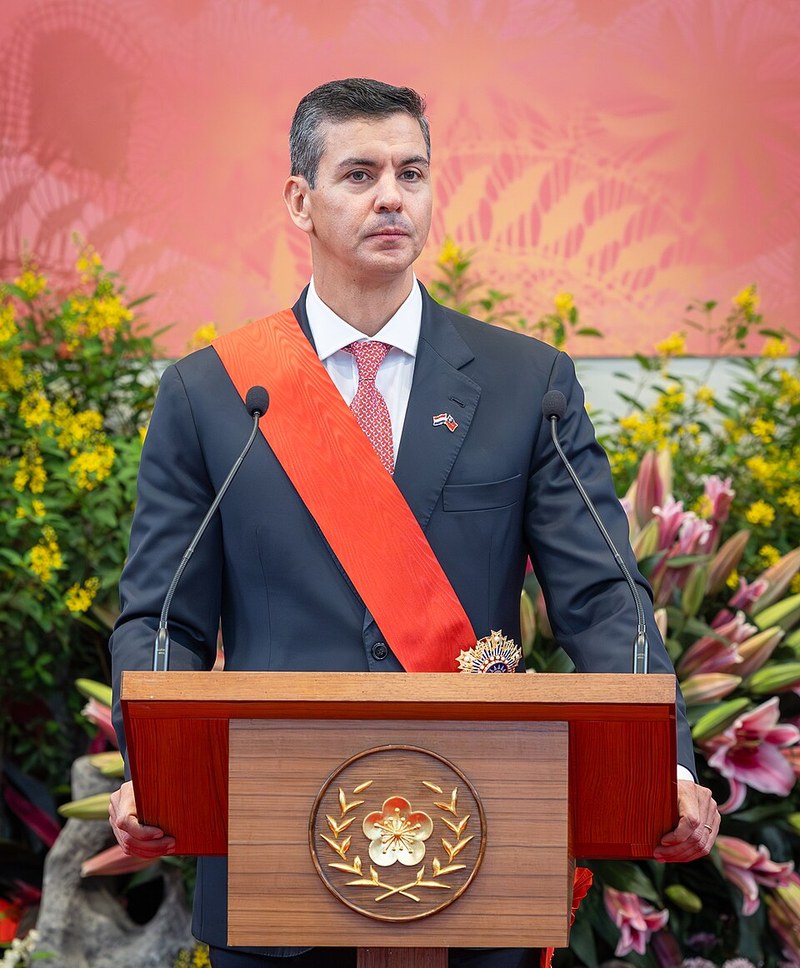
Santiago Peña is Paraguay’s ousted president, a 47-year-old economist and former International Monetary Fund staffer who was removed from office by a unanimous Senate impeachment vote on Friday, November 6, 2026, and placed under house arrest hours later on suspicion of breach of trust, influence peddling and using public office for personal gain — charges that carry up to 10 years in prison. The impeachment concluded three days after regulators seized Ueno Bank, a digital lender whose collapse locked roughly half the country’s 6 million people out of their savings, and ended what had been described as one of South America’s most stable presidencies. Peña denies wrongdoing.
Background Information
Peña owed his rise to former president Horacio Cartes, a tobacco magnate who made him finance minister and twice backed him for president; once in office, analysts say, he quietly built his own power base with Ueno as its linchpin, and was one of US President Donald Trump’s main allies in the region, meeting Treasury Secretary Scott Bessent in late October 2026. Ueno Bank was licensed in 2023 and acquired Visión Banco in 2024; by June 2026 it reported 2.94 million customers — about 63 percent of Paraguay’s adult population — and by the end of August 2026 held roughly $850 million of state money, the second-largest state-fund holder after the national development bank. Peña held about $1 million in shares of the company that became Ueno Holding from 2019 until he divested in April 2025 under pressure, and in 2023 he appointed Carlos Carvallo, who had run the finance company that became Ueno, as central bank chief — the regulator of the bank he used to run.
The Controversy or Incident That Led to Their Cancellation
Impeached and placed under house arrest. Santiago Peña was removed from office by Paraguay’s Senate, 44 votes to 0, on November 6, 2026, over the collapse of Ueno Bank, then ordered to remain at his Asunción home on suspicion of breach of trust, influence peddling and using public office for personal gain. He denies wrongdoing and must appear before prosecutors on Saturday morning.
Regulators seized Ueno before dawn on Tuesday, November 3, freezing withdrawals and setting off Paraguay’s worst political crisis in more than a decade; prosecutors opened an investigation into Peña on Thursday on suspicion of illicit enrichment, money laundering and influence peddling. That day, as his conservative Colorado Party turned on him under Cartes’ leadership, Peña offered to resign — a move that would have sent him to the senate-for-life former presidents enjoy with its special jurisdiction — but lawmakers refused, leaving him subject to impeachment and the ordinary courts. On Friday the Senate voted 44-0 to remove him for misconduct in office, the second Paraguayan president ousted by impeachment since the Stroessner dictatorship ended in 1989, and within minutes a prosecutor ordered him held at one of his Asunción homes. “It has been established that he is indeed inside his home. He voluntarily allowed officers to enter and made himself available for all procedural purposes,” prosecutor Elena Fiore Franco told local media.
Lawmakers accuse Peña of using his political influence to steer hundreds of millions of dollars in public funds into Ueno while regulators overlooked risky insider lending; the impeachment charges cite his stake in Ueno’s holding company, his appointment of Carvallo to run the central bank that regulated it, and his letting the state pension fund deposit $355 million at the bank, beyond legal limits. Analysts say the connections shielded Ueno from scrutiny even as its finances deteriorated — “the central bank began to lose credibility, lose neutrality and then relax all its control mechanisms to favor the business group,” said José Tomás Sánchez, a political theory professor at the National University of Asunción — while Peña defended the bank until weeks before it failed, telling reporters a regulatory inquiry did not mean it would close and accusing the media of frightening people. Prosecutors also ordered the arrest of Carvallo, though it was not immediately clear whether he had been taken into custody; in a separate case against Ueno’s executives, 27 people including founder and former CEO Miguel Vázquez — now held in the Tacumbú prison — are charged, and six former directors are in pretrial detention. Peña has denied wrongdoing throughout.
Public Reaction and Consequences
As the verdict came down, a roar rose from crowds packed into the plaza outside Congress — depositors, retirees and students in national soccer jerseys chanting “Dictatorship never again!” — and police ringed Peña’s house Friday night as demonstrators vowed to keep vigil until morning to make sure he did not escape, chanting “Santi Peña to Tacumbú!” Opposition senator Rafael Filizzola called it “one of the biggest corruption scandals since the return of democracy” and “the biggest fraud carried out from political power in the democratic era.” The fallout spread well beyond savers: retail sales reportedly fell by as much as 80 percent with much of the population unable to access money, a ride-hailing app that relied on Ueno shut down leaving 3,000 drivers without work, even national soccer team players could not reach their accounts, and Paraguay’s bonds posted some of the worst losses in emerging markets. Deposits are insured up to about $35,000 — covering 97 percent of customers — and limited withdrawals began Thursday for the smallest accounts.
Current Status
Peña, 47, is under police-guarded house arrest at his home in Asunción and is required to appear before prosecutors Saturday morning, November 7; the charges are unadjudicated and he is presumed innocent, and he has denied wrongdoing. Vice President Pedro Alliana was sworn in Friday to serve the term ending in August 2028 — while himself remaining under investigation in connection with the bank — inheriting a government under pressure to return depositors’ money and punish those responsible. In a farewell message before the verdict, Peña wrote that he did not want his “presence to be a cause of greater division or instability,” adding, “I say goodbye with gratitude, without ignoring the anguish of those who are waiting for answers today.” No trial date had been reported.
Impact on Their Career/Life
Peña’s fall came at dizzying speed — from a feted Washington ally meeting Bessent in late October to a impeached ex-president confined to his own home within a week — and without an accepted resignation he forgoes the senator-for-life status and special jurisdiction that have shielded Paraguay’s former presidents, leaving him to face prosecutors in the ordinary courts. His split with Cartes is complete: the mentor who made his career publicly called for his ouster once the bank collapsed, and Cartes loyalists drove the Senate vote. He leaves office facing up to 10 years on the most serious charges, with the country’s incoming administration, its central bank and its state pension funds all under pressure to unwind a crisis that made Paraguay’s bonds among the world’s worst performers.
Sources
- New York Post, “Ousted Paraguayan President Santiago Peña placed under house arrest after bank collapse,” November 7, 2026. source
- The Guardian, “Ousted Paraguay president under house arrest after banking crisis leaves 60% of country unable to access accounts,” November 7, 2026. source
- Wikipedia, “2026 Paraguay banking crisis,” accessed November 7, 2026. source
- New York Post (@nypost), trigger post on X, November 7, 2026. source