Hafiz Muhammad Tahir Mehmood Ashrafi
Introduction
Hafiz Muhammad Tahir Mehmood Ashrafi is a Pakistani Islamic scholar who serves as chairman of the Pakistan Ulema Council, a prominent body of religious leaders, and who for years was one of his country’s most visible voices on interfaith relations. In September 2026 he became the center of an international controversy when the Archbishop of Canterbury, Dame Sarah Mullally, presented him with an interfaith award at Lambeth Palace on the 25th anniversary of the September 11 attacks — and then withdrew it days later, after his years-old comments praising Osama bin Laden resurfaced. The withdrawal, announced without an apology, turned a ceremony meant to celebrate religious harmony into an embarrassment for the Church of England and an international smear against a cleric who insists his words were taken out of context.
Background Information
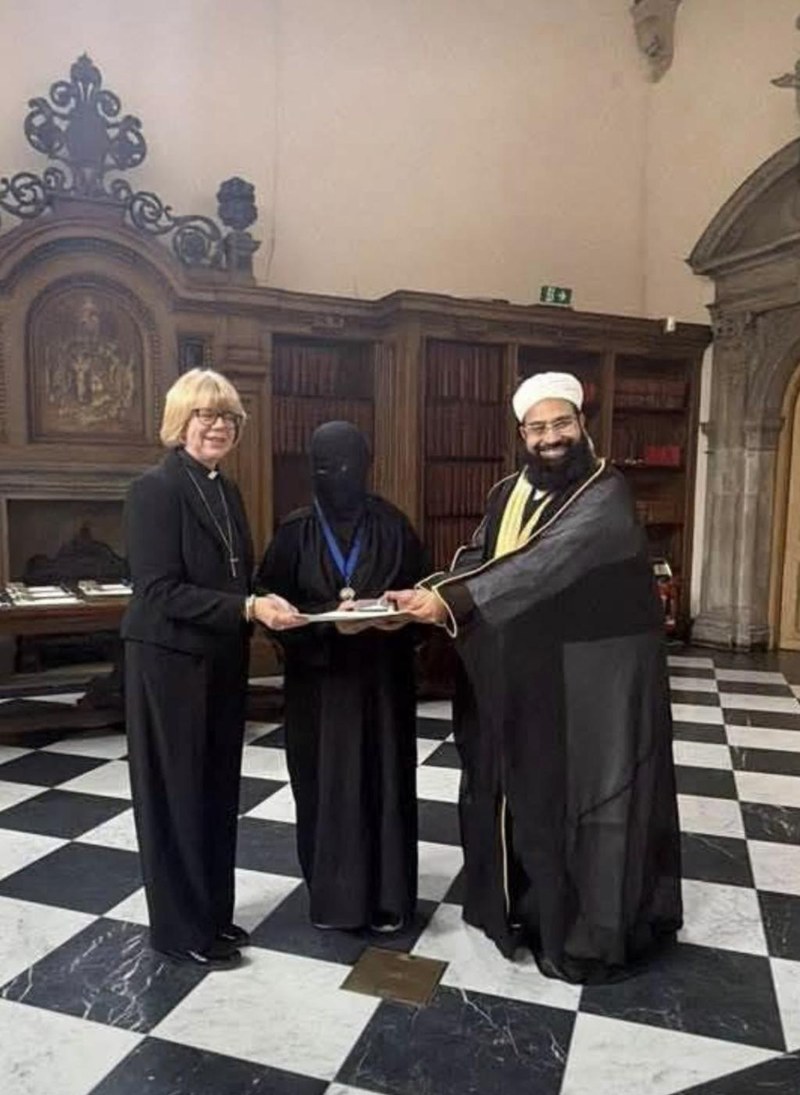
Ashrafi leads the Pakistan Ulema Council, an umbrella group of Islamic clerics and scholars in Pakistan. During the premiership of Imran Khan he was appointed the Special Representative to the Prime Minister on Religious Harmony and the Middle East, and he serves as the Imam and Khatib of the Grand Jamia Mosque in Lahore. His past roles include advisor to the President of Pakistan on affairs of the Islamic world, advisor to the Government of Punjab, and member of the Council of Islamic Ideology; in February 2017 he met with Saudi King Salman and Crown Prince Mohammed bin Salman to discuss bilateral relations. On September 11, 2026 — the 25th anniversary of the 9/11 attacks, in which nearly 3,000 people were killed — he was among 27 individuals honored at the Lambeth Awards ceremony at Lambeth Palace in south London, the Archbishop of Canterbury’s official residence. Mullally, the first woman to lead the global Anglican church, handed him the Hubert Walter Award for Reconciliation and Interfaith Cooperation. His office said at the time that Ashrafi was being honored for “his outstanding work as an ambassador of interfaith harmony in Pakistan, known for his commitment to promoting religious tolerance.”
The Controversy or Incident That Led to Their Cancellation
Allegations. The 2007 remarks described in this section are contested: Ashrafi says his words were “totally taken out of context” and were a response to the hurt many Muslims felt over Salman Rushdie’s knighthood, not an endorsement of bin Laden. Nothing about these remarks was ever charged or adjudicated in court; the withdrawal of the award is Lambeth Palace’s own decision, not a legal finding.
Following the September 11 ceremony, comments Ashrafi had made in 2007 resurfaced, in which he praised bin Laden, the architect of the 9/11 attacks. Ashrafi called bin Laden someone who had “been fighting for Islam against the Russians, Americans, and British,” and on another occasion described him as deserving of the title “Saifullah,” or “sword of God.” According to the Independent, he made the remark while serving as head of the Pakistan Ulema Council, declaring he would give bin Laden the Saifullah title “for serving Muslims by waging jihad against infidels.” His 2007 comments came amid protests in Pakistan against the British government’s decision to grant a knighthood to Salman Rushdie, author of “The Satanic Verses.” Ashrafi has also been criticized for his support of Pakistan’s blasphemy laws, which Human Rights Watch said last year were “perpetuating religious discrimination” and “targeting the poor and minorities in unlawful evictions and land grabs,” though Ashrafi has claimed the laws “save lives” by stopping people from taking religious offenses into their own hands.
Public Reaction and Consequences
The award drew fierce criticism as the old comments spread. The National Secular Society called the honor “obscene, and almost beyond parody,” noting it had been conferred on the anniversary of the attacks that killed nearly 3,000 people, including 67 British citizens. Criticism also reached beyond the bin Laden remarks: while Lambeth Palace had cited Ashrafi’s intervention in the 2012 case of Rimsha Masih, a young Christian girl falsely accused of blasphemy, he has otherwise supported blasphemy laws under which an estimated 2,000 people have been prosecuted since the late 1980s, disproportionately Christians and Ahmadis. On Thursday, September 17, 2026, Lambeth Palace revoked the honor, issuing a statement but no apology: “However, previous comments made by Imam Ashrafi have come to light that have led Lambeth Palace to reconsider this award, and we can now confirm today that the award has been withdrawn. We have contacted Imam Ashrafi to make him aware of this decision.”
Current Status
Ashrafi says his comments were “totally taken out of context” and has called the outcry “an unfair campaign” aimed at smearing him, in a statement to BBC News. He said he was only speaking about bin Laden in 2007 in response to “the hurt felt by many Muslims” over Rushdie’s knighthood, telling the BBC he was “giving an example” of the scale of offence caused and that the title was never formally granted. A spokesperson said the comparison “was not an endorsement of bin Laden” and pointed to Ashrafi’s “longstanding record against terrorism and violent extremism.” The spokesperson also defended Ashrafi’s wife and daughter against online criticism of their wearing face coverings in the ceremony photo, saying the decision to observe hijab was their “personal and religious right.”
Impact on Their Career/Life
The withdrawal was a public rebuke within days of what was meant to be the crowning recognition of Ashrafi’s decades of interfaith work, and it marked the first major misstep of Mullally’s tenure: the Lambeth Awards were the first she had hosted since assuming office earlier in 2026. Lambeth Palace indicated the award had originally been presented “for Imam Ashrafi’s longstanding support for religious minorities in Pakistan, particularly the Christian community — support that is valued by many Christians in Pakistan including its Anglican Church,” while maintaining that engagement “across deeply held differences” remains a principle of interfaith dialogue. NSS chief executive Stephen Evans welcomed the withdrawal but said “it is astonishing that it was given in the first place — on the anniversary of 9/11, no less,” arguing a church “capable of such a serious failure of judgement” should not enjoy constitutional privilege. For Ashrafi, the episode tied his name internationally to the resurfaced 2007 remarks he disputes, overshadowing the government and religious-harmony roles he has held at home.