Tabitha Bundrick
Introduction
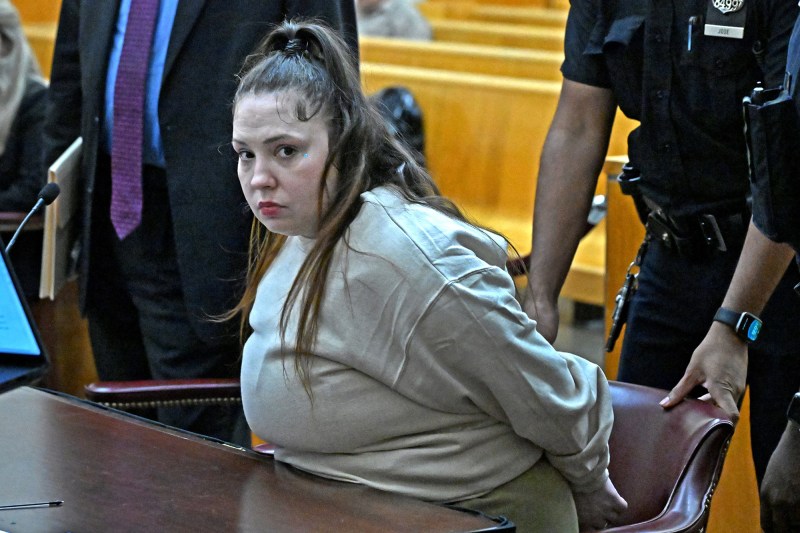
Tabitha Bundrick is a 39-year-old Manhattan woman who pleaded guilty on September 8, 2026, to murdering three men with fentanyl-laced drugs during a robbery spree across Upper Manhattan between April 2023 and February 2024, and under a plea agreement she is expected to be sentenced to 27 years to life in prison. Prosecutors said she lured men through sex work, fed them fentanyl while telling at least some of them it was cocaine, waited for the drugs to knock them unconscious, and then took their phones, cash, watches, clothes, and sneakers. The three victims — Mario Paullan, 42, Miguel Navez, 39, and Abrihan Fernandez, 35 — were found dead in separate apartments across Upper Manhattan.
Background Information
Bundrick worked in street-level sex trade in Upper Manhattan, and her own attorneys said in her federal case that she was lured into sex work as a teenager by her mother’s boyfriend, that she struggled with drug addiction, and that a learning disability had capped her intellectual functioning at what they described as a third-grade level. She first came to the attention of the Manhattan District Attorney’s office in March 2024, when she was arrested for burglary and grand larceny after allegedly being caught with items belonging to the final victim in the spree, and prosecutors say she was repeatedly seen coming out of that victim’s apartment on West 144th Street after his death. Her arrest opened the long-term investigation that led to the murder charges, which were carried out while she was already in federal custody on related drug-distribution offenses.
The Controversy or Incident That Led to Their Cancellation
According to the indictment and prosecutors, Bundrick’s deadly spree began on April 30, 2023, when she approached Mario Paullan and his ex-brother-in-law on the street in Washington Heights, offered to sell them detergent as a ruse, then propositioned them and led them to an empty apartment she had broken into. She gave both men what she said was cocaine and encouraged them to keep using it, even as Paullan — who had never taken drugs before — told her he did not want more; a cell phone video recovered by federal investigators captured her voice continually pushing him to take more of the purported cocaine. Paullan died at the scene of fentanyl intoxication, with no trace of cocaine in his system, while his companion woke up the next morning beside his body with no memory of the night; both men’s phones and cash were gone, and court papers say Bundrick began using the companion’s phone to call and text her own family within two hours. About five months later, in late September 2023, she met Miguel Navez at his apartment and fed him fentanyl-laced drugs; his body — with his pants down around his knees — was found days later by his brother, his apartment picked clean of his phone, money, jewelry, clothes, and sneakers. On February 25, 2024, she followed Abrihan Fernandez back to his West 144th Street apartment around 4 a.m. and drugged him as well; surveillance footage showed her coming and going from the building, and prosecutors said she hauled out several “giant laundry bags” of his belongings, while her son was later captured on video using Fernandez’s credit card and removing a pair of his sneakers from a bag. When police searched her home, they found four pairs of sneakers belonging to her victims.
Public Reaction and Consequences
Bundrick’s guilty plea, entered before Manhattan Supreme Court Justice Kathryn Paek, drew immediate condemnation from District Attorney Alvin Bragg, who said in a statement that “the defendant showed a shocking indifference to the lives of her victims and is now facing significant consequences for her conduct.” The case echoed through a city already shaken by a similar spree, in which three men — Jacob Barroso, Jayqwan Hamilton, and Robert DeMaio — drugged and robbed patrons of LGBTQ bars and were convicted in February and sentenced to decades in prison in May 2026 for a scheme that killed two victims. Victim impact statements filed in Bundrick’s federal case described the wreckage behind the case numbers: Paullan’s wife wrote that his killing left her “to be both a mother and father, working tirelessly from Sunday to Sunday,” and unable to explain his death to their 4-year-old daughter, while Paullan’s son wrote that he felt his world collapse when he was told he had to become the man of the house. Her federal sentencing hearing also aired her own history: her lawyer Kristoff Williams argued that addiction and the need to numb herself explained the deaths, writing that she had been pimped into sex work as a teenager and never intended to kill anyone.
Current Status
Bundrick, 39, pleaded guilty on September 8, 2026, to three counts of murder and a separate charge for drugging a fourth man who survived, and will be sentenced to 27 years to life in state prison at a hearing in October 2026, with the state term running concurrent to the 13-year federal sentence she received in August 2026 after pleading guilty to two counts of narcotics distribution in the men’s deaths. The federal prosecutors who sought 30 years in her federal case had called her “an extraordinarily dangerous individual” and wrote that her conduct was “tantamount to murder,” but the negotiated resolution means the 27-to-life term is expected to stand. She has been in custody throughout the state prosecution, ordered held without bail at her 2025 arraignment on murder, robbery, burglary, and assault charges.
Impact on Their Career/Life
Whatever life Bundrick had before the spree is over: she will spend the rest of it under sentence, with her earliest possible release coming only in her mid-60s if a parole board ever granted it after the 27-year minimum, and even her federal sentencers, who described her history of exploitation and addiction in detail, still concluded she was extraordinarily dangerous. The plea permanently attaches her name to three dead men whose families described in court how their worlds collapsed — the wife raising a 4-year-old alone, the son told to be the man of the house, the brothers who found their siblings dead in beds and apartments stripped of sneakers and phones. The case also became part of a grim New York pattern, cited alongside the gay-bar drugging spree convictions that sent three men to prison for decades, in which predators used fentanyl not for overdose but as a robbery tool — drugging victims unconscious so they could be stripped of everything they carried.