Jason Eaton
Introduction
Jason Eaton, a 51-year-old man from Burlington, Vermont, was convicted on September 21, 2026 of attempted murder for shooting three Palestinian college students as they walked near the University of Vermont campus in November 2023. A Chittenden County jury rejected his insanity defense — built on his claims that American and Israeli intelligence agencies were transmitting orders to him — and found him guilty of attempting to kill Hisham Awartani, Tahseen Aliahmad and Kinnan Abdalhamid, three 20-year-old students visiting Burlington for the Thanksgiving holiday. He faces up to life in prison, jailed pending sentencing.
Background Information
The three men Eaton shot grew up together as schoolmates in Ramallah in the West Bank before moving to the United States for college: Awartani was studying at Brown University, Abdalhamid at Haverford College near Philadelphia, and Aliahmad — whose name is also rendered Tahseen Ali Ahmad in some coverage — at Trinity College in Connecticut. They had come to Burlington to spend the holiday at Awartani’s grandmother’s house.
Eaton lived in an apartment house on North Prospect Street, along the route the students walked. He had lost his job at a credit union two weeks before the shooting — a fact his lawyers used to argue psychosis — and had bought the Ruger .380-caliber handgun used in the attack seven months earlier from a Vermont gun store. A medical record from a doctor’s appointment five days before the shooting listed his conditions as ADHD, PTSD, a depressive disorder and borderline personality disorder, with no psychotic or delusional diagnosis — a point prosecutors pressed.
The Controversy or Incident That Led to Their Cancellation
Adjudicated vs. alleged. Jason Eaton’s conviction on three counts of attempted second-degree murder, returned September 21, 2026, is a matter of court record; the jury also expressly rejected his insanity defense. No hate-crime charge was ever filed, and whether anti-Palestinian animus motivated the shooting remains an open question no court has adjudicated; conduct connected to that question is treated here as unproven.
The shooting itself was not disputed at trial: Eaton’s lawyers conceded he was the shooter while arguing he should be found not guilty by reason of insanity. Awartani testified that the three men were smoking cigarettes and speaking a mix of English and Arabic, two of them wearing keffiyehs, when he noticed Eaton standing on a porch. Within seconds, he said, Eaton came down and walked toward them, expressionless and silent; from about five to ten feet away, “he pulled out a handgun and started shooting at us.” Awartani was shot in the chest, the bullet severing his spinal cord and leaving him paralyzed from the waist down; Aliahmad was struck in the collarbone; Abdalhamid, shot in the right buttock, fled before realizing he had been wounded. A neighbor testified he heard four to six gunshots and found one of the men yelling, “I’ve been shot, help me.”
Eaton was arrested the next day as officers canvassed his building; federal agents testified he came out with his hands outstretched and said something to the effect of “I’ve been waiting for you.” The case against him was physical as well as testimonial: shell casings at the scene were matched to the Ruger found in his apartment, and ammunition there matched the casings. Authorities also found three shotguns in the apartment.
The weeklong trial turned on his mental state. His lawyers said he believed the CIA was sending him messages through FM radio — at first encouraging, then insisting that he “has to go out and shoot somebody” — and that God was commanding him to protect his Jewish neighbors; in a recorded interview days after the shooting, Eaton himself wondered whether he was “talking to an intelligence agency using an incredible AI that could come through my FM radio… or I’ve had this incredible psychotic break.” The defense’s forensic psychiatrist, Dr. Fabian Saleh, testified he was psychotic and delusional at the time; the prosecution’s expert, Dr. Jhilam Biswas, testified he was not legally insane and was aware he might have imagined the radio commands. The jury deliberated roughly two hours before convicting him on all counts.
Public Reaction and Consequences
The verdict landed as a bookend to a case that drew international attention when the shooting came, weeks after the start of the Israel-Hamas war, and quickly spawned calls for a hate-crime investigation. None was ever brought: questions persisted about whether anti-Palestinian animus, an altered mental state or something else had driven Eaton to open fire. Evidence pointing at the students’ identity did surface at trial — including Eaton’s recorded statements that he saw himself as the protector of a nearby house he believed was a Jewish communal home — but it never became a charge; the victims and their families continue to say they believe the men were targeted for being Palestinian.
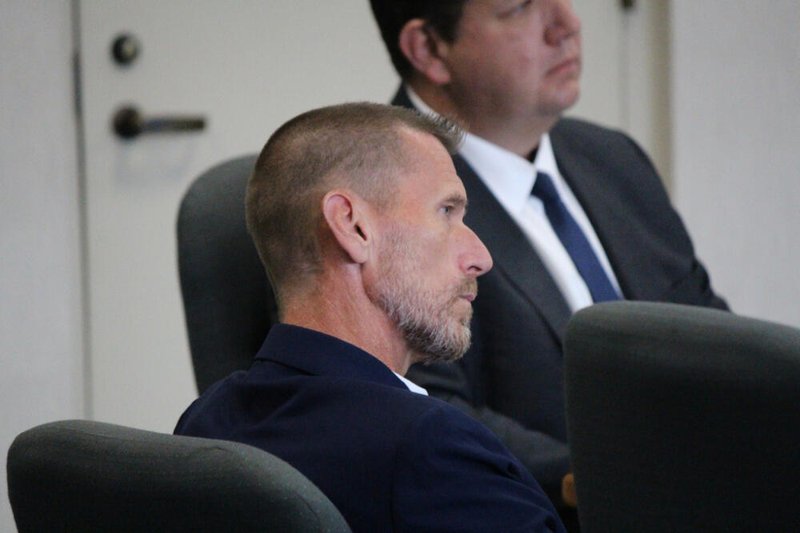
The courtroom scene at the verdict captured the two arcs at once. Eaton, who had repeatedly clashed with his attorneys during the case, stared ahead blankly as the guilty counts were read; Awartani and Aliahmad, watching from the front row, smiled and hugged the people around them. He was ordered jailed pending sentencing.
Current Status
Eaton is in custody awaiting sentencing, which had not been scheduled as of verdict-day reporting. Each count carries a potential life sentence. The insanity question is closed — the jury expressly rejected it — so the conviction stands as a finding of criminal responsibility; an appeal is his remaining avenue, and none had been reported as of verdict-day coverage.
Impact on Their Career/Life
Before November 2023, Eaton was a private citizen — a credit-union employee in Burlington with no public profile. The record now attaches three convictions for attempted murder to his name, an express jury rejection of his insanity claim, and a sentencing hearing at which life in prison is on the table. The trial itself recorded the deterioration the defense described: a man whose sister said he did not seem like himself, telling his lawyers he had been “hacked,” and fighting with the lawyers he later needed most.
His name is now permanently joined to one of the most prominent acts of violence against Palestinian Americans in recent United States history — a case that made three Ramallah schoolmates, and one wheelchair, the human face of a wave of post-October 2023 anti-Palestinian incident reporting. Whatever sentence he receives, the verdict has already fixed the account: three young men walking home, a man who concedes he shot them, and a jury that answered his insanity claim with a declaration that he knew what he was doing.
Sources
- New York Post (Associated Press), “Man who shot 3 students convicted of attempted murder — rejecting insanity claim,” September 21, 2026.
- WBUR / Vermont Public, “Jury finds Jason Eaton guilty of attempted murder in Vermont shooting,” September 21, 2026.
- MyNBC5 (WPTZ), “Jury reaches verdict in trial tied to 2023 shooting of Palestinian students in Burlington,” September 21, 2026.