Matthew Dowd
Introduction
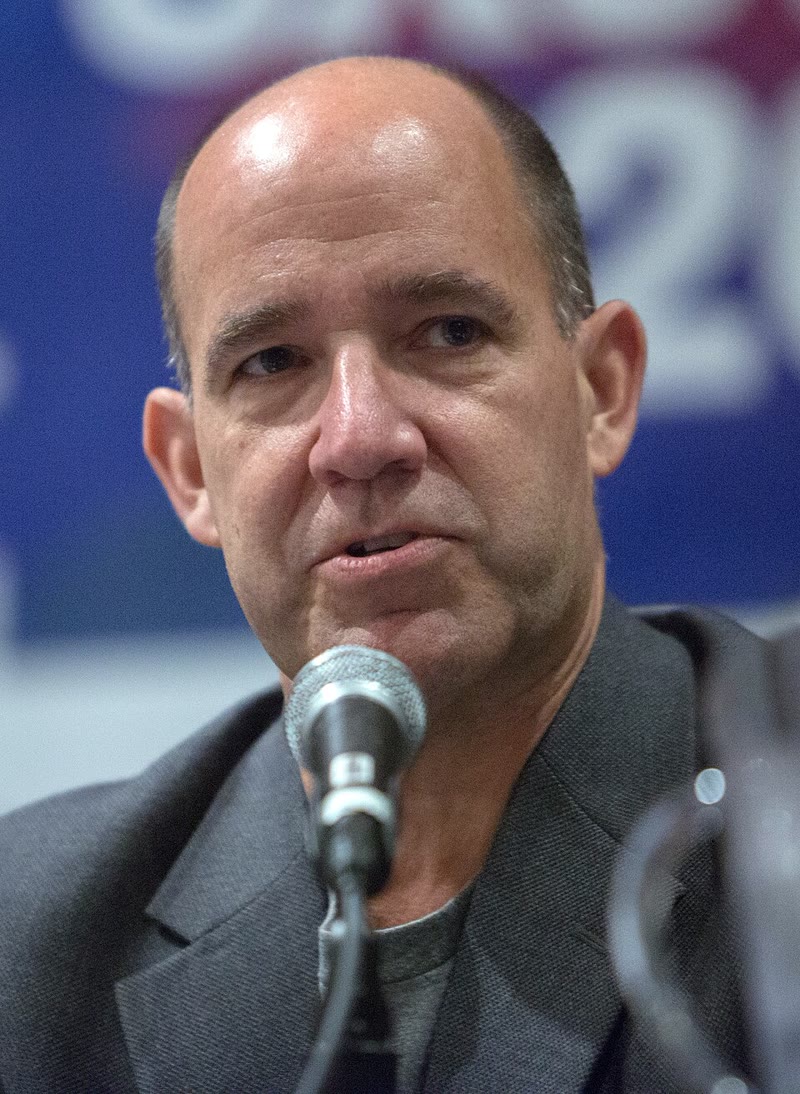
Matthew Dowd is an American political pundit and consultant best known as the chief campaign strategist for the Bush–Cheney 2004 presidential campaign and, for nearly two decades afterward, as a fixture on American television news, particularly MSNBC, where he served as a senior political analyst. On 10 September 2025, Dowd was fired by MSNBC following comments he made on-air in the immediate aftermath of the shooting death of conservative activist Charlie Kirk. In the remarks, Dowd suggested that the “hateful” rhetoric of the political environment was connected to the violence, and he speculated that the shooter might have been a supporter celebrating the killing. Both Dowd and the network’s president apologized for the statements, but the network moved to remove him within hours, making his case one of the most prominent examples of a media figure being dismissed over commentary made in the wake of a political assassination.
Background Information
Born on 29 May 1961 in Detroit, Michigan, Dowd built a long career in political strategy before turning to punditry. He served as the chief strategist for the 2004 Bush–Cheney presidential campaign, a role that made him a recognized figure in American politics, and he subsequently worked as a political consultant and analyst. He became a regular presence on MSNBC and other networks, where he commented on the political landscape for nearly two decades. Per Wikipedia, Dowd also authored several books, including the New York Times bestseller “Applebee’s America,” and he taught at the University of Texas’s Lyndon B. Johnson School of Public Affairs. He had previously served as an aide to President George W. Bush. His long-running role as a television commentator made his abrupt dismissal in 2025 a conspicuous break in a career that had spanned more than two decades of on-air work.
The Controversy or Incident That Led to Their Cancellation
The triggering incident was a set of on-air remarks made during the breaking-coverage of the shooting of Charlie Kirk at a Utah campus on 10 September 2025. In the comments, Dowd characterized Kirk as “one of the most divisive, especially divisive younger figures” who was “constantly sort of pushing this sort of hate speech,” and he argued that “hateful thoughts lead to hateful words, which then lead to hateful actions,” concluding that this was “the environment we are in.” He also speculated that the shooter “may have been a supporter shooting their gun off in celebration.” The remarks drew swift criticism, and later that same day MSNBC president Rebecca Kutler denounced them, saying that Dowd had made comments that were “inappropriate, insensitive, and unacceptable” and that the network, as Dowd himself, apologized for his statements. Kutler added that “there is no place for violence in America, political or otherwise.” That evening, Dowd was fired from MSNBC.
Public Reaction and Consequences
The reaction to the firing was intense and divided, and it landed in the middle of a much wider rush to police commentary made in the aftermath of Kirk’s killing. Across the country, a number of other people faced professional consequences for statements about Kirk’s death: a staff member at the University of Mississippi was fired after sharing “insensitive comments,” the president of Middle Tennessee State University said he had fired a staffer over “callous and inappropriate comments,” a reporter for a Florida news site was suspended for texting a congressman a question about gun control immediately after the shooting, and a feminist website removed a post. In this context, Dowd’s firing was described by AP as one of the highest-profile instances of a media figure being disciplined over commentary on Kirk’s assassination. Dowd defended his remarks after the fact, saying on Katie Couric’s podcast that he had told MSNBC he believed his words were being misconstrued as “insensitive,” and that the network agreed they had been misconstrued but that “it didn’t matter” and the decision had been made. He said he did not intend for his comments to blame Kirk for the attack. The episode generated widespread debate about the boundaries of commentary in the immediate wake of a political assassination.
Current Status
Following his dismissal, Dowd was no longer with MSNBC, bringing an abrupt interruption to his work as a television commentator that he had done for nearly two decades. As of the sources reviewed, he remained a public political voice, and he continued to defend his handling of the situation, framing his firing as the result of the network caving to public pressure rather than a considered judgment on the substance of his comments. The episode remained a point of discussion in the broader debate over how media organizations should treat commentary that is made in the immediate, unscripted aftermath of a major political tragedy.
Impact on Their Career/Life
The immediate consequence was the loss of Dowd’s long-running role as a senior political analyst at MSNBC, which ended a near-two-decade presence on the network and in American television news. For a figure whose public identity had been built in large part on his on-air commentary career, the dismissal was a significant professional setback. The case was also significant beyond his individual career: it became a reference point in the debate over the consequences of speech in the immediate aftermath of political violence, and it was cited alongside a series of other firings and disciplinary actions that took place in the days following Kirk’s killing. Dowd’s own account — that the network had agreed his words were misconstrued but fired him regardless — became part of the public narrative of the episode, and it kept his case in the public eye well beyond the day of the decision.