Chesa Boudin
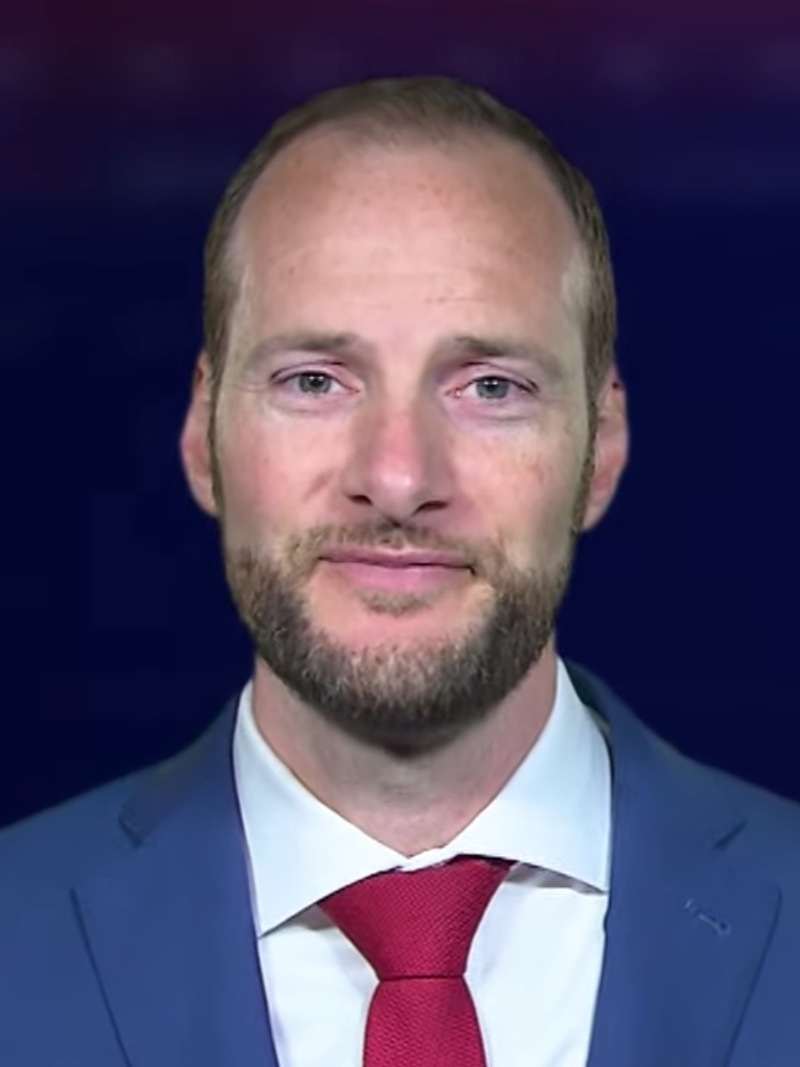
Introduction
Chesa Boudin, the 29th district attorney of San Francisco, was recalled by voters on June 7, 2022, in a heated campaign that bitterly divided Democrats over crime, policing, and public safety reform. The recall election was successful, removing from office a former public defender who had run on a platform of criminal justice reform.
Background Information
Boudin was born on August 21, 1980, in New York City to Jewish parents, Kathy Boudin and David Gilbert, both members of the Weather Underground. He was 14 months old when his parents were arrested; the two were later incarcerated for the felony murder of two police officers and a security guard in the 1981 Brink’s robbery in Rockland County, New York. His mother was sentenced to 20 years to life and his father to 75 years to life, and after their incarceration Boudin was adopted and raised in Hyde Park, Chicago, by fellow Weather Underground members Bill Ayers and Bernardine Dohrn. His mother was released under parole supervision in 2003, when Boudin was 23 years old, and his father was released in 2021.
Boudin attended the University of Chicago Laboratory Schools and Yale College. In 2003 he entered St Antony’s College, Oxford, on a Rhodes Scholarship, earning a Master of Science in forced migration in 2004, and he earned his Juris Doctor from Yale Law School in 2011. After clerking for two federal judges, he began working full time at the San Francisco Public Defender’s Office as a deputy public defender in 2015, where he argued on behalf of the office’s clients that California’s bail system is unconstitutional — an argument that led to the published case In re Kenneth Humphrey, in which the state’s First District Court of Appeals held that judges must give consideration to a defendant’s ability to pay before setting bail.
The Controversy or Incident That Led to Their Cancellation
Boudin was elected San Francisco district attorney in the 2019 election, defeating interim district attorney Suzy Loftus, after campaigning on a decarceration platform of eliminating cash bail, establishing a unit to re-evaluate wrongful convictions, and refusing to assist Immigration and Customs Enforcement with raids and arrests. He was sworn in on January 8, 2020, and quickly implemented reforms: in January 2020 he eliminated cash bail, replacing it with a risk-based system in which prosecutors evaluate whether a defendant poses a threat to public safety, and in March 2020 he reduced San Francisco’s jail population by 25%, from about 1,100 to 840, at the onset of the COVID-19 pandemic.
However, Boudin drew heavy criticism for mismanagement of the office and for his perceived softness on crime. Critics pointed to increases in specific crimes, particularly burglaries, car theft, and murders, during his tenure, and to his handling of suspects with histories of prior convictions, including repeat offenders who were released and went on to commit further crimes. By October 2021, at least 51 lawyers — about one-third of the District Attorney’s Office — had resigned or been fired since he took over, a turnover rate criticized as unusual and as producing understaffing.
Recall efforts against Boudin began early: social media pages calling for his recall appeared as early as December 2020, and by May 2021 he was the target of two recall campaigns. The first campaign collected over 50,000 signatures but fell short of the required number, while a second campaign, The Safer SF Without Boudin, raised 83,487 signatures — sufficient to trigger a recall election. In late 2021, prosecutors Brooke Jenkins and Don du Bain left the district attorney’s office and publicly joined the recall effort, blaming Boudin’s lack of commitment to prosecuting crimes.
Public Reaction and Consequences
The recall election was held on June 7, 2022, and was successful: The National Desk reported that about 60% of voters voted to remove Boudin, while Wikipedia records that 55% of the electorate supported his removal. “They were given an opportunity to voice their frustration and their outrage and they took that opportunity,” Boudin said during his concession speech.
The result was widely read as a signal about public safety: The National Desk reported that voters in one of the country’s most Democratic cities, fed up with soaring homelessness and surging crime, sent “a loud and clear message” with 60% voting to remove Boudin, and that Democrats were increasingly distancing themselves from progressive criminal justice policies as crime rates dragged their party’s poll numbers down. The article cited a poll showing that 53% of Americans worry “a great deal” about crime, and noted that in New York City, Mayor Eric Adams blamed Manhattan’s progressive prosecutor Alvin Bragg, while in Los Angeles, Rick Caruso ran for mayor on a tough-on-crime platform.
Boudin admitted he had made mistakes during his tenure and blamed his defeat on a combination of angry and frustrated voters and significant spending by “right-wing billionaires” in favor of the recall. He and his supporters had alleged that the campaign was largely a Republican effort, although the recall campaign was publicly led by Democrats.
Current Status
Boudin’s term as district attorney ended on July 8, 2022, and he was succeeded by Brooke Jenkins, one of the prosecutors who had left his office and joined the recall effort. In June 2023, Boudin joined the faculty of the University of California, Berkeley, School of Law as the founding executive director of the Criminal Law & Justice Center.
Impact on Their Career/Life
Boudin’s tenure lasted from January 8, 2020, to July 8, 2022, and ended with his removal by voters — one of the most prominent recalls of a progressive prosecutor in the United States. His case became a reference point in the national debate over criminal justice reform, as Democrats sought to distance themselves from policies branded as soft on crime and moderate Democrats warned that candidates who were seen as soft on crime were dragging down the party.
For Boudin personally, the recall brought an abrupt end to an unusual political career: a former public defender and Rhodes Scholar, raised by Bill Ayers and Bernardine Dohrn after his parents’ imprisonment, had become a national symbol of the progressive prosecutor movement. He subsequently moved into academia, joining the UC Berkeley School of Law faculty as the founding executive director of the Criminal Law & Justice Center, where he continues to work on criminal justice issues.