Christian Castro
Introduction
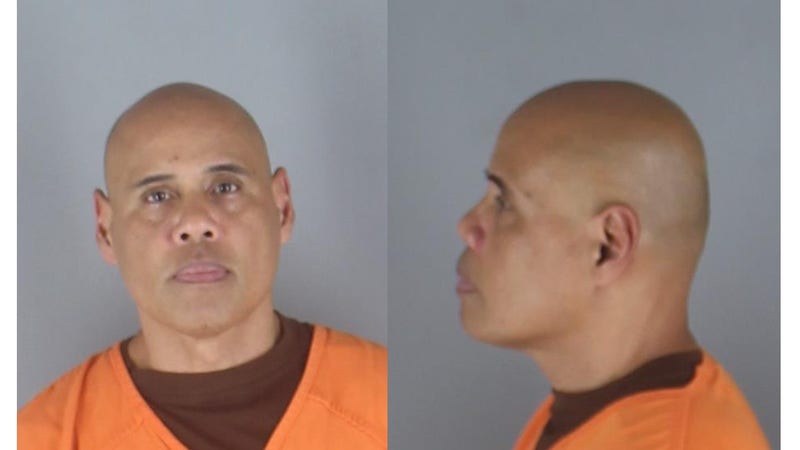
Christian Castro, 52, is an Immigration and Customs Enforcement officer accused of shooting a Venezuelan man, Julio Cesar Sosa-Celis, 24, in the leg during an immigration-enforcement operation in Minneapolis in January 2026 — and then lying to investigators about what happened . Castro now faces a federal count of making false statements about the shooting, as well as four felony counts of second-degree assault with a dangerous weapon and a misdemeanor false-reporting charge in Minnesota state court . He pleaded not guilty in federal court on September 18, 2026, and all charges against him remain allegations — no conviction exists .
Background Information
Castro was one of thousands of federal agents sent to Minnesota’s Twin Cities under “Operation Metro Surge,” an immigration enforcement operation the Trump administration launched in early December 2025 that brought sweeping arrests, protests and clashes between demonstrators and immigration officers . Federal agents shot three people during the operation: Sosa-Celis and two U.S. citizens, Renee Good and Alex Pretti, both of whom died .
The shooting Castro is accused of took place on January 14, 2026, about a week after Good was shot and ten days before Pretti . In the days after the shooting, the Department of Homeland Security released a statement saying people had “violently assaulted” ICE officers with a shovel and broom handle to evade arrest, and then-Homeland Security Secretary Kristi Noem described the incident as “an attempted murder of federal law enforcement” .
Federal prosecutors initially charged Sosa-Celis with assaulting a federal agent, but the charges were dropped after the U.S. attorney’s office cited evidence that was “materially inconsistent” with preliminary hearing testimony. Surveillance video released by the city of Minneapolis showed Sosa-Celis dropping the shovel and both men running inside as an agent fired in their direction .
The Controversy or Incident That Led to Their Cancellation
In both the federal and state cases against Castro, prosecutors say he shot Sosa-Celis in the leg while firing through the front door of a Minneapolis home where six people — including two children — were inside, while ICE agents were chasing another man. Prosecutors say Castro later falsely reported that he had been attacked with a broom handle and a snow shovel before firing his gun .
Hennepin County Attorney Mary Moriarty, whose office brought the state charges, told reporters after a September 17 court hearing: “Castro invented a story to justify shooting through a front door into a house with multiple people in it” .
The federal false-statements indictment was announced in early September 2026, after months in which Minnesota’s attempt to prosecute Castro was entangled in an extradition fight with Texas. Robin Wolpert, an attorney representing Sosa-Celis, said the evidence strongly supports civil-rights charges and called the federal case “grossly undercharged” — while ProPublica reported that a federal prosecutor on the case told Sosa-Celis’s lawyers that Justice Department officials had blocked plans to bring civil-rights charges against Castro .
Castro’s defense attorneys have said he plans to plead not guilty in the federal case, and his lawyer Daniel Gerdts declined to comment after a Thursday hearing. Another of his lawyers, Rolando Cantu, disputed prosecutors’ assertions that Castro might flee, saying “He wants his day in court” .
Public Reaction and Consequences
The federal case is the first Justice Department prosecution of a federal officer for actions taken during Operation Metro Surge — a notable step in an operation that had otherwise seen officers shielded from charges . The Department of Homeland Security, for its part, has called Minnesota’s prosecution of Castro “unlawful and nothing more than a political stunt,” saying only federal authorities have jurisdiction .
The case also became a jurisdictional fight between Minnesota and Texas. Authorities including Minnesota’s Bureau of Criminal Apprehension arrested Castro in Cameron County, Texas, on May 29, 2026, after a Minnesota judge issued a nationwide warrant. Under Texas law he could be held 90 days while Minnesota sought extradition, but Republican Gov. Greg Abbott refused to sign an extradition warrant — questioning whether Castro was a “fugitive” because the Department of Homeland Security had ordered him to leave Minnesota — and Castro was released in August .
Minnesota Attorney General Keith Ellison accused Abbott of “harboring a fugitive” and said Minnesota would never let Castro “escape accountability.” Moriarty, after Castro was taken into custody, said “Gov. Abbott’s attempt to shield Mr. Castro from accountability has failed. We look forward to commencing our prosecution” .
On September 16, 2026, Castro was arrested by BCA officers in downtown Minneapolis and booked into the Hennepin County Jail on the active warrant, days before he was due to surrender at his attorney’s office, his lawyer told Reuters .
Current Status
Castro pleaded not guilty in U.S. District Court in St. Paul on the morning of September 18, 2026, to the federal false-statement charge. In the brief hearing he appeared in person wearing an ankle monitor and confirmed he had surrendered all of his firearms .
The day before, in his state case, Judge Paul Scoggin set bail at $400,000 — or $200,000 with conditions, including a signed waiver that he would not fight extradition to Minnesota if he leaves the state while out on bail . Both cases remain pending, with no trial dates reported, and Castro has not been convicted of anything .
Impact on Their Career/Life
Castro’s law-enforcement career has been consumed by the case: FOX 9 now describes him as a former ICE agent, and he spent the summer of 2026 jailed in Texas and then Minnesota as the extradition fight played out . As of his September 18 federal appearance he was on an ankle monitor, had surrendered his firearms, and faced combined bail of up to $600,000 across the state and federal matters .
The outcome of the two prosecutions will determine whether the only federal officer charged in Operation Metro Surge becomes its first convicted one. The alleged false statement sits at the center of both cases: prosecutors say his report of being attacked with a broom handle and snow shovel was contradicted by surveillance video and witness statements, while the initial federal charges against the man he shot were dropped as inconsistent with the evidence .