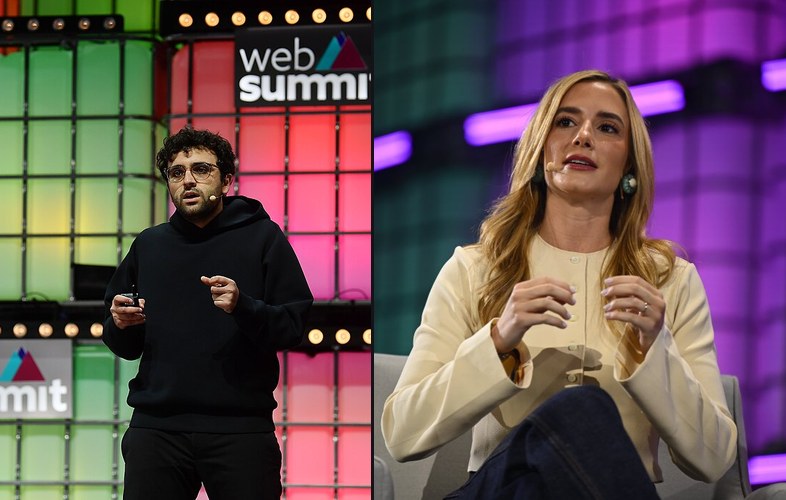
Tarek Mansour and Luana Lopes Lara
Introduction
Tarek Mansour and Luana Lopes Lara are the co-founders of Kalshi, the New York-based prediction-market platform: Mansour is its chief executive officer and Lopes Lara its chief operating officer. On October 28, 2026, Utah Attorney General Derek Brown filed criminal charges against their company, KalshiEX, LLC, in the Third Judicial District Court in Salt Lake County, listing both co-founders as co-defendants on the caption. The 14-count case accuses the platform of illegally promoting online gambling in a state whose constitution bars gambling, and it lands in the middle of a widening national fight over who regulates prediction markets.
Background Information
Per the court filing, KalshiEX, LLC is a Delaware-organized company with its principal place of business in Manhattan. In February 2026 Kalshi preemptively sued Utah’s governor and attorney general, arguing the federal Commodity Exchange Act insulated it from state gambling law; in August, U.S. District Judge Robert Shelby granted Utah summary judgment, and on September 8, 2026 the Tenth Circuit refused to block enforcement pending appeal. On October 20 the attorney general’s office also sued KalshiEX and related entities civilly — Brown said the company “runs an online casino in Utah and calls it a prediction market,” in one of only two states where gambling is prohibited under the state constitution.
The Controversy or Incident That Led to Their Cancellation
Charged, not convicted — the company calls the case a “crazy overreach.”
The October 28 Information charges KalshiEX, LLC with 14 counts: one count of pattern of unlawful activity, a second-degree felony; twelve counts of online gambling promotion, third-degree felonies; and one count of general gambling promotion, a Class A misdemeanor. Every count is pleaded against the company, on the theory that its board of directors or high managerial agents authorized, commanded, or recklessly tolerated the conduct. Mansour and Lopes Lara are named co-defendants, and the state’s probable-cause declaration alleges each “acquired or maintained” an interest in and control of the enterprise, and participated in its affairs, “through a pattern of unlawful activity.” The filing was authorized by Attorney General Brown and Criminal Deputy Attorney General Stewart M. Young.
The evidence, per the declaration of Special Agent Scott Eggerman: beginning September 13, 2026, he opened an undercover Kalshi account while independently verifying his Utah geolocation and IP address, then placed twelve wagers over two weeks — totaling $114 per the Salt Lake Tribune — on NFL, college-football, MLS, MLB, and NHL games, including a Cowboys-Giants bet, three Eagles-Titans bets, and a wager on a Utah Mammoth-Avalanche hockey game. The platform required him to confirm his location before he was allowed to place a wager, and Kalshi collected per-wager fees of roughly $0.03 to $0.78. The declaration also leans on the founders’ own public statements: that Mansour exercises “substantial, direct control” over business decisions and supervises employees directly, and that operations are centralized on Lopes Lara, who oversees product, design, engineering, markets, and marketing. It alleges that despite Judge Shelby’s ruling and the Tenth Circuit’s denial, Kalshi, Mansour, and Lopes Lara “have continued to provide or offer to provide online gambling to individuals in the State of Utah.”
The state frames the case as an escalation after the civil suit; Brown said, “Gambling is illegal in Utah, whether you place the bet, run the game, or promote it. Calling it a ‘prediction market’ doesn’t change what it is, and being federally registered doesn’t put a company above the law.” Kalshi’s statement called the charges a “crazy overreach,” said “Utah is clearly playing politics,” and vowed: “We look forward to putting a stop to this in court, just like we did in Arizona.” Arizona had filed the first criminal charges against the company earlier in 2026 — misdemeanors.
Public Reaction and Consequences
Legal analyst Daniel Wallach, who teaches at the University of Miami School of Law, called Utah’s felony case a potential shift in strategy by states that had mostly pursued civil actions, and a possible bellwether for how other states approach Kalshi and Polymarket after a Nevada appellate ruling went the state’s way. Litigation over who regulates the markets has spread to roughly 20 states, and analysts expect the Supreme Court to settle it; New Jersey asked the justices to take up the jurisdiction question just last month. Under President Trump, the CFTC has sided with the platforms and sued at least ten states — including Utah on Tuesday, the day before these charges were filed. Al Jazeera reported that neither Kalshi nor Brown’s office responded to its requests for comment.
Current Status
The charges are allegations, unadjudicated: the filing is an Information supported by a probable-cause declaration, and all defendants are presumed innocent until proven guilty in court. The filed summons still shows blank case-number and judge fields, and no arraignment date has been announced; the attorney general’s office has not said what penalties it will seek, though the felony counts carry the possibility of jail time. Per the attorney general, Kalshi has continued to operate in Utah despite the federal court ruling, while the company’s own appeal remains pending and the state’s separate civil suit — which also asks the court to make Kalshi give up the profits it made in Utah — proceeds alongside the criminal case.
Impact on Their Career/Life
For the two founders of the federally registered prediction market, Utah’s case is the first to charge the company at the felony level — a harder edge than the Arizona misdemeanors or the civil suits pending elsewhere — and it arrives at a precarious moment: their company is fighting a federal-judge ruling that state gambling law applies to it, a civil suit seeking disgorgement of Utah profits, and a CFTC counteroffensive that analysts say only a Supreme Court ruling can resolve. No arrests or other personal consequences beyond the charges themselves have been reported; the immediate exposure is legal and reputational, and it will be tested in a Utah courtroom.
Sources
- NY Post, “Utah charges Kalshi’s founders, escalating a war over who can regulate prediction markets”, October 29, 2026 — source
- State of Utah v. KalshiEX, LLC, Tarek Mansour and Luana Lopes Lara, Co-Defendant Information (Summons), Third Judicial District Court, Salt Lake County, filed October 28, 2026 — source
- Al Jazeera, “Kalshi, cofounders hit with criminal charges in US state of Utah”, October 29, 2026 — source
- Utah Attorney General’s Office, “Utah sues Kalshi, alleging its prediction market is gambling”, October 20, 2026 — source
- The Salt Lake Tribune, “Utah files 14 criminal charges against Kalshi and its founders”, October 28, 2026 — source
- NY Post on X, trigger post, October 30, 2026 — source