Reza Nabavi
Introduction
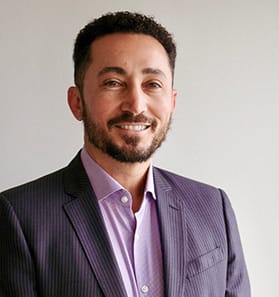
Dr. Reza Nabavi is the founder and owner of Resolutions Living, the Santa Monica halfway house where Presley Gerber — the 27-year-old son of Cindy Crawford and Rande Gerber — died of a suspected overdose on September 20, 2026, and the founder and executive director of its affiliated outpatient provider, Resolutions Therapeutic Services. In the days after Gerber’s death, Page Six reported from official records that Nabavi, now 50, was arrested twice in 2002 on methamphetamine-related offenses — once alongside a 15-year-old girl who was under the influence — pleaded no contest to two misdemeanor controlled-substance charges, and was denied a psychology license by the California Board of Psychology in 2004 because of that record. The report landed two days after Page Six confirmed Gerber was admitted to the facility the day before he died, with sources saying he appeared “visibly under the influence” at the time.
Background Information
Nabavi earned his Ph.D. in clinical psychology from the California School of Professional Psychology, and per his practice biography he has spent more than two decades in substance-use and mental-health treatment in Southern California. He served as director of family services at Promises Malibu — the since-closed celebrity-frequented rehab center — from June 2006 to May 2011, per Page Six’s review of his history. He later opened Resolutions Living (RL), a $7.7 million three-story home in a “prestigious” Santa Monica residential neighborhood, and founded Resolutions Therapeutic Services (RTS), an outpatient provider offering partial hospitalization, intensive outpatient and standard outpatient programs in an office building nearby. His practice biography presents him as a licensed clinical psychologist specializing in trauma, addiction and co-occurring disorders, with postdoctoral training and a certification as a domestic violence and abuse counselor.
The Controversy or Incident That Led to Their Cancellation
Allegations. The criminal record and license history recounted here are matters of official record as reported by Page Six: Nabavi pleaded no contest to two misdemeanor charges and was sentenced to probation, and his 2004 license application was denied by the California Board of Psychology — those are administrative and misdemeanor dispositions, not felony convictions. Any implication connecting his history to Gerber’s death is not an established fact: no cause of death has been released and no charges have been filed in connection with it. Nabavi has not publicly responded to the report.
Page Six, citing official documents, reported that in February 2002 — when Nabavi was 25 and two years before he obtained his doctorate — Oakland Police officers found him asleep in a car in an area known for “frequent narcotic and prostitution activity,” accompanied by a 15-year-old girl who told officers she did not know him well and was under the influence of methamphetamine. A search of the vehicle allegedly turned up meth, marijuana, a hunting knife, a handgun and ammunition. In May 2002 he pleaded no contest to a misdemeanor charge of possession of a controlled substance and received 36 months of probation; later that month he was arrested again after allegedly agreeing to sell meth to an informant, with officers reported to have found meth, a glass meth pipe and marijuana on him, and in June 2002 he pleaded no contest to a second misdemeanor possession charge and was again sentenced to 36 months of probation.
In September 2004, per the records Page Six reviewed, Nabavi applied to the California Board of Psychology for registration as a psychologist, and the application was denied that same month due to “the conviction of a crime,” a conviction “substantially related to the qualifications and practice of a psychologist,” use of a controlled substance, and unprofessional conduct. After another denial in May 2005, he registered as a psychological assistant in January 2006 — briefly revoked but stayed — and was able to register as a psychologist in December 2006 in compliance with probationary terms: a psychological evaluation, weekly monitoring by a licensed psychologist, a drug and alcohol recovery program, ongoing treatment, and random testing. The board granted him early termination of probation in May 2008.
The story broke two days after Page Six confirmed that Presley Gerber — who had a well-documented history of substance abuse, addiction and mental-health issues — was admitted to Resolutions Living on Saturday, September 19, 2026, the day before he died, and that sources said he appeared “visibly under the influence” at the time of admission. The facility’s defunct FAQ page had stated that individuals without sufficient clean time would be referred elsewhere for medically supervised detoxification under 24-hour nursing care, and it remains unclear whether Gerber was medically evaluated at admission.
Public Reaction and Consequences
The report landed amid national coverage of Gerber’s death and hit the facility’s operations almost immediately: Page Six observed that the Resolutions website appeared to have updated much of its wording and scrubbed its entire staff page in the days following the death. The scrutiny extended to the facility’s regulatory status — a representative of the California Department of Health Care Services said RL is not a licensed substance-use-disorder residential treatment facility and “appears to operate as a sober living environment or recovery residence, which is not licensed by DHCS and therefore not subject to state licensure requirements.” The county Medical Examiner listed Gerber’s place of death as a “rehabilitation facility” while his cause of death remains unreleased.
Reps for Nabavi, Resolutions Living and the Gerber-Crawford family did not immediately respond to Page Six’s requests for comment.
Current Status
Nabavi remains the listed founder and executive director of Resolutions Therapeutic Services, whose site continues to describe him as its clinical leader, and his California psychology license is currently listed as active with a June 30, 2028 expiration. No regulatory action arising from the Gerber death has been announced, the Medical Examiner’s cause-of-death finding is pending, and no criminal charges have been filed against anyone in connection with the death.
Impact on Their Career/Life
The exposure of Nabavi’s 2002 arrests, no-contest pleas and the 2004 license denial — two decades after the fact — struck at the foundation of his professional identity as a licensed clinician trusted with clients in early recovery, and at the credibility of the facilities he owns. The scrubbed staff page and revised website wording suggest active damage control, and the disclosure that RL operates outside state licensure as an unlicensed sober-living environment has become part of a broader public debate about gaps in how California regulates recovery residences — a debate Gerber’s death, coming days before the report, is likely to keep alive.