Hayden Panettiere #
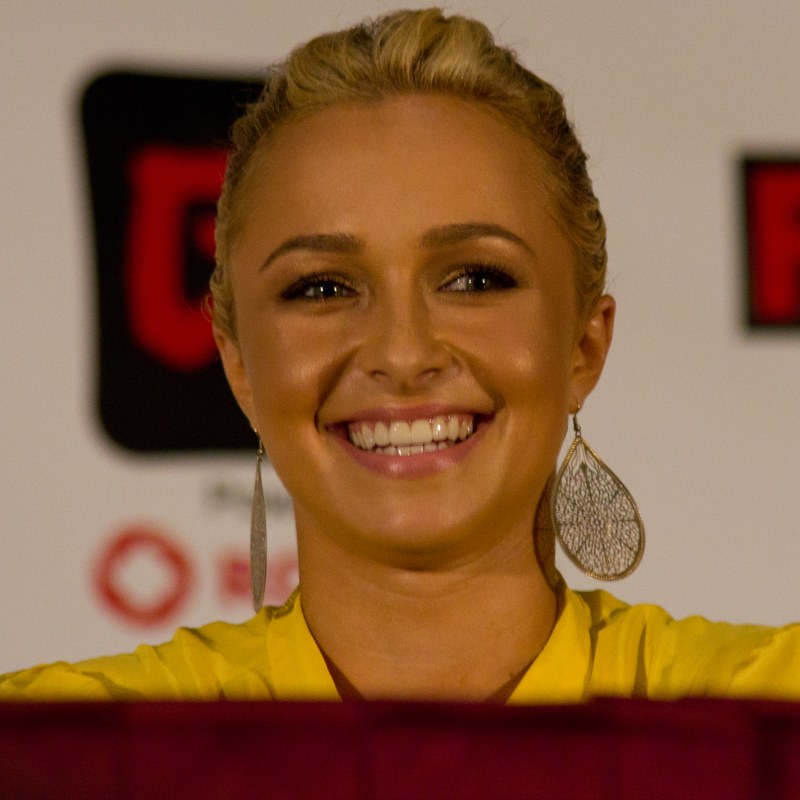
Introduction #
Hayden Panettiere was an American actress and singer best known as Claire Bennet, the cheerleader on NBC’s superhero drama “Heroes” (2006–2010), and as country singer Juliette Barnes on ABC’s “Nashville” (2012–2018) — a role that drew two Golden Globe nominations. She died on August 16, 2026, in Greenville, South Carolina, at age 36, twelve days before her 37th birthday, and a month later her death became the center of a fresh wave of headlines: per law-enforcement sources cited by TMZ and the NY Post, the pill she took on the day she died is believed to have been oxycodone laced with fentanyl, and federal agents are working to trace it to a Los Angeles dealer.
Background Information #
Panettiere was born August 21, 1989, in Palisades, New York, to a former soap-opera actress and an FDNY captain, and entered show business as an infant, landing soap roles on “One Life to Live” and “Guiding Light” in grade school. “Heroes” made her a household name at 16; she won a Saturn Award for the role, returned as Kirby Reed in two “Scream” films (2011, 2023), and voiced Kairi in the “Kingdom Hearts” games. Her struggles were as public as her success: she said “happy pills” were supplied to her by members of her own team before red-carpet events as a teenager, entered rehab for alcohol in 2015, and completed an eight-month drug-and-alcohol program in 2020 after developing jaundice from alcohol-induced liver damage. In May 2026, three months before her death, she published the memoir “This Is Me: A Reckoning,” writing candidly about opioid addiction, alcoholism, and postpartum depression after the 2014 birth of her daughter, Kaya, with former heavyweight champion Wladimir Klitschko.
Her on-and-off relationship since 2018 with Brian Hickerson, a South Carolina real-estate agent, was itself a public scandal: per her Wikipedia biography, he was arrested in 2019 after an alleged confrontation with her (the case was dismissed), arrested twice more in 2020 on domestic-violence-related charges, and in 2021 was sentenced to 45 days in jail after pleading no contest to two felony counts of injuring a wife or girlfriend. Hickerson was with Panettiere on the flight from Los Angeles and was staying at the apartment where she died; he and his brother Zach were both present that day.
The Controversy or Incident That Led to Their Cancellation #
Allegations. The claims in this section are allegations from multiple law-enforcement sources described as connected to the case, speaking to TMZ and repeated by the NY Post. They were never admitted by anyone, no dealer or other person has been charged, and nothing about the cause of death has been adjudicated; official toxicology results are pending and could take up to 12 weeks.
On August 16, 2026, Panettiere was found unresponsive after cardiac arrest at the apartment where she and Hickerson were staying; Hickerson administered Narcan and, per his brother’s account to TMZ, the brothers performed CPR before EMS arrived, and first responders pronounced her dead at 2:32 p.m. Police said preliminary findings showed no signs of foul play, and an autopsy the next day found no signs of trauma — but the exact cause of death was not released, pending toxicology.
The development reported September 14 is the overdose theory’s specifics: law-enforcement sources told TMZ that Panettiere appears to have met her “long-term drug dealer” in Los Angeles before flying to South Carolina, bought black-market oxycodone from him — reportedly taking several pills on the flight — and that the single pill she took the morning of her death is believed to have been laced with fentanyl, an opioid roughly 50 times stronger than heroin. The NY Post’s account matches, adding that police are said to be “zeroing in” on the alleged dealer. The DEA is piecing together the dealer relationship in both Los Angeles and South Carolina, trying to trace the fatal pill; TMZ’s sources compared the posture to the Mac Miller case, in which the rapper’s dealer was convicted of supplying the fentanyl-laced pills that killed him, while cautioning everything hinges on the pending toxicology. Per the NY Post, Hickerson has already met with DEA officials; what he told them is unknown, beyond his earlier statement to police that Panettiere had a “bag of medication” with her — police records, redacted as to which drugs, listed nine different types.
Public Reaction and Consequences #
Her August death drew an outpouring: Viola Davis called her “an amazing talent”; “Heroes” writer Bryan Fuller said she was “more than an actress, she was a muse”; Klitschko praised how she “built an incredible career through immense talent.” The September revelation recast the story from private tragedy to criminal investigation. The consequences now fall on the living: the unidentified dealer facing a DEA trace, and Hickerson, handcuffed by Greenville police on September 13 after an alleged bar altercation in which patrons allegedly heckled him over her death — video posted to X shows him yelling “GPD leaked it when my girlfriend died.” He was released and not charged; his attorney, Sloan Ellis, said only that “Hayden’s death remains under investigation and it is important to allow that investigation to proceed.”
Current Status #
As of September 14, 2026, Panettiere’s official cause of death remains undetermined: toxicology results are pending and could take up to 12 weeks, so the fentanyl-laced-pill account — however specifically sourced — is still a theory from law-enforcement sources, not a coroner’s finding. The DEA investigation in Los Angeles and South Carolina is active, and no one has been identified publicly, let alone charged, as the alleged dealer. Hickerson has not been charged in connection with the death and has spoken only through his attorney. The case is, in every formal sense, open.
Impact on Their Career/Life #
Panettiere’s death at 36 closed a career that began at 11 months old and had survived two decades of public struggle; her memoir, published three months before she died, was written as a survivor’s account — rehab twice, a damaged liver, doctors’ warnings. Instead, the record now holds the story her death tells: that the “happy pills” handed to her as a child performer grew into an addiction she documented in print, and that the black-market supply she reportedly turned to in the end allegedly killed her with a single fentanyl-laced pill. Her legacy rests on the performances — a cheerleader who saved the cheerleader, a country singer written with uncommon empathy — and on a memoir that may come to be read as a warning. Her daughter Kaya was 11.