Camiel Eurlings
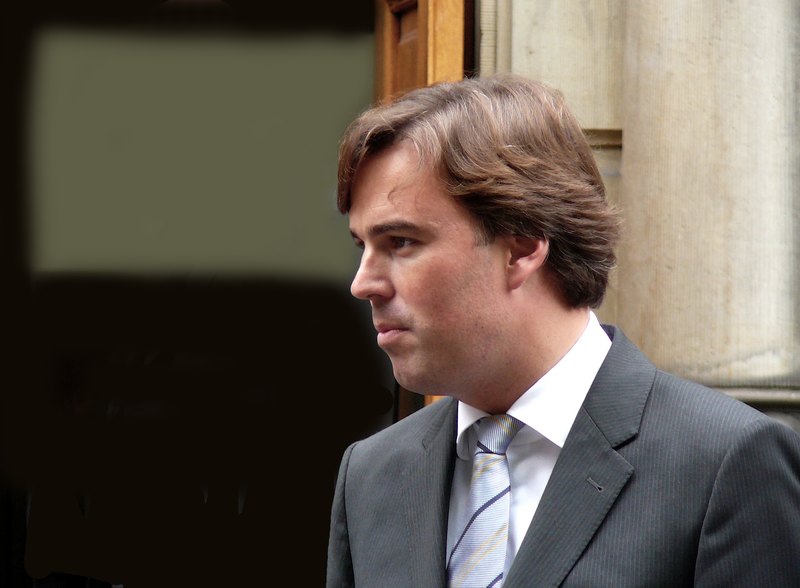
Introduction
Camiel Eurlings is a Dutch politician and businessman who served as president and CEO of KLM Royal Dutch Airlines from 2013 to 2014, and who became the subject of international attention in September 2026 after a power bank reportedly belonging to him caught fire aboard a KLM flight, forcing the aircraft to turn back mid-Atlantic. Eurlings was reportedly sitting in business class on KLM Flight 735 from Amsterdam to Curaçao on September 17, 2026, when the device allegedly burst into flames about five and a half hours into the flight. The story drew particular attention because, as multiple passengers and commentators observed, the former head of the airline was allegedly violating the very inflight rules his own company enforces
Background Information
Eurlings was born on September 16, 1973, in Valkenburg aan de Geul, the Netherlands, and studied industrial engineering at Eindhoven University of Technology. A member of the Christian Democratic Appeal (CDA) party, he became the youngest member of the Dutch House of Representatives when he was elected in 1998 at age 24, served as a Member of the European Parliament from 2004 to 2007, and was Minister of Transport, Public Works and Water Management in the fourth Balkenende cabinet from 2007 to 2010
His business career ran through aviation. Eurlings joined KLM as a corporate director leading the cargo department of Air France–KLM, and on July 1, 2013, he succeeded Peter Hartman as President and CEO of KLM. In 2014, fellow Dutch executives elected him “Best Manager 2014”. He resigned from the position on October 15, 2014. In September 2013 he became an IOC member and chaired the IOC Communication Committee; in January 2018 he resigned from the IOC after an accusation against him was settled out of court without establishment of guilt by the Dutch Public Prosecution Service and without any admission of guilt by Eurlings — a settlement that, formally, is not a criminal record. He later served on the board of American Express Global Business Travel and became a director of Knighthood Capital
The Controversy or Incident That Led to Their Cancellation
Allegations. The claims in this section are allegations from passenger accounts reported by RTL Nieuws and carried by Dutch and international media. They were never admitted by Eurlings, never criminally charged, and never adjudicated in court. Eurlings has not issued any public denial; through a fellow passenger he was described as shocked and remorseful about the disruption. KLM has not confirmed that he was aboard or responsible and says it is still investigating.
KLM Flight 735, a Boeing 777-300ER registered PH-BVP, departed Amsterdam Schiphol at 13:21 local time on Thursday, September 17, 2026, carrying 322 passengers bound for Willemstad, Curaçao. About five and a half hours into the flight, while the aircraft was over the Atlantic, a power bank reportedly caught fire in the business-class cabin. An anonymous female passenger seated nearby told RTL Nieuws that the device was being charged by former KLM chief executive Camiel Eurlings, who was allegedly sitting beside her, the passenger said: “There was suddenly a loud bang. Immediately after, there was a fire; large flames shot up from above the seat. The bang was the power bank exploding and instantly catching fire”
Cabin crews extinguished the fire quickly. Images and footage shared on X showed ash on an armrest and a charred window cover with a spiderweb crack, though KLM stated it could not confirm the authenticity of the pictures. Eurlings reportedly sustained minor injuries in the incident; initial reports had said no one was hurt, but RTL’s sources subsequently claimed he was slightly injured. The captain decided to return to Amsterdam as a precaution, and the aircraft touched down safely at Schiphol at roughly 8:40 p.m., after more than five hours in the air — nearly eleven hours after departure, the passengers ended up exactly where they started. KLM’s own rules allow passengers to carry up to two power banks in hand luggage but explicitly prohibit using or charging them inflight, because lithium batteries pose a fire hazard; if the passenger account is accurate, the airline’s former CEO was violating a clearly stated KLM safety rule at the moment his device ignited
Public Reaction and Consequences
The story spread internationally within a day, driven largely by its irony. A passenger seated at the back of the plane told RTL Nieuws: “If you are just a passenger, such a mistake can happen,” they observed. “But if you have enforced the company’s house rules, then this is very strange.” On X, one critic scoffed, “It’s hilarious that the former CEO doesn’t even follow his own rules.” Another quipped, “Imagine if he’d been the current CEO”.
The stranded passengers’ accounts were not uniformly hostile. The passenger who witnessed the fire commended the cabin crew for responding “very quickly and appropriately.” Another passenger who spoke with Eurlings after the incident said he was “extremely shocked” and “upset,” adding, “He feels terrible about the situation and all the inconvenience for everyone”, the flyer insisted. KLM, for its part, has declined to confirm that Eurlings was the passenger involved, citing privacy rules, and opened an investigation into the incident, including whether the device was actually being charged. The carrier has nonetheless been criticized in commentary for the gap between its strict written rules and what allegedly happened in its own premium cabin
Current Status
KLM has not confirmed Eurlings’s identity as the passenger or that the device was being charged, saying the investigation is ongoing. The affected passengers were re-accommodated on a new aircraft that departed for Curaçao on Friday morning. No criminal charge or fine has been reported against Eurlings, and he has not made any public statement about the incident
Impact on Their Career/Life
Eurlings left the KLM top job in October 2014 and has since held advisory and director roles in business, so the incident does not threaten an airline executive position he currently holds. Its impact is reputational: a former airline chief executive — once elected “Best Manager 2014” by his Dutch peers, and a man whose career has already included a resignation from the IOC in 2018 following a settled, no-guilt-established accusation — is now publicly attached to the image of a business-class seat scorched by his own burning power bank. Critics say the case shows why carriers ban power-bank use inflight, and the episode has become the defining anecdote of his post-CEO public profile