Novak Djokovic
Introduction
Novak Djokovic, the world No. 1 men’s tennis player, was deported from Australia on January 16, 2022, after a three-judge Federal Court panel rejected his last-ditch challenge to the government’s cancellation of his visa on “health and good order” grounds. The unvaccinated Serbian had entered with a medical exemption to defend his title, touching off a 10-day saga that ended in deportation on a flight to Dubai, a three-year ban from Australia, and a grand slam played without its defending champion.
Background Information
Djokovic had won the Australian Open nine times and was opposed to vaccination. In a Facebook live stream with other Serbian athletes in April 2020, he indicated he opposed vaccination and would not be forced to take a COVID-19 vaccine to return to the Tour; he later clarified he is not against all vaccines, but against forced vaccination, saying he was “extremely careful” about what he puts into his body. Asked why he would forgo majors, he said: “The principles of decision making on my body are more important than any title or anything else.”
His views came under scrutiny in late 2021 ahead of the 2022 Australian Open, after Australian government officials indicated tennis players would need to be vaccinated to enter the tournament. He refused to state publicly whether he was vaccinated, confirming to an Australian Border Force officer in January 2022 that he was not. He had been granted a medical exemption to enter Australia by two independent health panels — one commissioned by Tennis Australia, the other by the state government of Victoria — after testing positive for coronavirus in mid-December 2021.
The Controversy or Incident That Led to Their Cancellation
Djokovic, granted an Australian visa in November 2021, arrived in Melbourne on 5 January 2022 and was detained by the Australian Border Force, which said he had “failed to provide appropriate evidence” for entry. Held at the airport for several hours, he had his visa cancelled and was taken to an immigration detention hotel in the Melbourne suburb of Carlton. Prime Minister Scott Morrison insisted “rules are rules” and that no one was above the country’s entry requirements, while Deputy Prime Minister Barnaby Joyce said that if Djokovic had not told the truth, he was “taking the sovereign capacity of another nation for a joke.”
On 10 January, the Federal Circuit and Family Court ruled in Djokovic’s favour, ordering his release after finding he had been denied sufficient time to consult lawyers, and his visa was restored. But on 14 January, Immigration Minister Alex Hawke used his powers under the Migration Act 1958 to cancel the visa again, arguing his presence risked fanning anti-vaccine sentiment. His defence told a three-judge panel the grounds were illogical because deporting him would also risk fanning anti-vaccine sentiment; Chief Justice James Allsop said the ruling concerned the legality of the decision, not its merits. On 16 January the court upheld the cancellation, and Djokovic was deported, saying he was “extremely disappointed” but accepted the ruling. He later admitted an error in his travel declaration after having been in Spain shortly before arriving.
Public Reaction and Consequences
The episode infuriated many in a country that had endured some of the world’s strictest pandemic restrictions and where over 90% of those over 16 were fully vaccinated. Outside the detention hotel, Melbourne’s Serbian community protested, with the player’s father, Srdjan, saying: “This is not just a fight for Novak, but a fight for the whole world.” Serbian President Aleksandar Vucic accused the Morrison government of conducting a “witch hunt,” saying “the whole of Serbia” supported Djokovic, while Australian anti-vaccination activists rallied around the hashtag #IStandWithDjokovic.
The government faced criticism at home and abroad: opposition senator Kristina Keneally said Morrison had made himself a “laughing stock on the world stage,” and former prime minister Kevin Rudd called the affair a “political circus” that could have been avoided had a visa not been issued in the first place. The men’s tennis governing body ATP called the saga a “deeply regrettable series of events,” and Djokovic said he was “uncomfortable” with the focus placed on him: “I hope that we can all now focus on the game and tournament I love.” His first-round place went to Italy’s Salvatore Caruso, ranked 150th in the world, who entered the draw as a “lucky loser.”
Current Status
Deportation orders usually include a three-year ban on returning to Australia, waivable in certain circumstances. He returned to competition in February at the Dubai Championships, where vaccination was not required, losing in the quarterfinals to Jiří Veselý and, with it, the No. 1 ranking he had held for a record 373 weeks, which passed to Daniil Medvedev. Unable to travel to the United States under federal vaccination rules for non-citizens, he also missed the 2022 US Open. In a BBC interview on 15 February 2022, he said he did not associate with the wider anti-vaccination movement but believed in personal freedom of choice, and would forgo tournaments held in countries mandating the vaccine even if it cost him his career records and standing among the all-time greats.
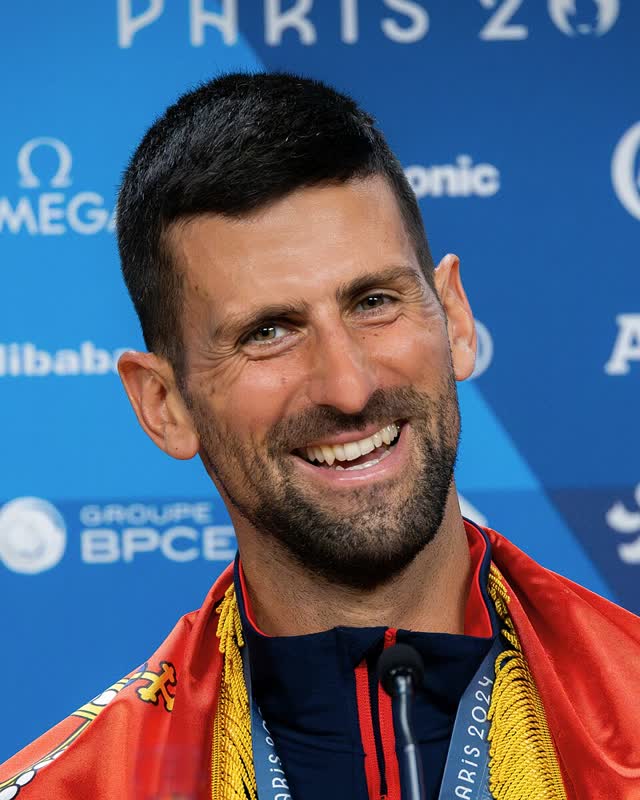
His career recovered fully: he won the 2023 Australian Open, defeating Stefanos Tsitsipas in the final for a record-extending 10th title and reclaiming the No. 1 ranking, added the French Open and US Open for a record-extending 24th men’s singles major, and took Olympic singles gold at the 2024 Paris Games.
Impact on Their Career/Life
The episode made Djokovic the center of one of modern sport’s most intensely debated stories, pitting his stance against COVID-19 vaccination against national border rules and reshaping his 2022 season: the defending champion and tournament favorite sat out the Australian Open, and enforced absences cost him the No. 1 ranking he had held for a record 373 weeks. Several commentators felt his stance could damage his placement among the all-time greats because he could not enter tournaments requiring vaccination, while others applauded him for deciding for himself.
The affair was also a political flashpoint in Australia, exposing friction between state and federal authorities, and abroad, where Serbian leaders framed it as mistreatment of their champion. Mats Wilander warned that Djokovic’s career was “on the line,” and Andy Murray said the situation was “not good” for anyone. In the longer run, the deportation did not end his dominance: he returned to win the 2023 Australian Open — his 10th title there — and kept adding records, showing that even a very public cancellation could not erase his standing in the sport.