Thomas Francis McInerney
Introduction
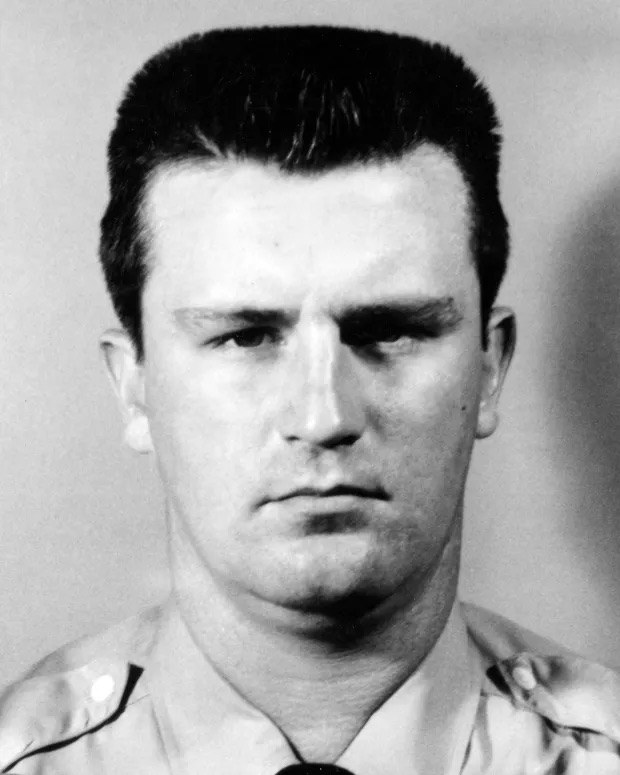
Thomas Francis McInerney was a Chicago police officer for 28 years — hired in 1959, promoted to detective in 1964, and assigned over his career to burglary, vice and gangs on the South Side, homicide and sex crimes on the North Side, and violent crimes on the West Side before retiring in 1987. In October 2026, the Chicago Police Department publicly identified him as the man it believes kidnapped and killed 8-year-old Gloria Kowalewicz on November 12, 1960, closing one of the oldest cold cases the department has solved in nearly a decade. McInerney, who died in Las Vegas in 2006, was never charged or tried.
Background Information
McInerney was 24 years old and in his first years on the force when Gloria Kowalewicz was killed. According to Census records cited by the Chicago Tribune, his parents lived on South Laflin Street, about three-quarters of a mile from the Kowalewicz family home in West Englewood, and his father worked as a guard at the Chicago House of Correction. After retiring from CPD, McInerney moved to Las Vegas and worked as an investigator for the federal public defender’s office in Las Vegas and Reno until 2004; an online obituary says he was named Outstanding Federal Defender Investigator in 2003. He was an Army veteran and a father of five.
The Controversy or Incident That Led to Their Cancellation
Named by police, never charged. The identification of McInerney as Gloria Kowalewicz’s suspected killer is a Chicago Police Department conclusion announced in October 2026, resting on DNA, fingerprint and ballistics findings described by CPD detectives. McInerney died in 2006, so no charge, trial or verdict will ever follow; the finding is a police determination, not a court adjudication.
Gloria Kowalewicz left her West Englewood home the morning of November 12, 1960, walking three and a half blocks to St. Mary of Mount Carmel Church to receive communion on the last day of a two-week devotion. She never arrived. A laundry-company driver found her body shortly before noon in a wooded ravine in Palos Park, about 15 miles southwest of her home; she had been shot twice in the head and had bruises on her neck. Investigators determined from the blood at the scene that she had been killed only after being taken to the woods. The Chicago Tribune reported that police believed she was not sexually assaulted, and that traces of semen would later be recovered from her clothing.
The original investigation was enormous — more than 1,300 people interviewed, local sex offenders rounded up, firefighters, veterans and Boy Scouts aiding the search — but it produced no suspect, and the case faded. In 2010, grant funding sent Gloria’s dress to a DNA laboratory; five months later testing revealed a male DNA profile from semen on the dress, which was entered into CODIS but matched no then-known suspect. In 2024, CPD submitted Gloria’s coat to the FBI for investigative genetic genealogy, the family-tree DNA technique first used in the Golden State Killer case. “In July of 2026, Thomas McInerney was positively identified as the donor of the semen recovered from the dress of Gloria Kowalewicz,” CPD Lt. Mark Kearns told the Tribune. Detectives then pulled McInerney’s 1959 CPD application: the fingerprints he submitted to join the department matched a print lifted from Gloria’s purse strap in 1960, and records showed he owned three Colt revolvers of the same type used to fire the casing found at the scene. CPD says McInerney had no prior contact with Gloria before her death and is not suspected in any other crimes.
Public Reaction and Consequences
The identification landed hard because the suspect had spent his career behind a police star. CPD Chief of Detectives Kevin Bruno told the Tribune that “the fact that he was a police officer is deeply troubling to all of us that have made a career out of this most noble profession,” adding, “it’s not something we’re going to minimize or shy away from. And as far as we’re concerned, he’s a murderer who was acting as a police officer.” Gloria’s brother Adam Kowalewicz, born months before the killing, said the revelation that his sister’s killer was a Chicago officer came as a shock, but that the identification lets his parents’ souls rest: “Gloria can rest.” He remains distressed that McInerney escaped accountability — “He never paid his dues. You hope he’s going to pay his dues with the good lord.” McInerney’s family could not be reached for comment by either outlet.
Current Status
McInerney died in 2006 in Las Vegas, 20 years before police named him the suspected killer; no prosecution is possible. CPD has closed the case, and police data show Gloria’s killing as one of the oldest cases closed by CPD detectives in nearly a decade. The department’s account — DNA from the dress, the genetic-genealogy lead, the fingerprint match and the ballistics overlap — stands as the final public record of the crime. The NY Post’s report of the identification circulated nationally on October 11-12, 2026, more than 65 years after the murder. McInerney’s family has made no public statement.
Impact on Their Career/Life
A 28-year police career that ended in an honored retirement is now permanently paired in the public record with the answer to a 65-year-old child murder. The obituary accolades — federal defender investigator of the year in 2003, a father remembered by name in Las Vegas — now sit beside a police determination that he “positively identified” as the donor of evidence found on a murdered child’s clothing, in the words of the detective who worked the case. For CPD, the closure was framed as proof that “we don’t forget”; for the Kowalewicz family, it closed six decades of not knowing — with the added grief that the killer died free.
Sources
- NY Post, “Murderer in 65-year-old cold case killing of girl, 8, revealed to be Chicago homicide detective,” Oct 11, 2026 — source
- Chicago Tribune, “Chicago police solve a child murder from 1960,” Oct 11, 2026 — source
- Hoodline, “Chicago Cop Identified as Suspect in 1960 Murder of 8-Year-Old Gloria,” Oct 11, 2026 — source
- @nypost trigger tweet, Oct 12, 2026 — source