Nithya Raman
Introduction
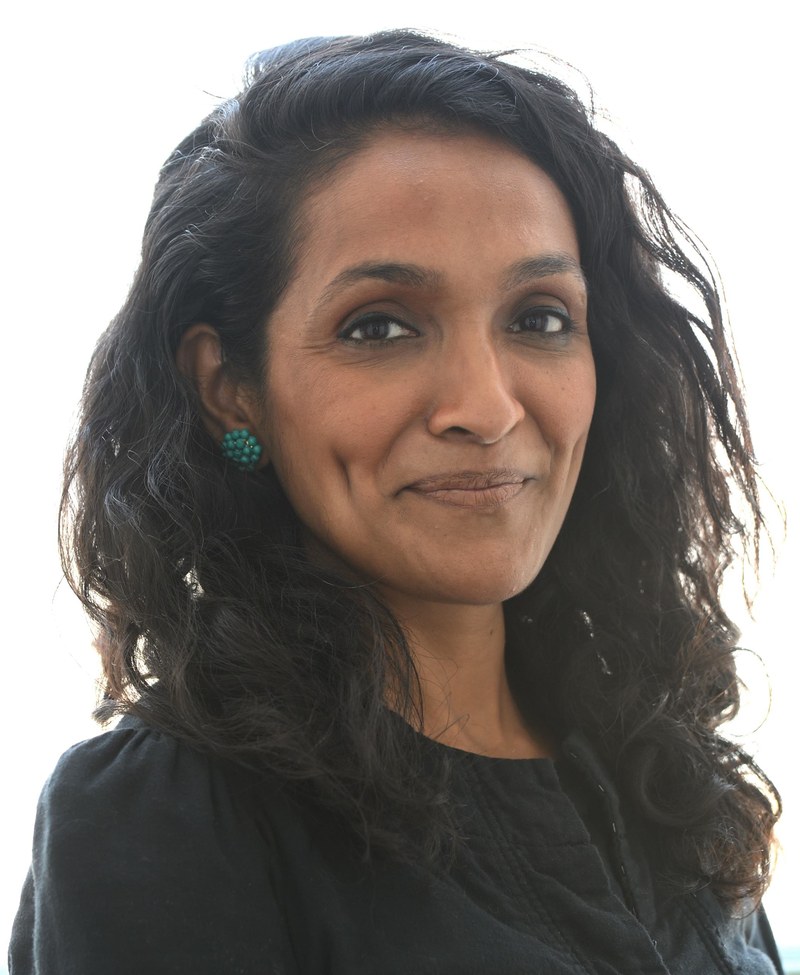
Nithya Raman (born 1980 or 1981) is an American urban planner and politician who has represented Los Angeles City Council District 4 since December 2020 and is currently the Democratic challenger to Mayor Karen Bass in the November 3, 2026 Los Angeles mayoral runoff. A former executive director of Time’s Up Entertainment and co-founder of the SELAH Neighborhood Homeless Coalition, she won office in 2020 by unseating incumbent David Ryu and became the first candidate to win L.A. city office with the backing of the Democratic Socialists of America. On October 1, 2026, with under five weeks to the election, she became the subject of ethics complaints alleging that her mayoral campaign paid social media influencers to promote her without legally required disclosure.
Background Information
Raman arrived in Los Angeles in 2013 and worked in the City Administrative Officer’s office on homelessness policy before co-founding SELAH. She spent roughly a year as executive director of Time’s Up Entertainment, the Hollywood anti-harassment organization, leaving in 2019 to run for City Council. After her 2020 council win she chaired the council’s housing and homelessness committee and built a progressive profile, endorsing Karen Bass for mayor in early 2026 before launching her own mayoral bid weeks later and finishing second in the June 2 primary behind Bass (34%) and ahead of Spencer Pratt (26%) with 29% of the vote. Her campaign has been marked by that “pay to play” critique of Bass — special interests and unions spending on the incumbent — a framing the influencer complaints now cut against.
The Controversy or Incident That Led to Their Cancellation
Allegations. The claims in this section come from ethics complaints filed by two influencers and reported by the New York Post and Los Angeles Times. They are unadjudicated — no agency has found a violation, and Raman, her campaign, and Adam Conover all deny wrongdoing.
Influencers Kaitlyn Hennessy and Beatrice Gomberg filed complaints with the California Fair Political Practices Commission and the Los Angeles City Ethics Commission alleging Raman’s campaign ran a “sustained” effort to conceal who was being paid to promote her, in violation of California’s requirement that paid political influencers disclose sponsorships — a rule few states have, and which Los Angeles regulates even more strictly.
At the center of the complaint is comedian Adam Conover, creator and star of “Adam Ruins Everything,” whose company SwizzleCorp was paid by Raman’s campaign during a period when Conover was posting in support of her to his more than 400,000 Instagram followers. Campaign finance reports initially labeled the payments “online ads” before they were amended to “video production services” — a change also documented by the Los Angeles Times. The complaint also targets Eric Cheng, who posts as “ericsaymore” to roughly 35,000 Instagram and 47,000 TikTok followers: he joined Raman’s campaign staff in September while continuing to post about the candidate, and when he announced the job wrote that he was “not getting $ to make videos or content about the race.” The complaint alleges his role was structured so his posts could fall under the exemption for staff whose principal job is not social media content.
The complaints further allege that from about May 14 through at least September 1, anonymous meme accounts bashed Mayor Karen Bass and Spencer Pratt while promoting Raman. The Los Angeles Times reported the filings got a legal assist from Bass’s campaign: metadata showed the drafts were prepared with help from the Kaufman Legal Group, the law firm used by Bass’s election committee, which is picking up the tab — an arrangement legal experts said is permissible so long as it is disclosed as an in-kind expenditure. Hennessy told the California Post, “When people go through their feeds, they need to know that what they’re seeing is either paid or not,” and consultant Michael Trujillo said the “influencer industrial complex don’t get to have fake moral superiority while being paid off.”
Conover called the complaint “a flimsy political attack that’s easily debunked,” said he has “never been paid” to support Raman, and produced five invoices from March 9 to April 4 totaling $2,447.13 — about 80 hours of hourly staff work at $30 an hour plus sign supplies and cookies — saying every dollar was properly reported. Raman’s campaign called the complaint “frivolous,” said it “proactively sought and received guidance from the City’s Ethics Commission staff,” and said Cheng is paid for campaign work, not his personal posts, which he voluntarily disclosed. Conover separately accused the influencers of “secretly working on behalf of the Bass campaign” — a claim the Bass campaign’s funding of the legal work does not literally contradict, though it says it is not paying Hennessy and Gomberg.
Public Reaction and Consequences
The story broke five weeks before the November 3 general election, and commentators noted the timing: Loyola Law School professor Jessica Levinson, a former Ethics Commission president, said, “Whenever I see that there’s an ethics complaint filed this close to the election, I always pause for a minute.” The FPPC and Ethics Commission declined to comment on the complaints’ status. Earlier ethics complaints about the same Conover posts, filed in May by former council candidate Dylan Kendall, remain under investigation, so the disclosures are now the subject of parallel proceedings rather than a single filing.
Current Status
No agency has found any violation, and the investigations into the complaints — including the earlier Kendall filings — are ongoing. Raman continues to campaign against Bass ahead of the November 3 runoff, with the ethics story landing as her first sustained negative coverage of the general election. New state legislation signed last month gives the FPPC power to refer alleged disclosure violators to prosecutors for misdemeanor charges, with fines up to $5,000 per instance; the L.A. Ethics Commission can levy fines up to $15,000 or three times the money at issue.
Impact on Their Career/Life
The complaint attacks the core of Raman’s political identity: a clean-government outsider whose campaign attacked Bass’s “pay to play” politics, now accused of the mirror-image offense — paying promoters while keeping voters in the dark. The Bass campaign’s fingerprints on the filing (through its law firm) give her campaign a ready-made rebuttal, but the documented “online ads” to “video production services” relabeling and the Cheng hiring structure give the story a factual spine that can grow if regulators act before November 3.
Sources
- source — “Nithya Raman’s social media lovefest under fire over secret payment claims: ‘Fake moral superiority’,” New York Post (California Post), October 1, 2026
- source — “Bass lawyers help influencers file complaint against Raman campaign,” Los Angeles Times, October 1, 2026
- source — “Your guide to the race for L.A. mayor: Bass vs. Raman,” Los Angeles Times, October 1, 2026
- source — “Councilmember Nithya Raman to run for L.A. mayor, challenging onetime ally Karen Bass,” Los Angeles Times, February 7, 2026
- source — “Nithya Raman,” Ballotpedia
- source — “Nithya Raman, 2022.jpg,” Wikimedia Commons (official council portrait, public domain)
