Adam Kalkstein
Introduction
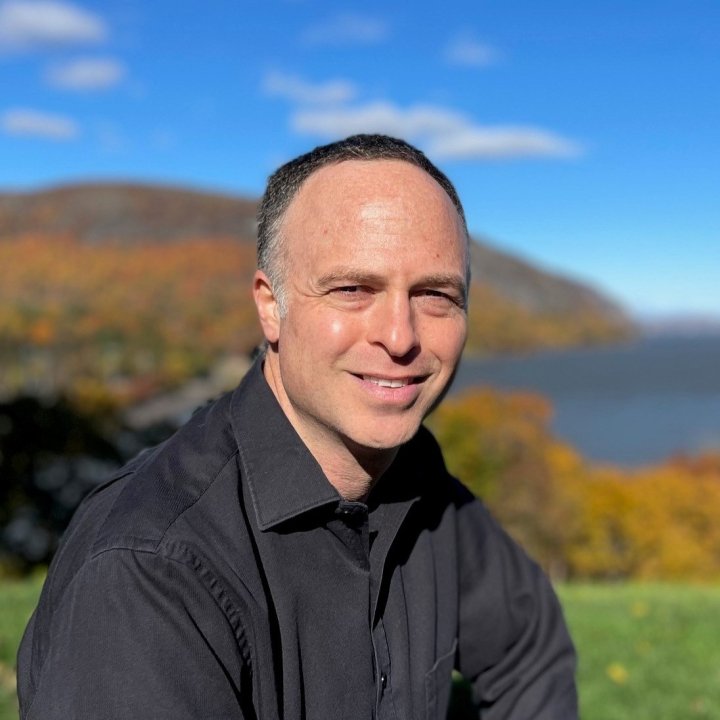
Dr. Adam Kalkstein, a civilian geography professor and the only climate scientist on the faculty at the U.S. Military Academy at West Point, was told at the end of the spring 2026 semester that his contract would not be renewed — a consequence, he alleges, of his refusal to stop teaching cadets that humans contribute to climate change. Kalkstein filed a federal lawsuit on Monday, August 24, 2026, in the U.S. District Court for the Southern District of New York, accusing the academy of violating his First Amendment rights by forcing him “to omit a massive, fundamental, essential component of the course and to defy science.”
Background Information
Kalkstein spent 17 years teaching climatology and other geography courses to cadets and said he consistently received “outstanding” appraisals of his work; about 20 percent of the academy’s roughly 500 faculty members are civilians, according to the lawsuit.
His position first came under threat in May 2025, when, according to the lawsuit, he learned his tenured post would be terminated as part of a reduction in force — one of two civilian professors cut — around the same time West Point opened a new Center for the Humanities and said more geographers were needed to staff it, deepening his suspicion that the move targeted his climate expertise. That summer, according to his attorney, the academy agreed to let him remain as a “term employee” paid from his roughly $750,000 external grant to research weather systems for troop protection, on condition that he give up tenure in October 2025 and forfeit a large severance package.
The Controversy or Incident That Led to Their Cancellation
The conflict unfolded over roughly nine months:
-
The September 2025 curriculum order — In September 2025, leaders of the geography program barred faculty from teaching that humans contribute to climate change, according to the lawsuit. Kalkstein, who taught climatology, said he tried to comply but ultimately pushed back, telling colleagues it was a disservice to cadets’ education — “learning how humans affect the atmosphere was a fundamental component of his course which he had been teaching for many years, and the concept that humans can alter Earth’s climate is a plainly established scientific fact,” the suit noted. He chose to stay out of concern for the colleagues who would take over his courses.
-
The November 2025 meeting with Brig. Gen. Shane Reeves — In November 2025, Kalkstein confronted Brig. Gen. Shane Reeves, then dean of West Point’s academic board, at a geography department meeting. He told Reeves the order was immoral and potentially illegal, and said he felt like “a liar and a fraud” rather than someone upholding Army values, according to the lawsuit. “It’s not a college-level course. It’s not even a high school course. Not because it isn’t rigorous; it is. But because we’re leaving out essential information,” he said at the meeting, according to the lawsuit. “We’re only telling cadets part of the story. We’re lying to them, deceiving them. It would be like trying to teach the law without being able to even mention the Constitution.” Reeves reminded him that Trump, as commander in chief, sets West Point’s agenda; when Kalkstein declined a suggestion that he resign, Reeves stormed out of the room, according to the lawsuit.
-
The contract non-renewal (spring 2026) — Six months after that meeting, at the end of the spring 2026 semester, Kalkstein learned his contract would not be renewed, with “poor character and temperament” cited and the November meeting given as evidence, according to the lawsuit. He also tried to send Defense Secretary Pete Hegseth a letter arguing that human-induced climate change has real national security implications; his attorney said it never left campus.
Public Reaction and Consequences
Filed Monday, August 24, 2026, in the U.S. District Court for the Southern District of New York, the complaint accuses West Point of breaching his First Amendment rights and seeks a jury trial, an order blocking “baseless” restrictions on academic freedom, reinstatement to his tenured position, and monetary damages.
His attorney, Michael Sussman, described him as a conservative man with no ideological agenda. “There are certainly people who, anything Donald Trump does, they want to complain about it and scream and yell about it. He’s not that guy,” Sussman told Stars and Stripes. “He’s a person who has a great deal of dedication to West Point and the cadets.” “He is loyal to the cadets and the academy,” he told the New York Times, “and to his perspective, edicts that he can’t say what’s true in a classroom is beyond his tolerance and totally counterproductive.”
West Point said its officials were “aware of the allegations and take such matters seriously.”
Kalkstein’s is the second such lawsuit by a civilian educator at West Point under Trump’s second term; law professor Tim Bakkan filed a similar First Amendment suit in September 2025 over banned books and courses, and it remains ongoing.
Current Status
As of late August 2026 the lawsuit was pending; West Point declined further comment, citing pending litigation. Reeves, the dean at the center of the November 2025 meeting, retired in April 2026 after a 30-year military career and is now president of the University of Wyoming’s board of trustees. The cut came as Hegseth pushed to scale back civilian professors at the service academies, a push captured in a draft Pentagon memo this summer that decried “civilian academic norms” diluting the “focus on lethality.”
Impact on Their Career/Life
The non-renewal ended a 17-year teaching career and capped a year in which Kalkstein had already surrendered his tenure and a large severance package to stay in the classroom as a term employee. In his undelivered letter to Hegseth, he framed the stakes as military rather than ideological: “How can our country compete with the Russians in the Arctic if we ignore what’s causing the present-day melting?”
Alongside Bakkan’s case, his lawsuit has become a test of academic freedom at the service academies under an administration dismissive of climate science — Trump told the U.N. General Assembly in September 2025 that climate change is “the greatest con job ever perpetrated by the world,” and his administration categorized federal climate programs as “woke, weaponized and wasteful spending.” What the court decides will determine how far West Point can require civilian professors to omit the human causes of climate change from their courses.