Lance Schroyer
Introduction
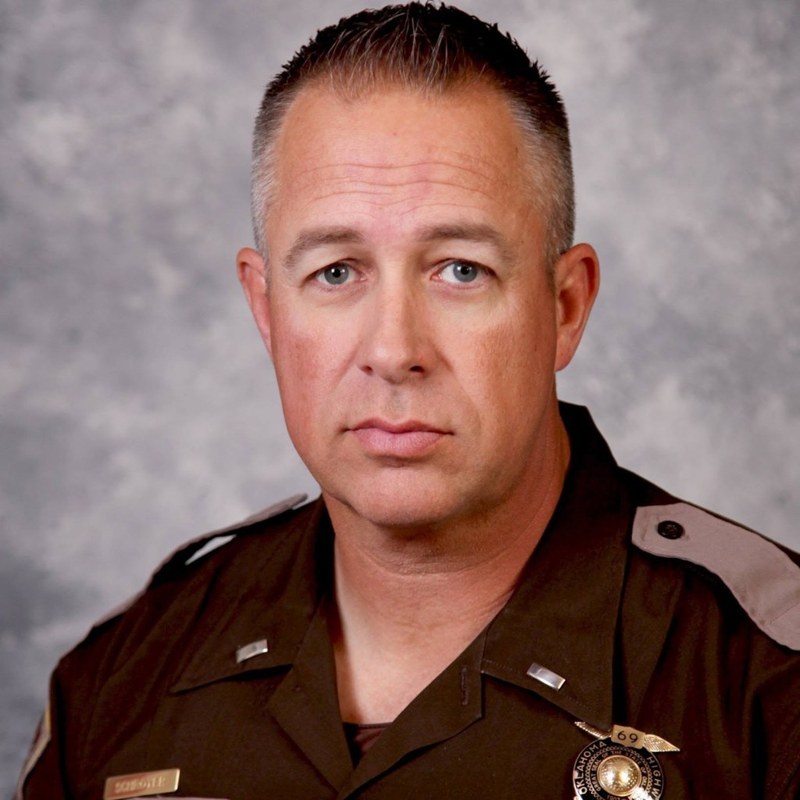
Lance Schroyer is a former Oklahoma state trooper and United States Marine who was President Donald Trump’s nominee to lead U.S. Immigration and Customs Enforcement (ICE) — a nomination the White House withdrew on September 17, 2026, after it stalled in the Senate for nearly three months. Schroyer, who had no experience leading a law enforcement agency of any kind and no formal experience working in ICE, was announced in June 2026 and was widely described as a “good friend” of Homeland Security Secretary Markwayne Mullin, having worked on Mullin’s Senate security detail and later as a senior adviser to him at DHS. The withdrawal leaves ICE — the agency at the forefront of Trump’s domestic immigration agenda — without a Senate-confirmed director, a vacancy that has persisted since the Obama administration.
Background Information
Schroyer built his career in Oklahoma law enforcement; Trump, announcing the nomination on Truth Social in June 2026, credited him with “over 29 YEARS of Law Enforcement experience in Oklahoma,” called him “a former Oklahoma State Trooper, and United States Marine,” and described him as “a PATRIOT with real operational experience, and proven leader.” His path to the nomination ran through his personal relationship with Mullin, a former U.S. senator from Oklahoma: Schroyer worked as a member of Mullin’s security detail while Mullin was in the Senate, then followed him to DHS as a senior adviser. The Post reported that Mullin reportedly collaborated with White House deputy chief of staff Stephen Miller on the selection, and that Mullin had stressed his desire to pick someone who could clear the Senate. What Schroyer lacked was immigration or agency-leadership experience: The Guardian reported that critics seized on the fact that he had “no formal experience working in ICE,” while the Associated Press noted flatly that “he has little experience with immigration.”
The Controversy or Incident That Led to Their Cancellation
Allegations. The criticism in this section — that Schroyer was a crony appointment who was under-qualified to run a major federal law enforcement agency — comes from reporting by The Guardian, the Associated Press and The New York Post, including unnamed DHS employees who spoke to Politico. None of it was admitted by Schroyer, none of it involves criminal conduct, and none of it was adjudicated anywhere; Schroyer himself did not publicly counter it. What is established fact: the Senate never held a hearing on his nomination, and the White House withdrew it.
The trouble began almost immediately after Trump’s June announcement. Although the president urged the Senate to confirm Schroyer immediately, some Department of Homeland Security officials expressed skepticism about his qualifications, and unnamed DHS employees told Politico in August 2026 that they did not want Schroyer to take over and implement changes at the agency. The nomination then stalled in the Senate — not over any finding against Schroyer personally, but as collateral in a standoff: Sen. Rand Paul (R-Ky.), chair of the Senate Homeland Security Committee, had long feuded with Secretary Mullin and declined to schedule a hearing on the nomination until the administration handed over more records on the ICE shootings of two Americans, Alex Pretti and Renee Good, earlier in the year in Minnesota. According to Paul’s office, Paul did not actually oppose Schroyer becoming ICE director; he simply declined to move the nomination until the records dispute was resolved.
Public Reaction and Consequences
On September 17, 2026, the White House announced it was withdrawing Schroyer’s nomination, posting the announcement on its website without offering any reason. The withdrawal confirmed the skeptics’ core criticism by ending the nomination: an agency-leading job Trump had framed as requiring someone who could “DETAIN AND DEPORT Illegal Alien Criminals” went unfilled by a man whose chief credential was his closeness to the DHS secretary. The Associated Press reported that the pullout ensures ICE “will remain without a Senate-confirmed leader for at least a while longer,” and The Guardian noted it was unclear whether the administration planned to nominate another director immediately or who that might be. The episode also deepened the visible rift between Paul and Mullin, and left Mullin — already under fire from the right for not being aggressive enough on deportations — with a public nomination failure on his record.
Current Status
As of September 17, 2026, Schroyer’s nomination has been withdrawn and his name is out of Senate consideration; the White House offered no comment beyond a brief statement, and Schroyer has not spoken publicly about the withdrawal in his own defense. ICE remains under the leadership of acting director David Venturella, who returned to the agency earlier in 2026 after Todd Lyons resigned — Lyons having stepped down amid an internal rift over enforcement aggressiveness in which Border Patrol commander-at-large Greg Bovino and then-DHS Secretary Kristi Noem were ultimately pushed out. It is not publicly known whether Schroyer remains in his role as a senior adviser to Mullin at DHS.
Impact on Their Career/Life
For a 29-year law-enforcement veteran, the withdrawn nomination is a career-defining public failure: Schroyer was elevated to lead one of the federal government’s most scrutinized agencies and was pulled back down before ever receiving a hearing, with his qualifications debated in national headlines rather than vetted in a Senate confirmation process. The episode tied his name permanently to the criticism of the nomination — press accounts repeatedly paired his announcement with the words “no experience leading a law enforcement agency” and “little experience with immigration” — and to the Paul-Mullin feud that sank it. Whether his advisory career at DHS survives the episode is not publicly known; what is clear is that the job he was nominated for remains unfilled, with ICE still lacking a Senate-confirmed director and the administration giving no sign of who it will pick next.