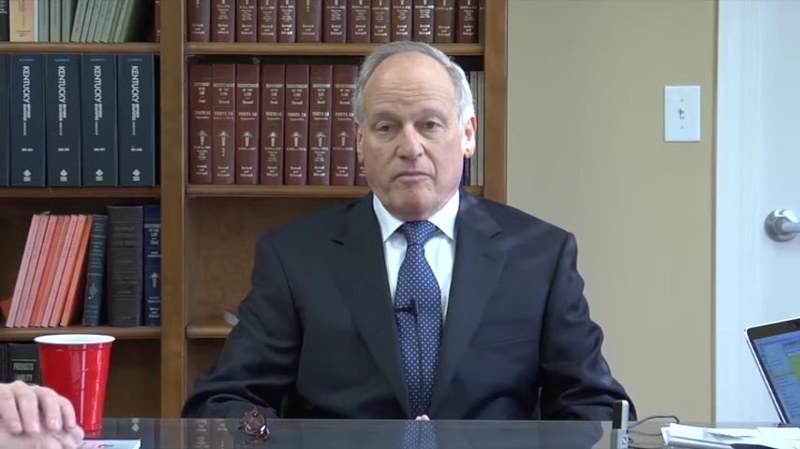
Richard Sackler
Introduction
Richard Sackler, 81, the former president and chairman of Purdue Pharma who led the company during its aggressive promotion of OxyContin, was ordered by a federal bankruptcy judge on 28 October 2026 to stop interfering with the court-supervised sale of his Greenwich, Connecticut mansion — one of the assets his family pledged as collateral for the 7.4-billion-dollar settlement of opioid claims against the company. Sackler has never been criminally charged for Purdue’s role in the opioid epidemic, and he and his wife plan to appeal the ruling.
Background Information
Sackler led Purdue Pharma as president and later chairman while the company aggressively marketed OxyContin, the prescription painkiller at the center of tens of thousands of lawsuits over the American opioid epidemic. Purdue twice pleaded guilty to criminal charges over its marketing of the drug, but no member of the Sackler family, which owned the company until the end of its bankruptcy, has ever been criminally charged; the family is funding most of the 7.4-billion-dollar bankruptcy settlement, most of which flows to state and local governments and other plaintiffs. The contested property at 60 Field Point Circle spans nearly 10,500 square feet with six bedrooms and eight bathrooms, per Zillow, and reportedly carries a municipal assessment of 65.45 million dollars; it was previously transferred between two Sackler family trusts to free up funds for a 62-million-dollar settlement payment. Sackler owns four other homes, including his primary residence in Florida.
The Controversy or Incident That Led to Their Cancellation
Court-ordered to stop obstructing the settlement — a civil and financial posture only. No Sackler has faced criminal charges over the opioid epidemic, and this ruling concerns the sale of pledged collateral, not misconduct adjudicated at trial.
US Bankruptcy Judge Sean Lane, presiding in White Plains over the Purdue Pharma case, had already ruled that the Greenwich estate was among the assets Sackler family members pledged to fund the settlement. At a 28 October hearing he rejected both the couple’s request to reconsider that ruling and their bid to pause any sale, saying the two had “violated the letter and spirit” of their agreements to fund payments to victims, according to Reuters. “The persistent fiction that seems to pervade these papers is that this is Dr. Sackler’s house and Lin Gao’s house. It is not,” Lane said.
Lane told the couple’s attorney Stephan Hornung, “This is not a victimless crime your clients are perpetrating,” and said he was “profoundly concerned about the victims of the opioid epidemic having to wait for what’s their due in terms of getting payment, by virtue of this.” The judge stopped short of ordering the family to vacate, but warned that eviction or other sanctions could be on the table. Julia Winters, representing the Sackler trust charged with selling the assets, said Sackler’s wife Lin Gao and her children continue to live in the mansion, complicating the sale of both the property and the artwork inside. Hornung told the court the couple plans to appeal the underlying ruling; the Post reported it reached out to their attorneys for comment.
Public Reaction and Consequences
The judge’s unusually pointed language — a member of the family that owned Purdue accused in open court of perpetrating “not a victimless crime” by delaying payouts — drove the story onto the front pages of the Post and across Reuters’ syndication network the same day. The image of one of America’s most notorious opioid-era families fighting to keep a Greenwich estate while victims wait for settlement money gave the procedural ruling a resonance well beyond bankruptcy court, with outlets from New York to Times of India picking it up. No Sackler family member has publicly responded beyond the courtroom filings.
Current Status
As of 29 October 2026, the mansion remains within the pool of assets funding the settlement, Sackler and Gao remain in the home, and their appeal of the underlying ruling is planned but undecided. Lane has left eviction and further sanctions open if the interference continues. The case — Purdue Pharma, US Bankruptcy Court for the Southern District of New York, No. 19-23649 — continues; no criminal charge has ever been brought against any Sackler family member, and nothing in this property dispute has been tried before a jury.
Impact on Their Career/Life
The ruling converts one of the family’s flagship properties from a private residence into settlement collateral on a judge’s timetable, and puts a 65-million-dollar-assessed estate in Greenwich — with its occupants still inside — on the path to sale for opioid victims’ payments. For Sackler personally, it is the most concrete public consequence yet of the settlement his family struck: a court publicly rebuking him by name for obstructing the flow of money to victims, with eviction now an explicit option.
Sources
- NY Post, “Richard Sackler loses bid to block sale of Greenwich mansion”, 29 October 2026.source
- NY Post via X, “Embattled Purdue Pharma exec ordered to stop blocking sale of mansion to fund opioid settlements”, 29 October 2026.source
- Reuters (Dietrich Knauth) via FinanceTime, “Richard Sackler loses bid to keep mansion despite Purdue settlement”, 28 October 2026.source
- Times of India (TOI World Desk), “Richard Sackler and his wife tried to stop the sale of their Connecticut mansion…; on October 28, a bankruptcy judge rejected both requests”, 29 October 2026.source